The history of humanity is, to a large extent, a history of the quest for strategic advantage. From the moment Odysseus conceived the Trojan Horse to the modern era of autonomous weapon systems and large language models, the essence of strategy has remained constant: the ability to shape the future in one's favor, often through deception, speed, or superior information processing. The documentary series "Strategy" on Cosmote TV, particularly its third episode, illuminates this very transition, highlighting how Artificial Intelligence (AI) is not merely a new tool, but a radical paradigm shift.
The Trojan Horse as the First Deception "Algorithm"
In antiquity, strategy was inextricably linked with "metis" – the wily intelligence that combines knowledge with guile. The Trojan Horse was not just a wooden construction; it was a means of bypassing physical defenses through psychological manipulation. Today, in the digital age, we see a superlative revival of this tactic. Cyberattacks of the "Trojan Horse" variety are the obvious analogy, but the deeper connection lies in Artificial Intelligence. AI can analyze vast volumes of data to identify vulnerabilities in human psychology or infrastructure, creating informational "Trojan horses" that penetrate the social fabric via social media and disinformation.
- Strategy is shifting from kinetic power to informational dominance.
- Deception is being automated through algorithms that learn from an opponent's reactions.
- Decision-making speed is becoming the critical metric in the age of "Hyperwar."
From Clausewitz to Code: The Digitization of Conflict
Carl von Clausewitz famously defined war as the continuation of politics by other means. In the 21st century, those "means" are increasingly algorithmic. Artificial Intelligence introduces the concept of "predictive strategy." While generals have traditionally relied on intuition and experience to pierce the "fog of war," AI promises to dissipate that fog through real-time pattern analysis. However, this creates a new paradox: the more predictable strategy becomes through data, the more valuable the unpredictable human factor becomes – the "madness" or creative spark that can upend an algorithmic prediction.
"Strategy in the age of AI is no longer about who has the largest army, but who possesses the fastest information processing loop."
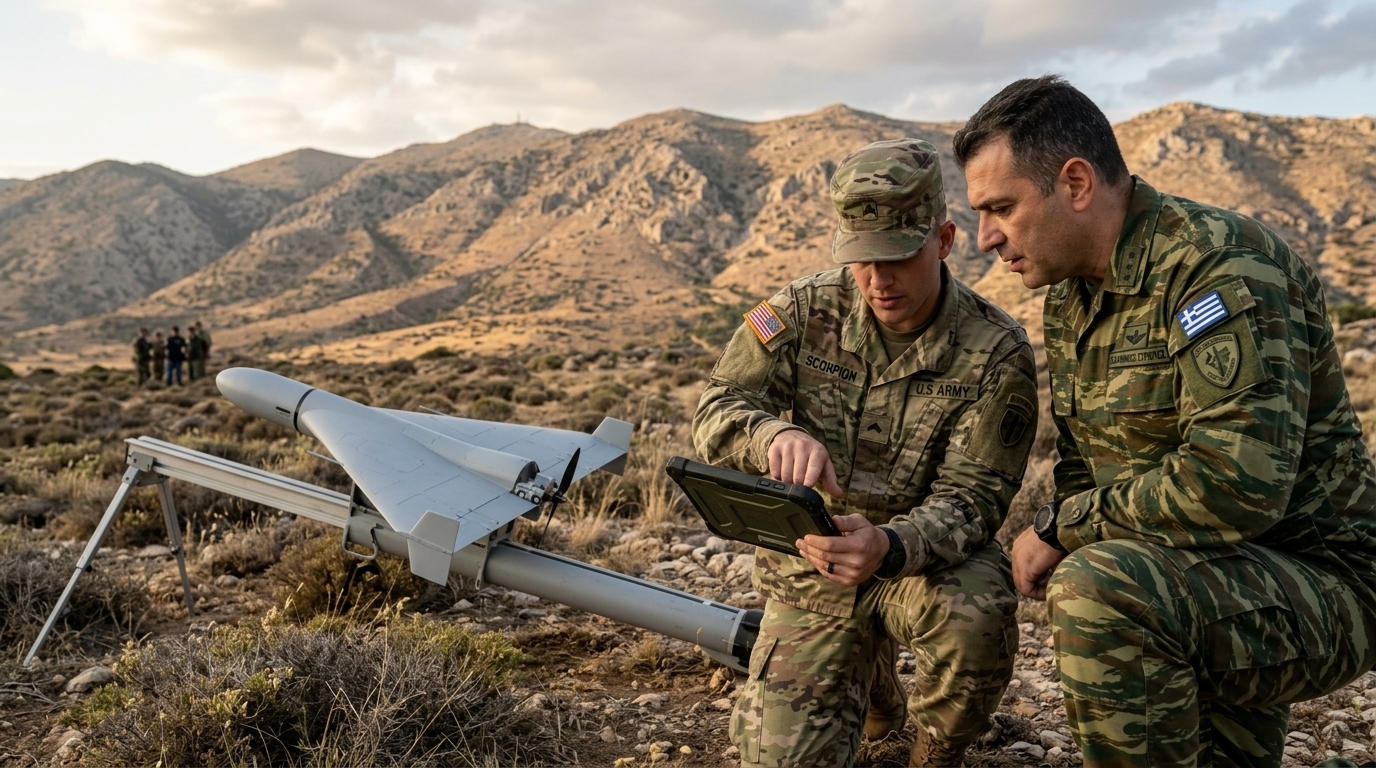
The episode analyzes how Greece, a nation with a deep history in strategic thought, is called to adapt. The country's geopolitical position demands a modern approach that integrates AI into national defense and diplomacy. The use of drones, border surveillance with smart systems, and the protection of critical infrastructure from cyber threats are the modern-day walls of Troy.
The Ethics of Automated Strategy
One of the most thorny issues addressed is the delegation of decision-making to machines. If strategy is the art of the possible, what happens when the "possible" is determined by a "black box" of algorithms? The risk of unintended escalation, where the algorithms of two opposing sides react to each other in milliseconds, is real. Ethically, humanity stands at a crossroads: will humans remain "in the loop," or will they become mere observers of a strategy they no longer fully comprehend?
In conclusion, the transition from the Trojan Horse to Artificial Intelligence is not a path toward the abolition of human guile, but toward its perfection. Strategy remains a deeply human endeavor, even when its tools are made of silicon and code. Understanding this evolution is essential not only for military leaders but for every citizen wishing to navigate the complex world of the future.