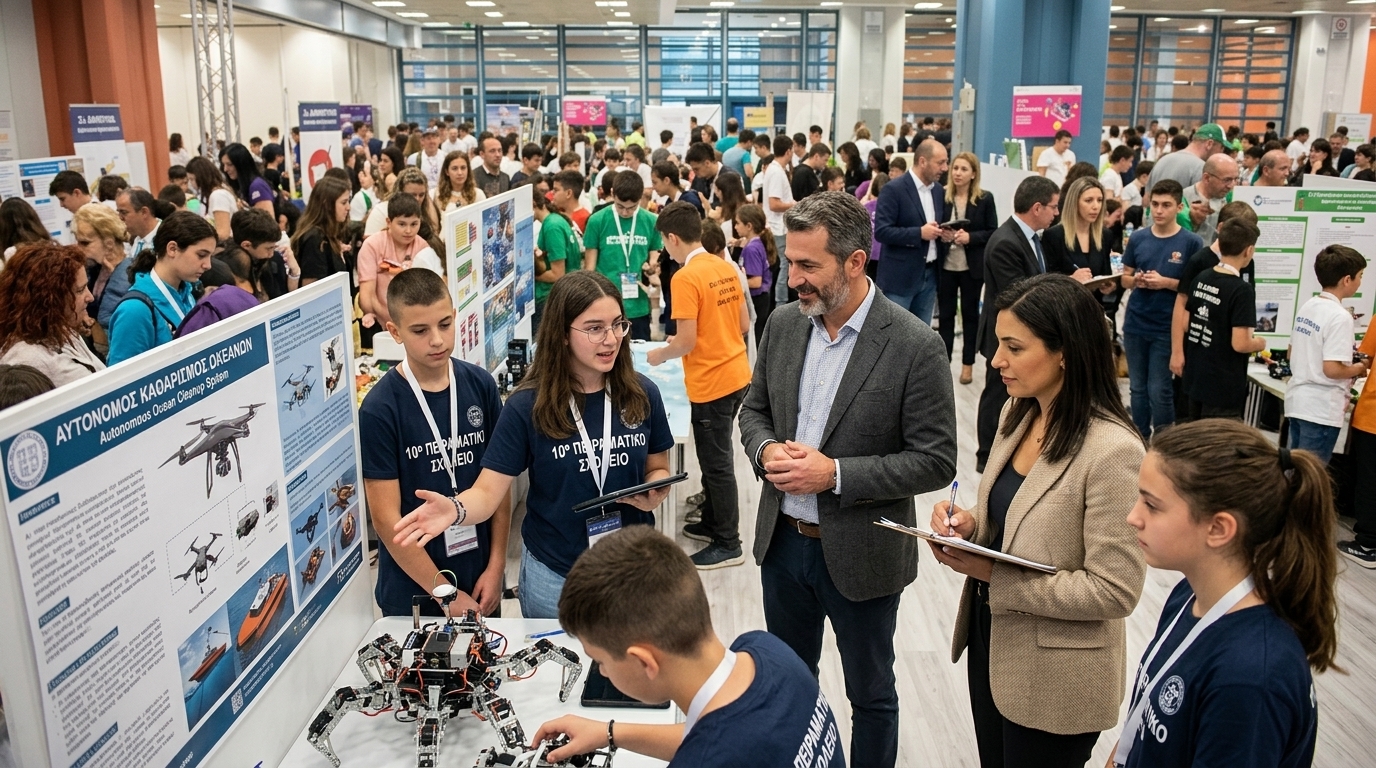
Greece in 2026 bears little resemblance to the technological introversion of previous decades. At the grand final of the STEM 2026 competition, the atmosphere was electric—not from the tension of competition, but from the pure creativity of a generation born into the digital revolution and now tasked with leading it. A total of 95 robotic applications were recognized, offering solutions ranging from environmental protection to medical support and smart agriculture.
The AI Revolution in the Classroom
What sets this year's competition apart from its predecessors is the deep integration of Artificial Intelligence (AI). Students did not limit themselves to simply assembling robots that perform pre-programmed movements. Instead, they presented systems that "think," adapt, and learn from their environment. Utilizing advanced machine learning algorithms and computer vision, these young innovators managed to create autonomous vehicles that map burnt forest areas, as well as robotic arms that assist individuals with mobility disabilities through voice command and gesture recognition.
The use of AI in schools has now matured. It is no longer a "gimmick" for show, but a tool for problem-solving. The 95 distinguished applications are the result of thousands of hours of work in laboratories across the country, from Kastellorizo to Orestiada. Notably, many of these ideas emerged from public schools in rural areas, proving that access to knowledge and innovation has begun to democratize, despite any logistical shortcomings.
Sustainability and Social Impact: The Core Pillars
The thematic areas of STEM 2026 reflect the grand challenges of our era. Climate change was at the forefront, with student teams presenting smart water management systems that reduce waste by 40% through AI soil analysis. Other applications focused on "green" energy, featuring robotic solar panels that track the sun's trajectory with absolute precision, maximizing efficiency in urban environments.
- Autonomous fire detection systems in forests using drones.
- Robotic assistants for the elderly that monitor vital signs and send emergency alerts.
- Circular economy applications that automatically sort waste at the source.
- Smart greenhouses that self-regulate based on weather forecasts.
The social dimension of the projects was particularly moving. A middle school team from Crete developed a system that converts sign language into text and audio in real-time, using low-cost cameras and a credit-card-sized AI processor. Such initiatives demonstrate that the new generation does not view technology as an end in itself, but as a means to a more inclusive society.
The Challenge of Continuity: From Lab to Market
Despite the success and the accolades, a critical question remains: what happens to these 95 applications the day after? Greece has historically struggled to transform academic and student innovation into viable products or startups. The need for a bridge between education and the labor market is more pressing than ever.
"The talent we saw today is world-class. The challenge for us is to keep these minds here by offering them the ecosystem they need to flourish," stated one of the competition judges.
The state and the private sector must invest in incubators that will house these projects, providing mentoring and seed capital. Awards and podium photos are not enough. The true success of STEM 2026 will be judged by how many of these 95 ideas are operational by 2030, improving the lives of citizens. The new generation has taken the first step. It is now the state's turn to follow.