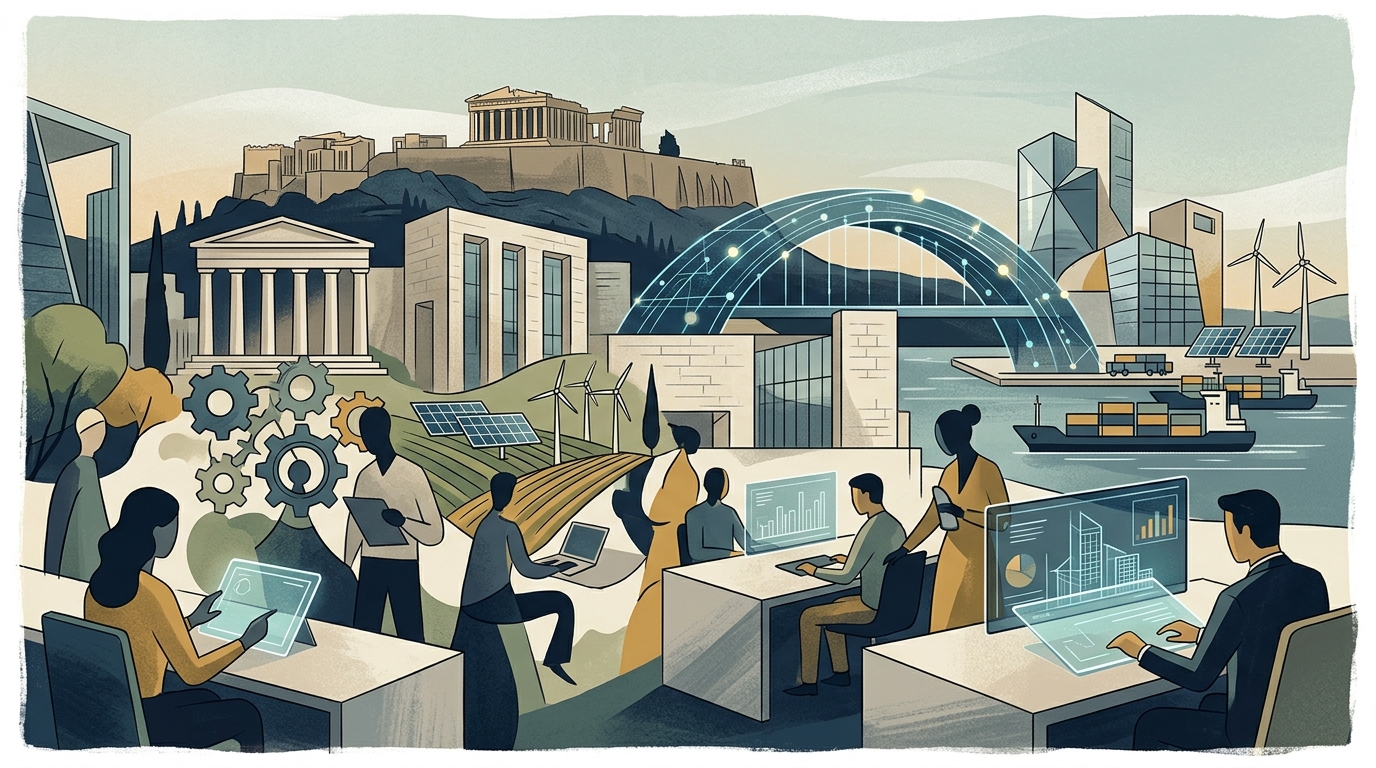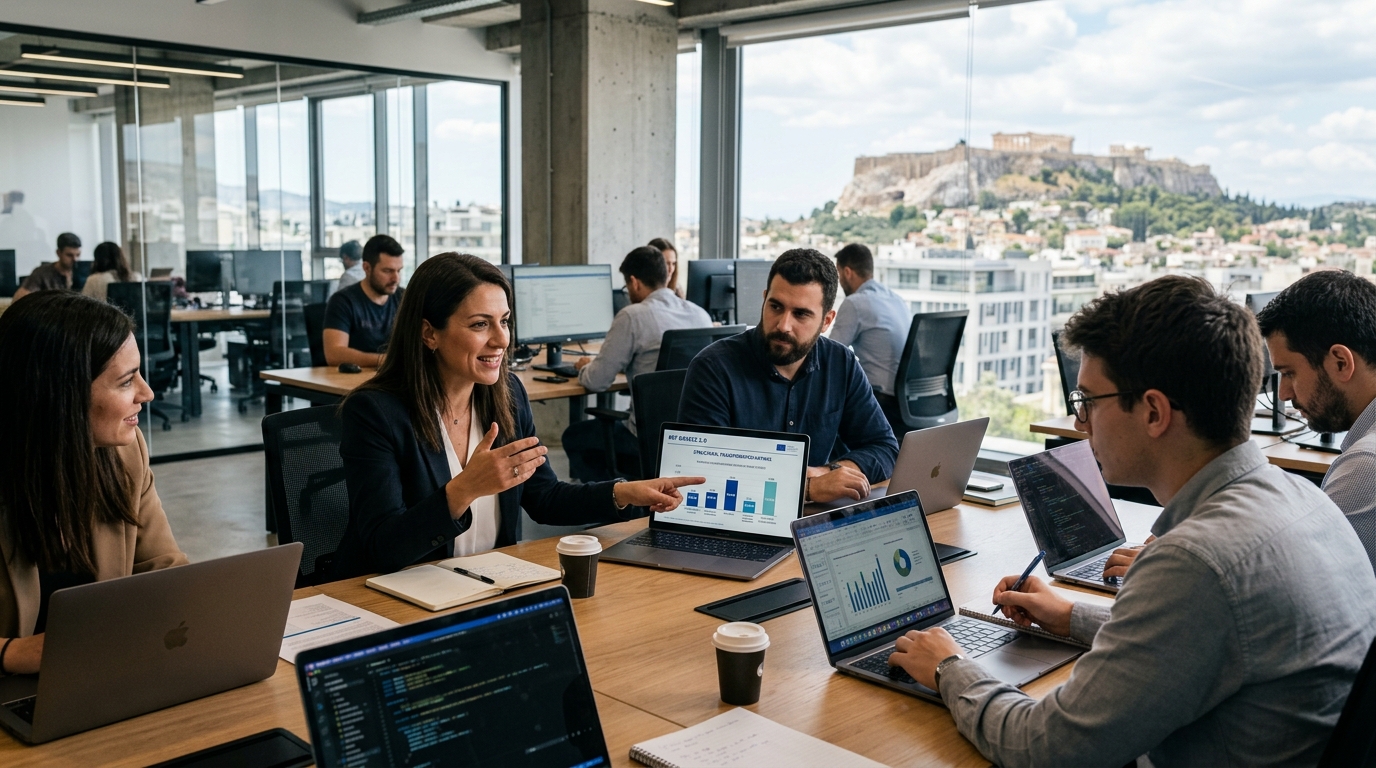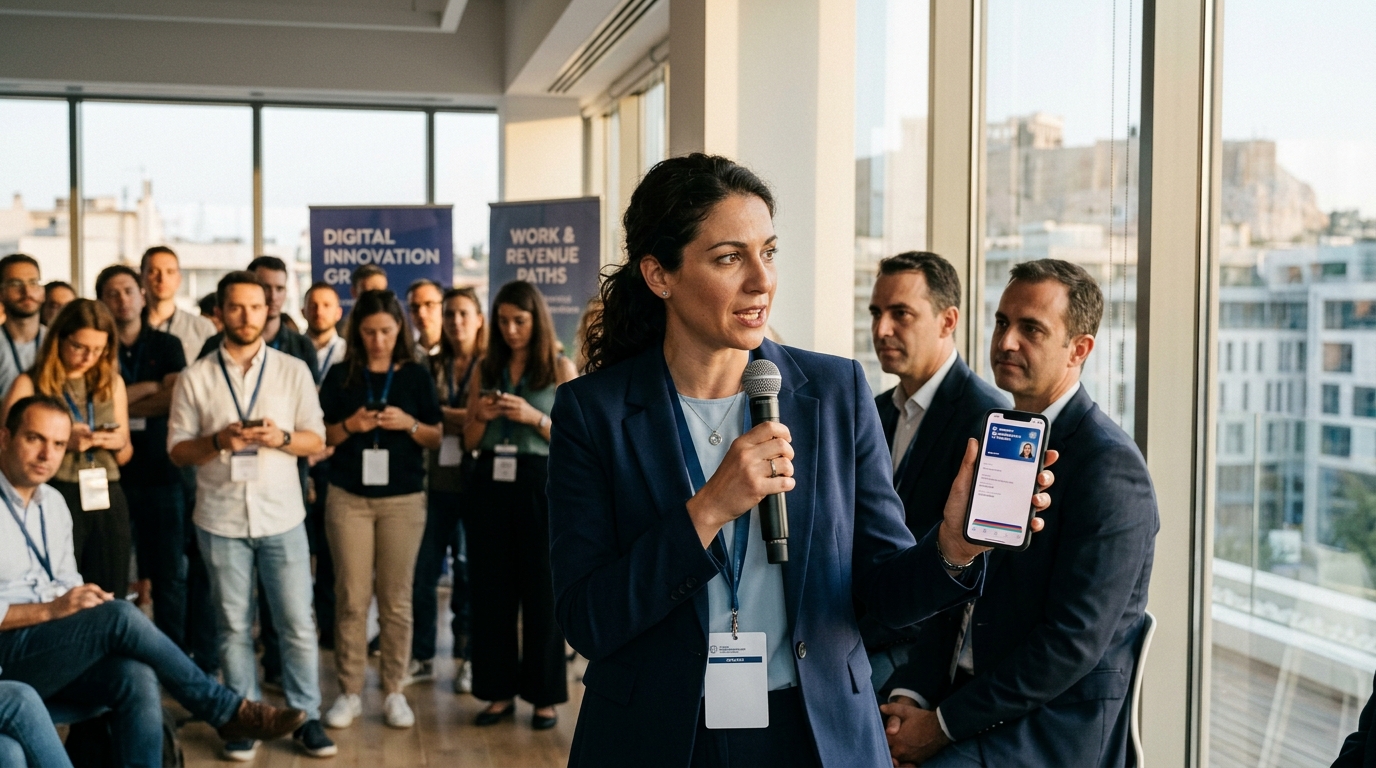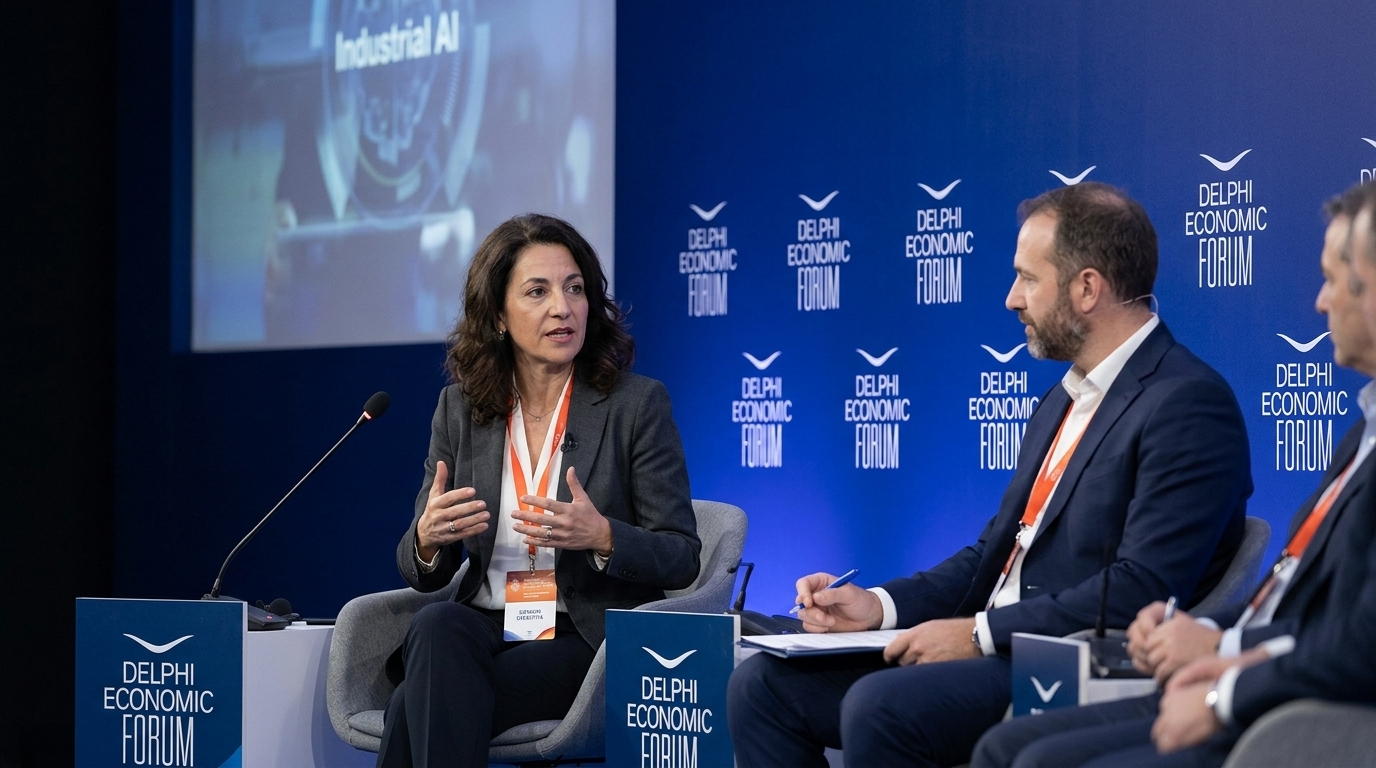
In the evocative setting of Delphi, where ancient wisdom meets modern geopolitical and economic challenges, Siemens set the tone for the future of global and Greek industry. At the 11th Delphi Economic Forum, top executives from the German giant described a reality where Artificial Intelligence (AI) is no longer an experimental tool but is becoming the central 'operating system' driving production, infrastructure, and energy.
The discussion was not limited to simple automation but extended to the convergence of the physical and digital worlds. According to Siemens, 'Industrial AI' is the catalyst for the twin transition—digital and green—offering solutions to problems that until recently seemed insurmountable, such as energy waste and supply chain disruptions.
Industrial AI as a Driver of Efficiency
The core position developed at Delphi is that industrial AI differs radically from the Generative AI familiar to the general public. While the latter focuses on content creation, the former concentrates on precision, reliability, and safety in real-time environments. For a business, this means the ability to predict failures before they occur (predictive maintenance), optimize energy consumption based on production load, and reduce the carbon footprint.
'We are no longer talking about whether to adopt AI, but about how quickly we can integrate it into the core of our operations,' it was characteristically noted. The use of 'Digital Twins' allows companies to simulate entire production lines in digital space before they are even built, saving resources and time. This 'test digitally, build physically' model is a game-changer for competitiveness, especially in a period of high capital costs.
Cybersecurity: The Invisible Pillar of Progress
As industries become more interconnected, the risk of cyberattacks increases exponentially. Siemens emphasized that cybersecurity is no longer an optional 'add-on' but the fundamental prerequisite for any digital investment. At the Delphi Forum, the need for a holistic approach was highlighted, where security is integrated into the design of products and systems (security by design).
For Greece, this is of particular importance. As Greek businesses strive to bridge the digital divide, shielding critical infrastructure—from the power grid to port facilities—is a national priority. Siemens, through its partnerships in the Greek market, promotes standards that ensure digitalization does not become the 'backdoor' for malicious actions that could paralyze the economy.
The Skills Challenge and the Future of Work
One of the most interesting aspects of the discussion concerned the workforce. The introduction of AI into industry does not mean the elimination of jobs, but their radical transformation. The need for upskilling and reskilling is more urgent than ever. Siemens executives noted that 'the human remains at the center,' but their role is shifting from manual supervision to managing intelligent systems.
- Training in AI and data analysis tools.
- Understanding human-machine interaction (cobots).
- Developing critical thinking for data-driven decision-making.
In conclusion, Siemens' presence at the 11th Delphi Economic Forum sent a clear message: Technology is the tool, but strategic will is the driver. For Greek entrepreneurship, adopting industrial AI is not a luxury, but the only way to remain relevant in a globalized and highly demanding environment.