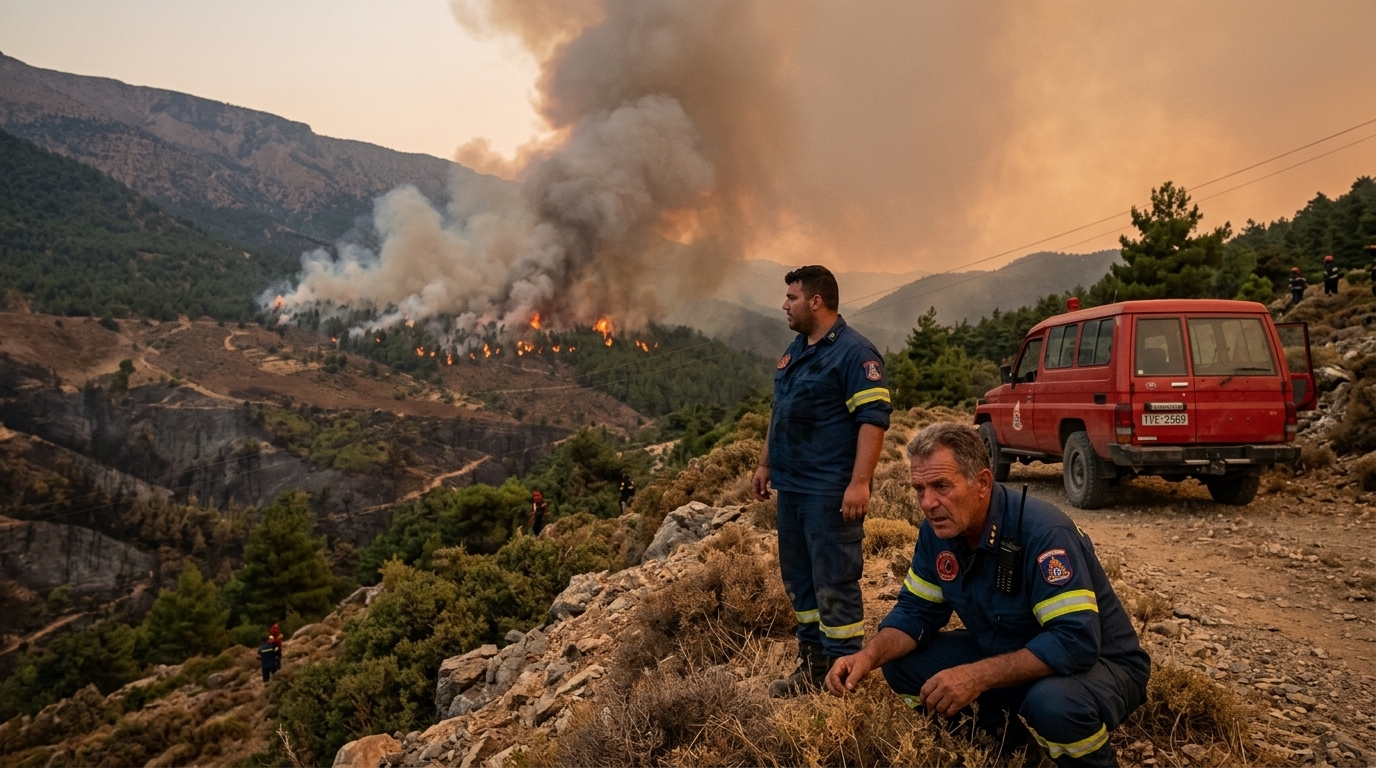
Greece, a nation historically identified with its luminous light and deep blue seas, is facing a dark reality that repeats every summer: the gray of ash. A recent, extensive investigation by Reuters brings to light a disturbing contradiction that undermines the country's national security and environmental integrity. While the climate crisis accelerates, making wildfires more frequent and violent, the lines of defense on the ground—forestry officials and prevention experts—are shrinking dramatically.
The Numbers of Devastation: Two Decades in Flames
According to official government data cited by Reuters, since 2000, nearly 10 million acres of land have been surrendered to the flames. To understand the scale, this represents approximately 7.5% of the country's total surface area. This statistic is not just a number; it represents the loss of entire ecosystems, the destruction of property, and, most tragically, the loss of human lives. The investigation points out that the intensity of fires has changed. They are no longer the traditional forest fires that older generations knew how to manage, but "megafires" that create their own microclimate and are practically impossible to control once they gain momentum.
The Weakening of the Forestry Service
The central argument of the report focuses on human resources. Despite announcements about strengthening Civil Protection, the Forestry Service—the primary body responsible for forest management and health—remains understaffed and aging. The recruitment of foresters and forest technicians has been frozen for years, while the average age of those serving exceeds 55. This shortage has a direct impact on prevention. Without people on the mountain to create firebreaks, clear combustible material, and monitor forest roads, aerial suppression—however impressive it may look on television screens—is often doomed to fail.
"The forest is not protected from the air; it is protected from the ground, 12 months a year, not just in the summer," experts state in the report.
The Imbalance Between Prevention and Suppression
One of the most thorny issues highlighted by Reuters is the allocation of resources. Greece spends the bulk of its firefighting budget on suppression: leasing and purchasing aircraft, helicopters, and strengthening the Fire Brigade. Conversely, prevention receives a fraction of these funds. This "suppression-heavy" model is proving ineffective in the era of the climate crisis. International experience shows that every euro invested in prevention saves multiple times the cost of suppression and restoration. In Greece, however, political pressure for immediate results leads to a preference for "visible" means of suppression, leaving forests to their fate during the critical winter months.
Climate Crisis: The Power Multiplier
Climate change is no longer a future threat but a present reality. Prolonged heatwaves, lack of winter rainfall, and strong winds create the "perfect setting" for catastrophic fires. The Reuters investigation emphasizes that the fire season has lengthened, starting earlier in the spring and ending later in the autumn. This means that the already exhausted personnel are required to operate for longer periods, increasing the risk of errors and accidents. The need for a radical restructuring of the forest protection model is now imperative, as the country's natural capital is being depleted at rates that do not allow for natural regeneration.