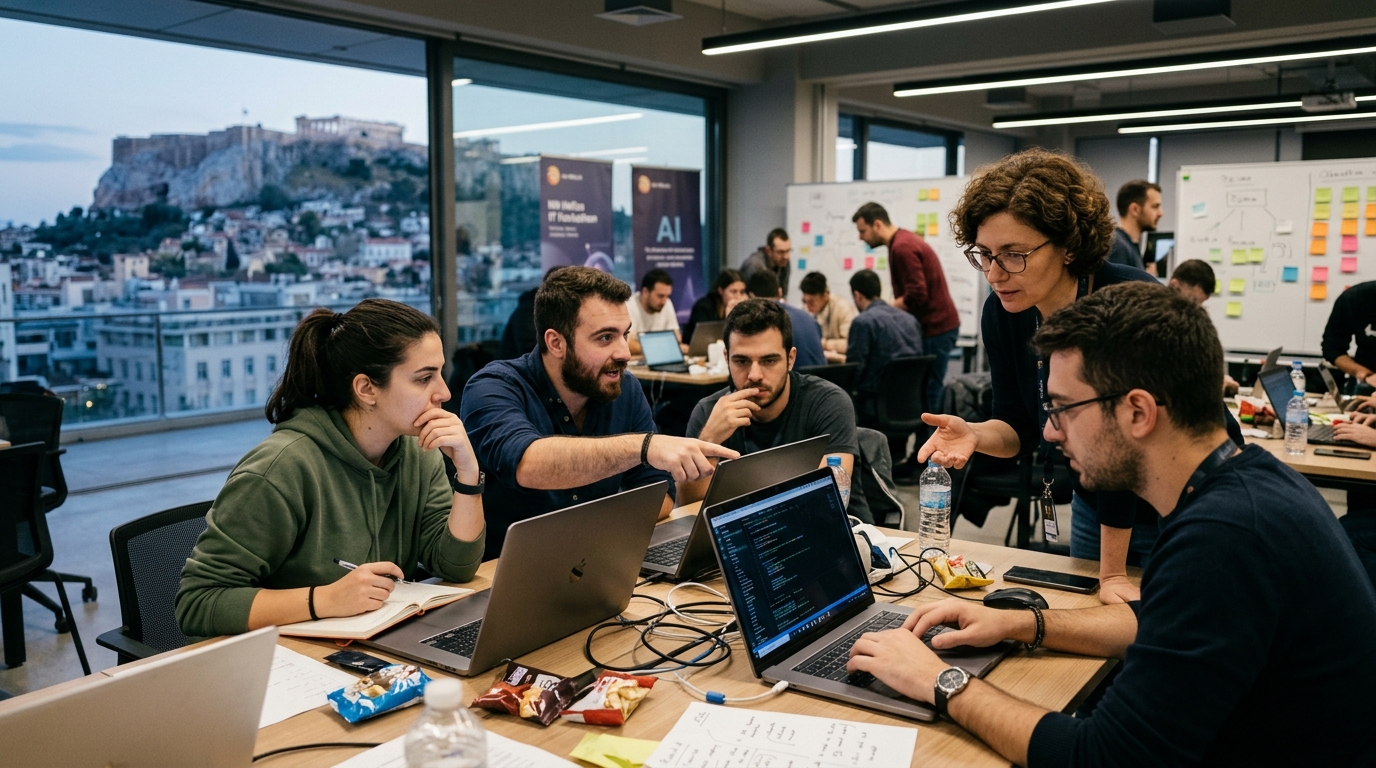
In an era where digital transformation is no longer an option but a prerequisite for survival, NN Hellas has reaffirmed its leadership in the Greek insurance market by organizing a groundbreaking two-day IT Hackathon. The event, which focused on leveraging Artificial Intelligence (AI) and emerging technologies, was not just a coding competition, but a strategic move to redefine customer experience and operational efficiency.
The Hackathon attracted talent from the IT sector, data analysts, and software development experts, who were called upon to provide solutions to real-world problems in the insurance industry. Through an intensive marathon of creativity, participants experimented with Generative AI tools, predictive analytics, and automated processes, highlighting the potential of technology to personalize services and respond more quickly to the needs of policyholders.
The Strategic Importance of Innovation in Insurance
The insurance industry, traditionally associated with bureaucratic processes and complex risk models, is undergoing a radical change. NN Hellas, recognizing this trend, uses the Hackathon as an "open innovation" tool. The goal is not only to generate new ideas but to foster a culture of agility within the organization. The ability to test prototypes in real-time allows the company to reduce the time-to-market for new products.
According to company executives, the emphasis on Artificial Intelligence during the two-day event focused on three main pillars: automating claims management, improving accuracy in risk pricing, and creating intelligent assistants (AI assistants) that can provide immediate support to customers 24/7. These technologies are not intended to replace the human factor but to empower it, allowing insurance advisors to focus on more complex and meaningful interactions with their clients.
Artificial Intelligence: From Theory to Practice
During the Hackathon, teams worked on scenarios using Large Language Models (LLMs) to analyze legal and medical documents, a process that traditionally requires hundreds of man-hours. The use of AI can speed up this process by 70-80%, while simultaneously reducing human error. Additionally, Computer Vision applications were examined for the automatic assessment of damage to vehicles or property through photographs, which could revolutionize the speed of claims payouts.
NN Hellas systematically invests in upgrading its infrastructure, and the Hackathon served as a bridge between internal IT teams and the wider technology ecosystem in Greece. Collaboration with startups and independent developers offers fresh perspectives, which a large organization often finds difficult to develop internally due to its structured processes.
Talent and the Day After
One of the most significant benefits of such initiatives is talent acquisition and retention. In the global labor market, top developers look for environments that allow them to experiment with cutting-edge technologies. By showcasing its technological face, NN Hellas positions itself as an attractive employer in the InsurTech sector.
At the conclusion of the two-day event, the winning proposals did not remain at the theoretical level. The company has committed to considering the integration of the most promising solutions into its business model. This "marriage" of creativity with business application is what makes the NN Hellas IT Hackathon a benchmark for the industry. The challenge now shifts to the ethical use of data and ensuring the transparency of algorithms, issues that were extensively discussed during the event's workshops. NN Hellas is leading the way toward insurance that is smarter, faster, and ultimately more human through technology.