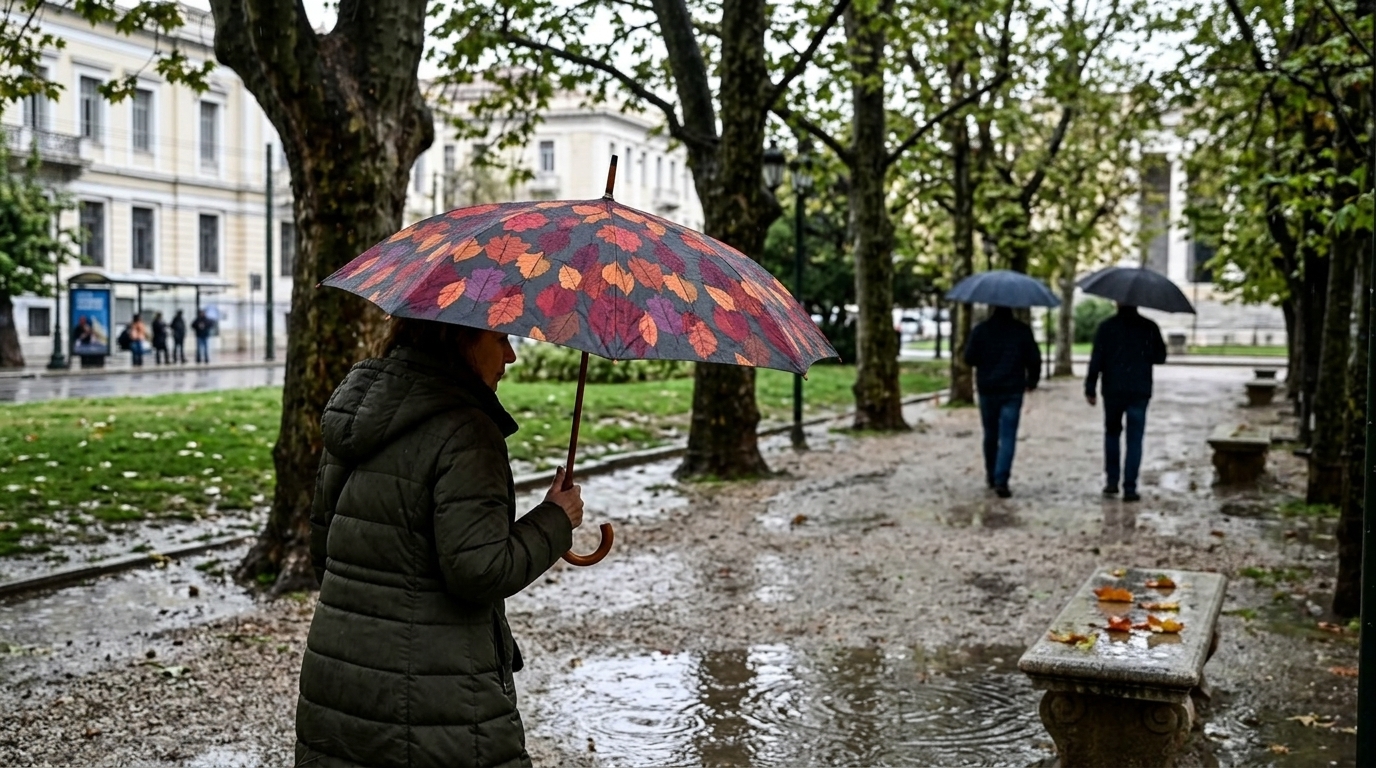
May 1st in Greece is traditionally associated with the rebirth of nature, the weaving of flower wreaths, and excursions to the countryside. However, 2026 had a somber meteorological surprise in store for us. Instead of the bright sunshine and mild temperatures typical of the season, the country is facing an "autumnal" landscape, characterized by heavy rainfall, localized storms, and a temperature drop that has forced citizens to pull their coats back out of the closet.
The Meteorological Paradox of May 1st
According to the latest data from the National Meteorological Service (EMY), a cold air mass from the northern Balkans moved rapidly towards Greece, colliding with warmer, more humid masses over the Aegean and Ionian Seas. The result was the formation of an extensive weather front affecting most of the mainland. The temperature drop is striking, reaching 8 to 10 degrees Celsius below normal levels for this time of year in some parts of Central and Northern Greece.
- In Macedonia and Thrace, rains began early in the morning, with brief snowfall even occurring at high altitudes in the mountains.
- In Thessaly and Central Greece, the setting is grey with continuous steady rain, making the traditional outdoor escape impossible.
- In Attica, clouds thickened quickly, with the first drops appearing shortly after 10:00 AM, impacting planned Labor Day rallies.
Social and Political Implications of the Bad Weather
May Day is not just a celebration of nature, but also a day of political and social advocacy. Traditional union marches in the centers of Athens and Thessaloniki were held under adverse conditions. Despite umbrellas and raincoats, participation was visibly lower than in previous years, sparking discussions about how climate instability can affect even the public expression of political will.
"The weather may prevent us from weaving wreaths, but it cannot stop the need for social justice," said a labor union representative, attempting to keep the morale of protesters high amidst the rain.
At the same time, the tourism sector is taking a significant hit. After a warm April that raised expectations for an early start to the tourist season, today's bad weather led to a wave of last-minute cancellations for destinations near major urban centers. Seaside taverns and cafes, which were counting on today to recover from a difficult winter, see their tables empty and their equipment tucked away under shelters.
The Climate Crisis as a Permanent Guest
While a single weather event cannot be attributed solely to climate change, scientists warn that the frequency and intensity of such abrupt shifts are directly linked to global climate destabilization. The "autumnal" May Day of 2026 is another wake-up call. Spring as we knew it—a gradual and smooth transition from cold to heat—seems to be giving way to violent fluctuations.
Greece's adaptation strategy must now include such scenarios. From agricultural production, hit by late rains and cold, to urban planning for flood management during periods previously considered "safe," the country is called to redefine its relationship with the seasons. Today, though grey, reminds us that nature no longer follows our calendars, but its own—now disrupted—rules.