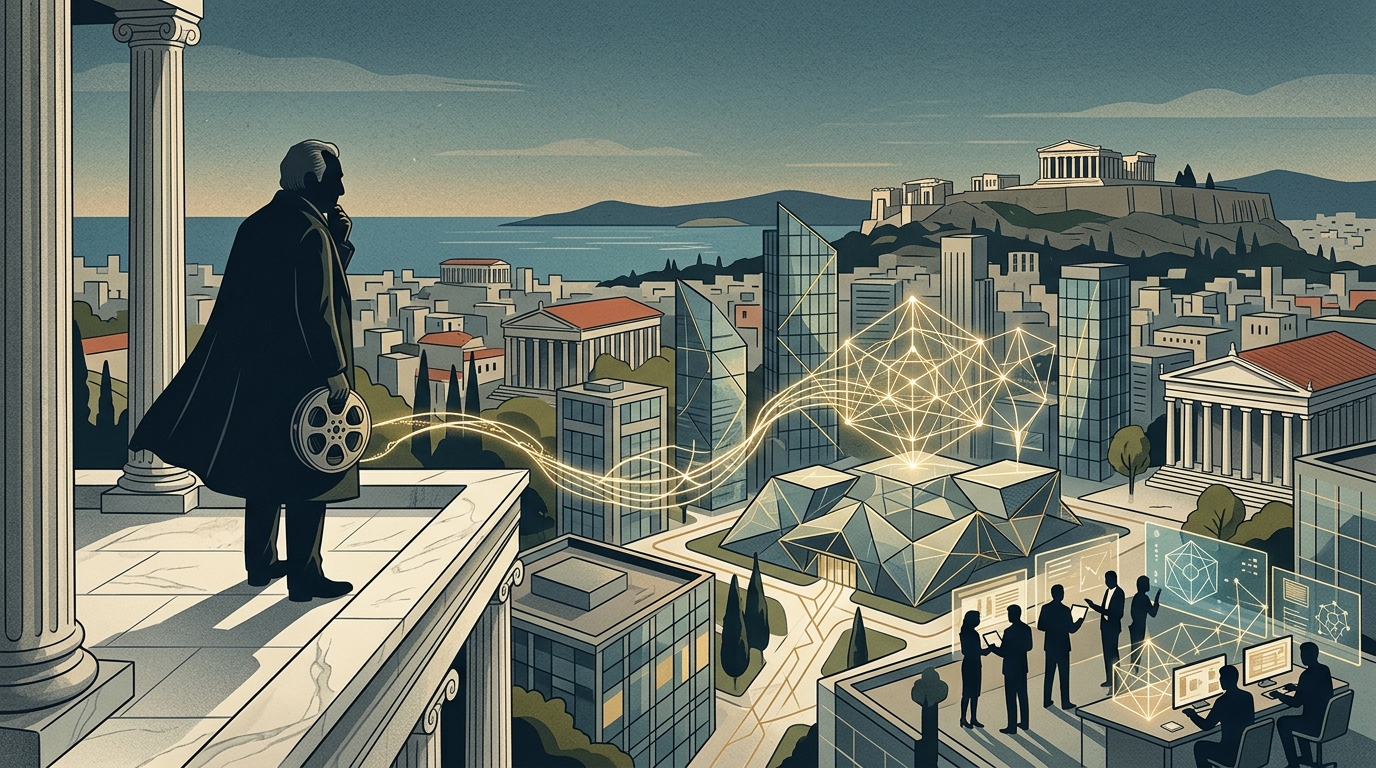
In a move that sent shockwaves through Cannes and the boardrooms of major Hollywood studios, Martin Scorsese—the man whose name is synonymous with the sanctity of the cinematic experience—has announced his appointment to the advisory board of Lumiere Interactive. This German AI startup specializes in generative video tools and narrative-driven machine learning. For a director who once famously declared that Marvel movies are "not cinema," this pivot toward AI initially feels like an ideological surrender. However, a deeper analysis reveals a far more complex strategy: an attempt to seize the reins of technology before it renders the traditional auteur obsolete.
The Philosophy Behind the Machine
Lumiere Interactive is not your typical Silicon Valley startup promising to replace artists with a single prompt. Headquartered in Berlin, the company focuses on developing models that prioritize narrative structure, lighting, and cinematography. It functions more as a "digital assistant director" than an autonomous content generator. Scorsese, through his work with The Film Foundation, has spent decades preserving and restoring classic cinema. His partnership with Lumiere appears to be a natural extension of this mission: ensuring that AI is trained on the principles of classical filmmaking rather than a chaotic sea of internet data.
- Protecting artistic intent through specialized AI interfaces.
- Training models on high-quality cinematic archives.
- Democratizing high-end visual effects for independent filmmakers.
- Combating "digital noise" in the age of mass content production.
The European Response to Silicon Valley Dominance
Scorsese’s choice of a German firm is deliberate. While OpenAI (Sora) and Runway dominate the headlines, Europe is attempting to carve a path that balances technological innovation with strict regulation (the AI Act) and respect for intellectual property. Lumiere Interactive promotes an "ethical AI" model, where creators are compensated for the data used to train algorithms. At a time when Hollywood is still healing from the scars of the WGA and SAG-AFTRA strikes, Scorsese’s move provides a vote of confidence in the European model of tech governance.
"Technology is merely a tool, like the camera or the editing bench. The question isn’t whether we will use it, but whether we will allow it to dictate the story," the director stated during a recent keynote in Berlin.
The Future of Directing: From Physical to Digital Worlds
Scorsese’s involvement is expected to focus on developing tools that give directors granular control over the "body language" of digital characters and the nuance of atmospheric lighting. Instead of generating random imagery, Lumiere aims for precision. This could drastically lower production costs for historical dramas or epic fantasies, enabling emerging filmmakers to realize visions that previously required nine-figure budgets. However, critics warn that the involvement of such a titan could serve as a smokescreen for further industry automation, potentially leading to job losses in technical sectors.
Ultimately, Martin Scorsese isn't trying to become a tech mogul. He is trying to save cinema from its own evolution. If artificial intelligence is the future, Scorsese wants to ensure that this future retains the scent of film, the intensity of drama, and, above all, the imprint of the human spirit.