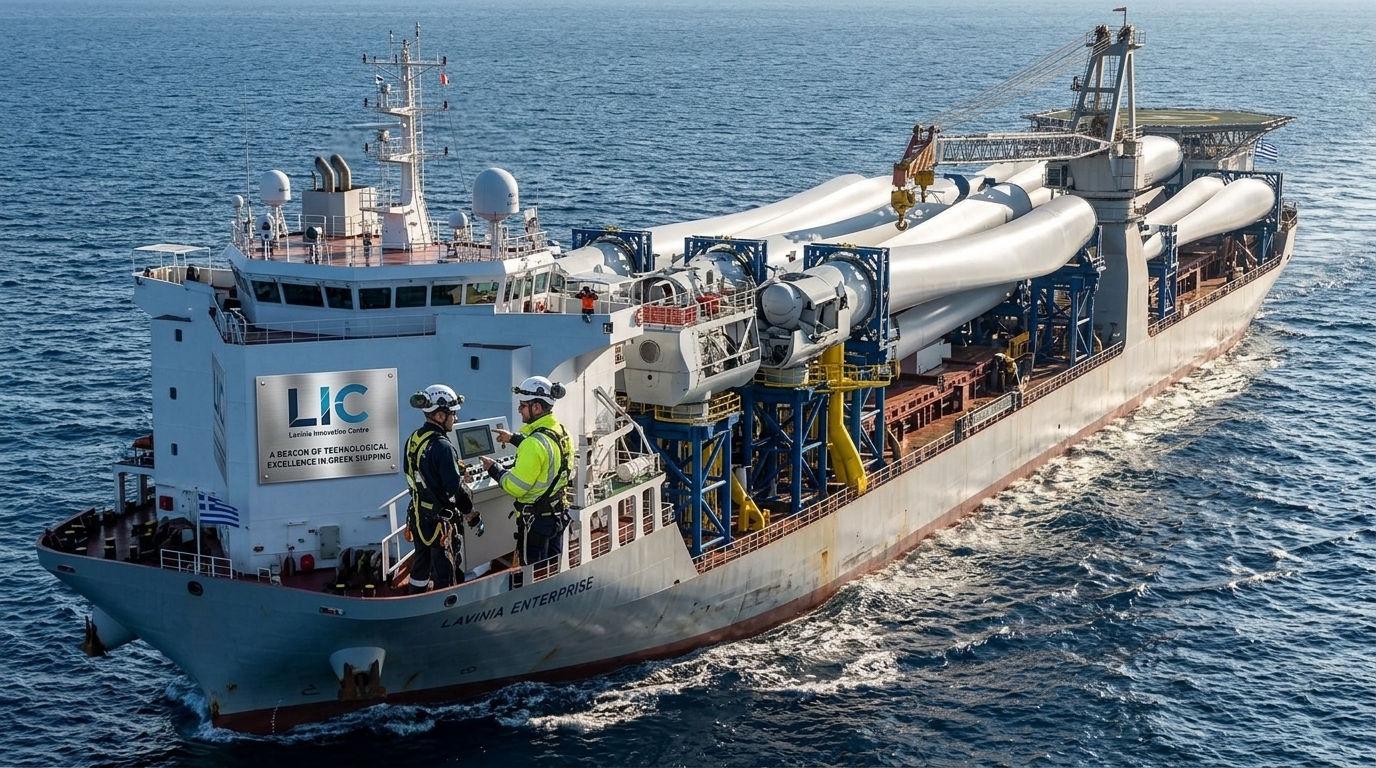
Greek shipping, the undisputed leader of the global seas, finds itself at a critical crossroads. As the industry grapples with the dual challenges of decarbonization and digital transformation, the establishment of the Lavinia Innovation Centre by Lavinia Corporation marks a strategic pivot toward applied scientific research. This is not merely a corporate initiative; it is a statement of intent: Greek shipowners are no longer just adapting to change, they are seeking to co-author it.
Digital Transformation as a Growth Engine
The Lavinia Innovation Centre focuses on integrating advanced technologies, such as Artificial Intelligence (AI), the Internet of Things (IoT), and Big Data analytics, into daily fleet operations. Digitalization in shipping is no longer a luxury but a necessity for survival in an intensely competitive environment. Through real-time vessel monitoring, Lavinia aims to optimize routes, reduce fuel consumption, and predict maintenance needs before costly breakdowns occur.
The use of machine learning algorithms allows for the analysis of vast amounts of data collected from on-board sensors. This data is converted into actionable intelligence, enabling fleet managers to make data-driven decisions that enhance both safety and efficiency. The centre serves as an incubator for ideas, where researchers and maritime executives collaborate to solve complex supply chain puzzles.
The Green Transition and Sustainability
One of the central pillars of the new hub is responding to the stringent environmental regulations of the International Maritime Organization (IMO) and the European Union (EU ETS). Shipping is required to drastically reduce its carbon footprint, which necessitates innovation in fuels and mechanical design. The Lavinia Innovation Centre is researching the use of alternative fuels, such as ammonia and methanol, as well as the implementation of on-board carbon capture systems.
"Innovation is not just a matter of technology; it is a matter of survival and ethical responsibility toward the planet," group executives state, emphasizing the company's commitment to a 'blue economy' that respects the environment.
Furthermore, the centre focuses on the energy efficiency of existing vessels. By improving hull design and utilizing advanced coatings, Lavinia seeks to reduce water resistance, leading to an immediate reduction in emissions. This holistic approach combines traditional seamanship with cutting-edge technology, ensuring that the fleet remains competitive in a low-carbon future.
Partnerships and Human Capital
The success of such an endeavor relies on people. The Lavinia Innovation Centre seeks to attract talented scientists from Greece and abroad, bridging the gap between academic research and industrial application. Partnerships with leading universities and research institutions are already in the works, creating an innovation ecosystem in Piraeus and Athens.
Investing in the training of seafarers is equally critical. New technologies require new skills, and the centre will also function as a space for continuous learning. Familiarizing crews with digital tools is essential for a smooth transition into the new era of shipping. In this way, Lavinia Corporation strengthens Greece's position as a global hub of maritime expertise, proving that the country can produce not only world-class services but also world-class innovation.