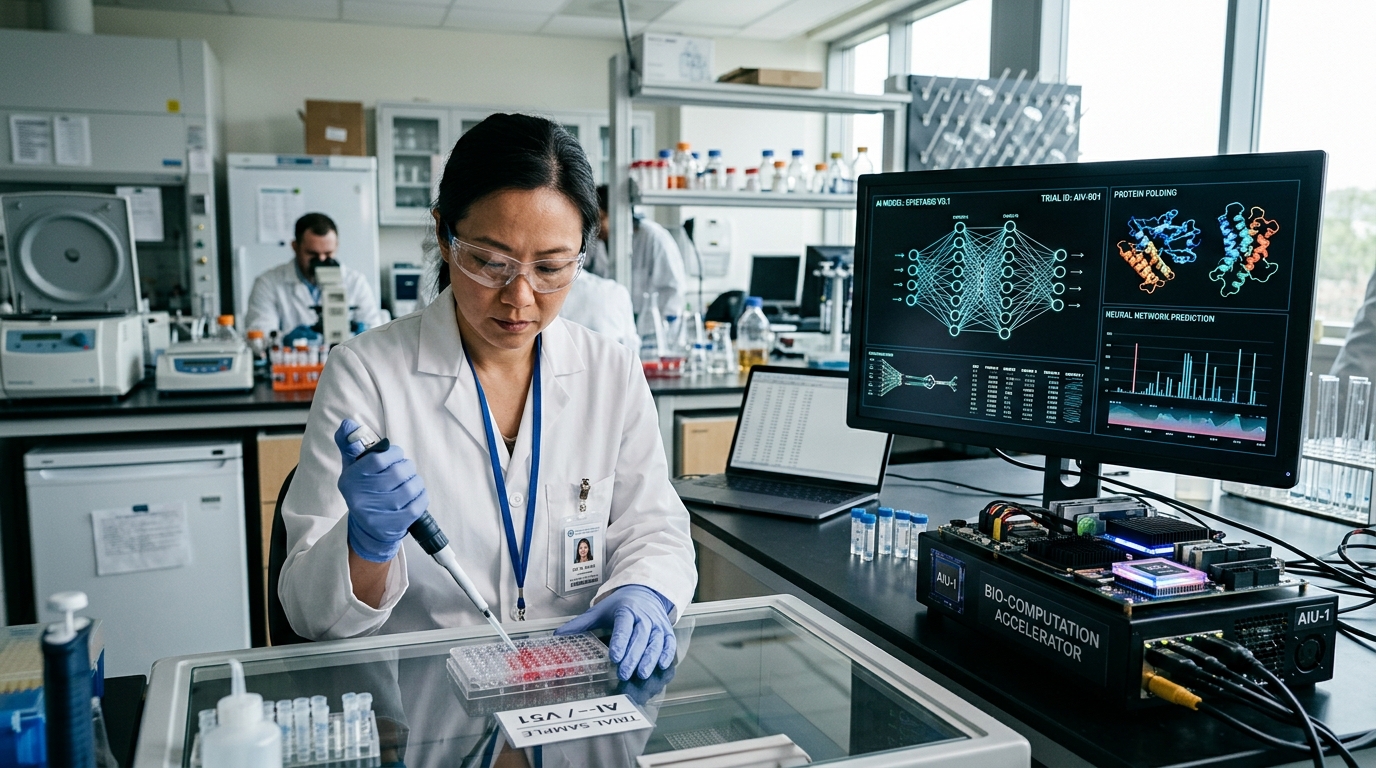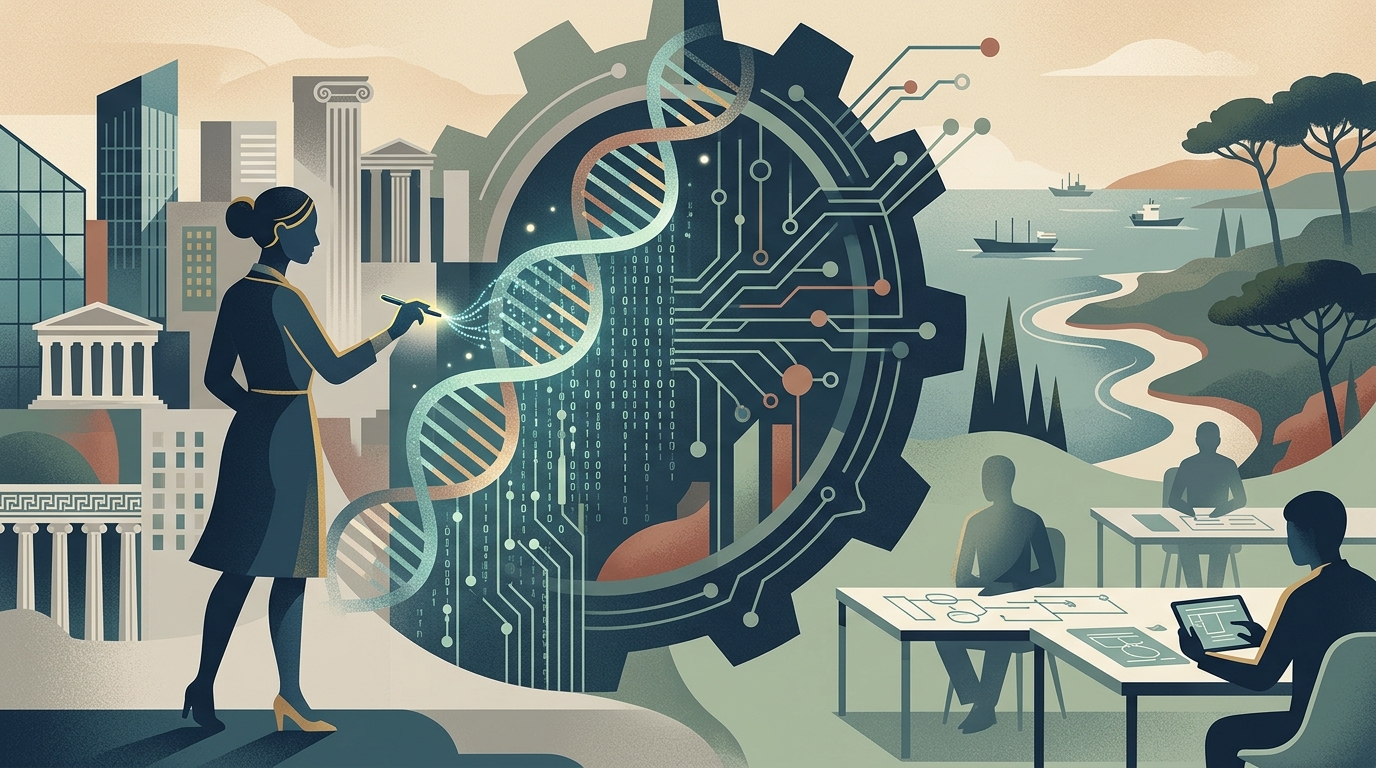
The era when Artificial Intelligence (AI) was a distant vision for the medical community has passed irreversibly. Today, the integration of machine learning algorithms into clinical genetics is a tangible reality that is radically transforming diagnosis, treatment, and disease prevention. Ioanna Michalopoulou, a distinguished lawyer specializing in Health and Life Sciences Law, emphasizes that we are no longer at the gates, but within a new era where DNA code meets software code.
From Theory to Clinical Practice
The analysis of the human genome has always produced a volume of data impossible for the human mind to manage unaided. AI fills this gap, offering speed and precision that were previously considered unthinkable. According to Ms. Michalopoulou, the use of AI in genetics allows for the identification of rare mutations in record time, facilitating early intervention in conditions such as cancer or rare genetic disorders.
This transition, however, is not just technological; it is primarily structural. Medical practice is moving from a "one size fits all" model toward personalized precision medicine. In this context, AI acts as a "smart assistant" capable of predicting how a specific patient will respond to a treatment based on their genetic profile, minimizing side effects and maximizing therapeutic benefit.
The Legal Framework and Physician Responsibility
One of the greatest challenges highlighted by Ms. Michalopoulou is the legal status governing these technologies. With the implementation of the European Union's AI Act, AI applications in healthcare are often classified as "high risk." This entails strict requirements regarding transparency, traceability, and human oversight.
- Algorithmic Transparency: The need to understand how an algorithm reached a diagnosis is critical for the trust of both patient and physician.
- Data Protection: Genetic data is the most sensitive form of personal data. Compliance with GDPR is not just a formal obligation but a foundation of medical ethics.
- Civil Liability: Who is responsible for an error? The programmer, the manufacturer, or the doctor who followed the AI's recommendation?
Ms. Michalopoulou stresses that the physician remains the ultimate decision-maker. AI does not replace clinical judgment; it enhances it. However, legal liability becomes complicated when a doctor is called to explain a decision based on a "black box" algorithm that they may not fully understand themselves.
The Greek Reality and Perspectives
In Greece, the adoption of these technologies is at a critical crossroads. While there are exceptional scientists and research centers, bureaucracy and the lack of a unified digital health record act as deterrents. Ms. Michalopoulou points out that for our country to reap the benefits of AI in genetics, the creation of a secure health data ecosystem is required.
"Artificial Intelligence in Genetics is not a future science fiction scenario. It is the tool we are already using to save lives, and our legal shielding must run at the same speed."
Investment in the education of doctors and lawyers is essential. Understanding bioethics in the digital age will determine whether AI will be a tool for the democratization of health or a factor in new inequalities. Ms. Michalopoulou concludes by noting that innovation must always serve humanity, ensuring that technological progress does not sacrifice the privacy and dignity of the patient.