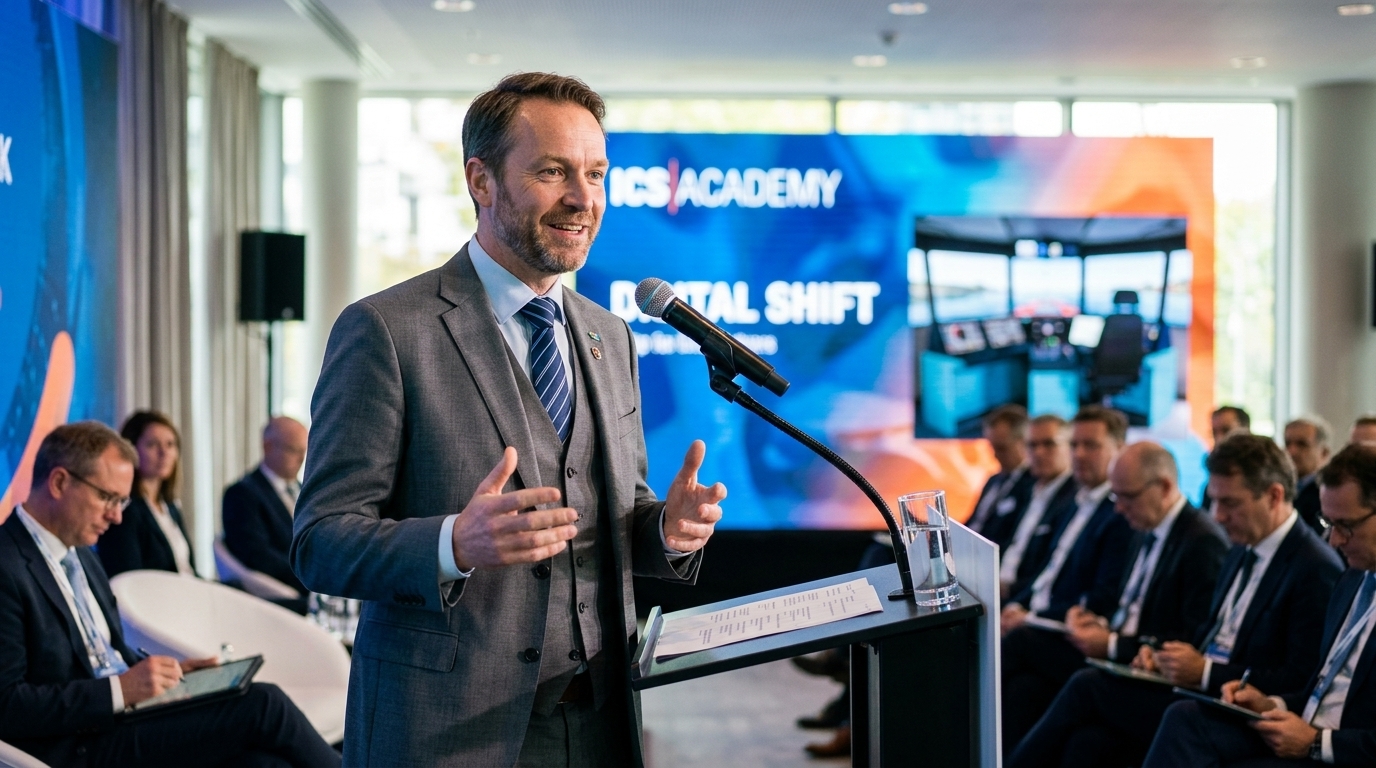
In an era where the shipping industry faces its most significant challenges in decades—from decarbonization to the full digitalization of its operations—the need for a highly skilled and properly trained workforce has never been more urgent. The International Chamber of Shipping Academy (ICS Academy) recently announced a strategic shift toward experiential and activity-centric digital training, responding to poll findings that show seafarers are demanding more meaningful engagement with educational content.
The Fatigue of Passive Learning
For years, online training in the maritime sector relied heavily on static presentations and videos that seafarers were expected to watch during their rest periods or limited time ashore. This model, known as "passive learning," has begun to show its limits. "Screen fatigue" and a lack of interaction often lead to low information retention rates, which in the maritime world can have fatal consequences.
According to Thomas Kazakos, Director General of the Cyprus Shipping Chamber and a prominent ICS figure, the transition to a model where the learner is at the center of the action is not just a preference but a necessity. The Academy's recent poll revealed that the vast majority of crews prefer scenarios that simulate real bridge or engine room conditions over simply reading digital manuals.
Technology Serving the Experiential Journey
The ICS Academy’s new approach integrates advanced tools that transform training into an interactive experience. This includes:
- Scenario-Based Simulations: Seafarers are required to make decisions at critical moments, with the system analyzing the consequences of their actions in real-time.
- Gamification: Using game mechanics to increase engagement and healthy competition among crew members.
- Micro-learning: Short, targeted modules that can be completed quickly, avoiding mental exhaustion.
The implementation of these methods is not just about convenience; it is about a deeper understanding of new environmental regulations and cybersecurity. With the introduction of new fuels like ammonia and hydrogen, risks increase, and traditional training is no longer sufficient to bridge the knowledge gap.
The Human Element and Safety
"Technology on board is evolving faster than the training methods for the people operating it. We must bridge this gap immediately," industry analysts state.
The statistics are relentless: 75% to 96% of maritime accidents are attributed to human error. Experiential learning aims exactly there—at reducing error through "action memory." When a seafarer has "lived" an emergency in a digital environment, their real-world reactions are calmer and more precise.
Furthermore, investing in the quality of training is a key pillar for crew retention. In a labor market where officers are in high demand, companies that offer modern and engaging development tools gain a competitive advantage. The ICS Academy, through its platform, seeks to set a global standard that shipping companies worldwide will follow, ensuring that training is no longer seen as a "chore" but as an essential and attractive career tool.
Challenges and the Path Forward
Despite the advantages, the transition to experiential digital learning is not without challenges. Connectivity on ships, though improved thanks to systems like Starlink, remains an issue in certain regions. Additionally, creating high-quality interactive content requires significant investment and collaboration between maritime experts and software developers.
However, the message from the ICS Academy is clear: The future of maritime education is digital, interactive, and strictly connected to practice. Greek shipping, as a global leader, is expected to be at the forefront of adopting these standards, enhancing the safety and efficiency of the global fleet.