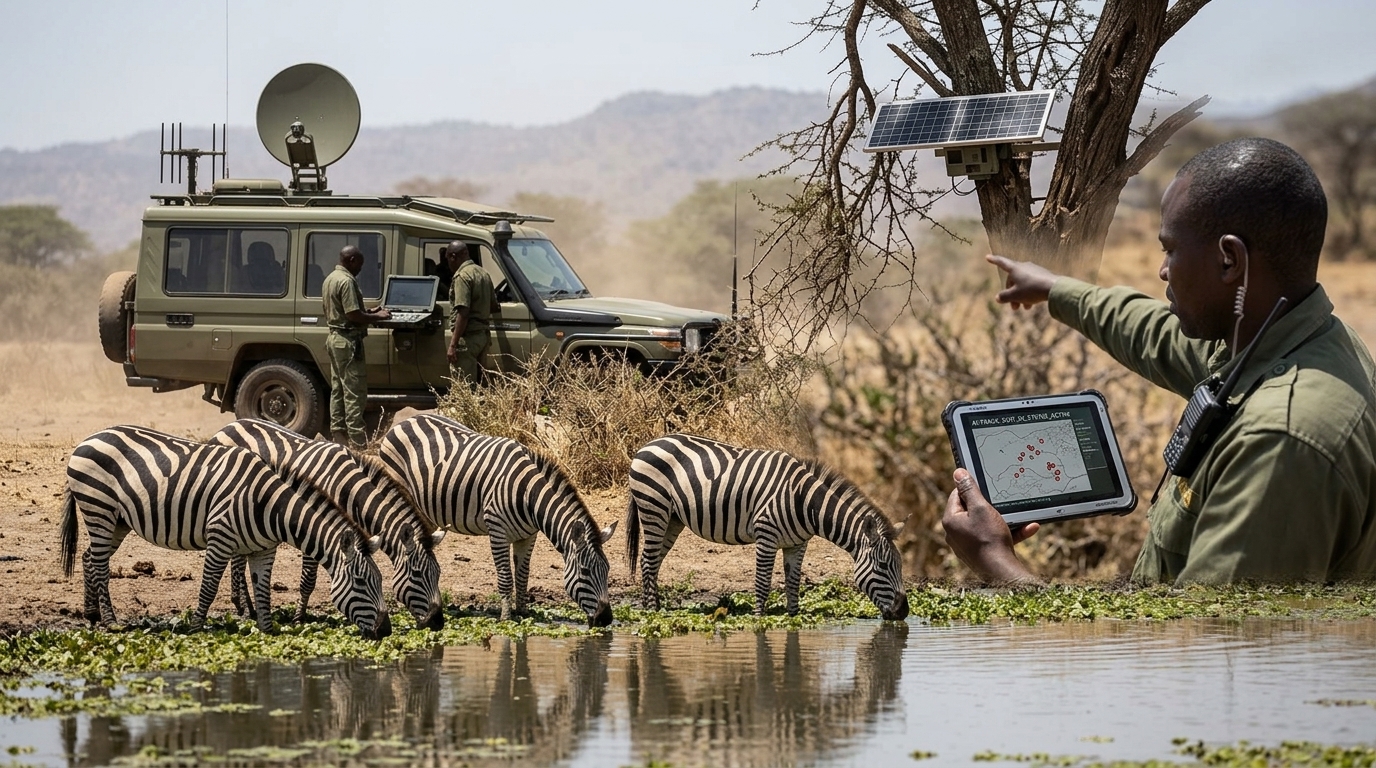
Deep within the African savannah and the dense rainforests of Southeast Asia, an invisible war has been raging for decades. Poaching, a multi-billion dollar industry fueled by the illegal wildlife trade, has pushed iconic species to the brink of extinction. However, traditional patrolling by rangers often proves insufficient against the vast scale of protected areas. This is where Artificial Intelligence (AI) enters the fray—not merely as a recording tool, but as a digital 'translator' of animal behavior that can predict the presence of intruders before the first shot is even fired.
The 'Internet of Animals' and Behavioral Sensors
The core concept behind this new technological approach is the so-called 'Internet of Animals.' Through advanced GPS collars equipped with accelerometers and motion sensors, scientists can now monitor animal activity in real-time. AI takes on the task of analyzing this data, learning the 'normal' behavioral profile of an elephant, a rhinoceros, or a zebra. When a poacher approaches, animals react in specific ways: sudden bursts of speed, abrupt changes in herd direction, or even spikes in heart rate.
Machine Learning algorithms are trained to recognize these 'panic patterns.' Unlike human observers, AI can process data from thousands of animals simultaneously, identifying anomalies that would be impossible to spot with the naked eye. This 'biometric surveillance' turns the animals themselves into mobile sensors that alert authorities to threats, creating a living shield of protection.
From Reaction to Prediction: The SMART Model
The use of AI is not limited to monitoring animals; it extends to predicting the movements of poachers. The SMART (Spatial Monitoring and Reporting Tool) system, used in hundreds of protected areas worldwide, combines historical poaching data, topographical features, and satellite imagery. AI analyzes where and when poachers are most likely to appear, allowing rangers to plan strategic patrols.
- Trail Analysis: Algorithms calculate the most likely escape routes for poachers based on terrain elevation and cover.
- Acoustic Surveillance: Smart microphones in forests recognize the sounds of chainsaws, gunshots, or vehicle engines, sending immediate GPS coordinates.
- Thermal Imaging Drones: AI-equipped drones scan the ground at night, distinguishing the thermal signature of a human from that of an animal within seconds.
This shift from reactive to proactive protection is crucial. In the past, rangers often arrived at the scene after the damage was done. Now, technology enables them to intervene preemptively, saving lives and preventing crime before it is completed.
Challenges and the Ethical Dilemma of 'Digital Nature'
Despite the successes, integrating AI into wildlife conservation is not without its challenges. The greatest threat is the so-called 'Poaching 2.0.' There is a risk that poachers could gain access to this data through cyberattacks, using the very technology designed to protect animals to track them more easily. Data encryption and cybersecurity, therefore, become as vital as the algorithms themselves.
"Technology is a force multiplier, but it cannot replace the human presence on the ground. AI gives us the eyes, but humans remain the heart of conservation," say experts from Save the Elephants.
Furthermore, the issues of cost and maintenance are significant. In many developing nations, the infrastructure to support high-tech networks is lacking. Dependence on Western tech giants could also create new forms of inequality in natural resource management. However, advancements in 'Edge AI'—where data processing occurs directly on the sensor without the need for a constant internet connection—offer hope for more autonomous and cost-effective solutions.
The Future: A Symbiotic Relationship
The case of AI in the fight against poaching is a classic example of how the Fourth Industrial Revolution can serve biodiversity. As algorithms become more sophisticated, we will be able to understand not only when an animal is in danger, but also how climate change affects their migration and survival. Artificial Intelligence is not just a nature warden; it is a new way for humanity to finally listen to what animals have to say about the world we share.