Greece is once again facing the phenomenon of prolonged heatwaves, a reality that is no longer an exception but the rule of the climate crisis in the Mediterranean. While most citizens focus on the efficiency of their air conditioning units, a critical parameter often remains in the dark: the heat generated by the electronic appliances themselves within the home. This is not just about the cost of electricity, which remains highly volatile in the Greek market, but about a "thermal self-feeding" phenomenon where our appliances force the AC to work overtime to neutralize their own heat emissions.
The Kitchen and Bathroom Culprits
The kitchen is the heart of a home's thermal load. The traditional oven, even with the best insulation, releases vast amounts of heat into the environment, which can raise the temperature of an open-plan space by 2 to 4 degrees Celsius. During a heatwave, using the oven at noon is energy suicide. Experts suggest switching to alternatives like air fryers or microwave ovens, which heat the food directly and not the air around them, consuming up to 70% less energy.
Similarly, dishwashers and washing machines, when operated at high temperatures, release steam and heat. Humidity is the greatest enemy of comfort during a heatwave, as it makes the perceived temperature feel much higher than the actual one. The use of these appliances should be strictly limited to post-midnight hours, when external temperatures drop and the power grid is under less pressure.
The "Standby Load" Phenomenon and Technology
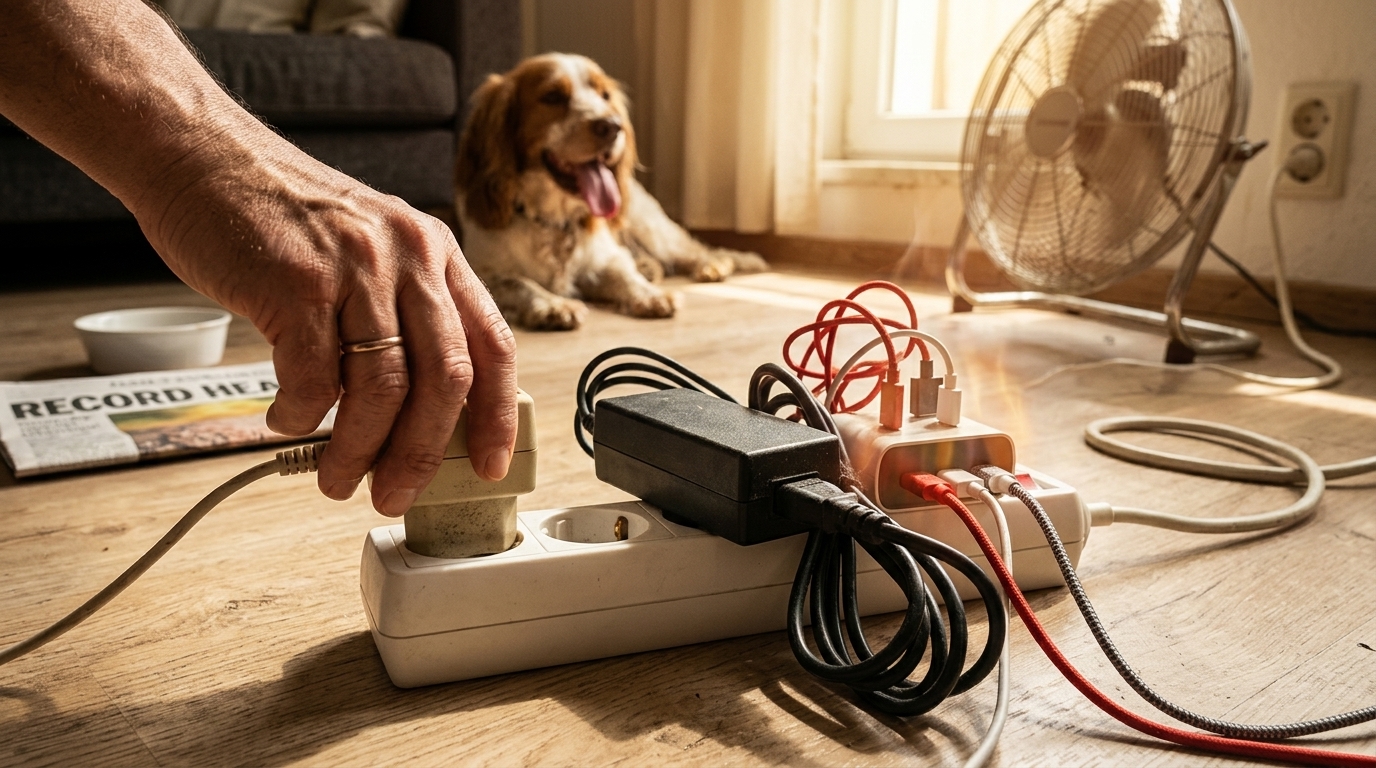
One of the most overlooked sources of heat is appliances in standby mode. Although the consumption of a TV or computer in standby seems negligible, the accumulation of many such devices creates a constant thermal footprint. Gaming consoles, desktop computers with powerful power supplies, and large OLED/LED screens act as small radiators. Even chargers left in the socket without being connected to a device convert energy into heat through their transformers.
- Computers and Gaming: A high-end PC can emit heat equivalent to a small 300-500 Watt heater.
- Lighting: Old incandescent bulbs convert 90% of energy into heat and only 10% into light. Replacing them with LEDs is mandatory.
- Refrigerators: A fridge with dusty coils at the back works harder, venting more heat into the room to maintain internal cooling.
The Economic Dimension and Survival Strategy
In Greece, where wholesale electricity market prices often peak during hours of maximum demand (12:00 - 18:00), the unnecessary use of heat-generating appliances doubles the cost. The air conditioner, trying to compensate for the heat from the kitchen or the TV, consumes up to 30% more power. The "unplugging" strategy is not just ecological advice, but a move for economic survival.
Furthermore, appliance maintenance plays a decisive role. An air conditioner with dirty filters or low refrigerant levels not only fails to cool effectively but overheats itself, increasing the thermal load on the building's exterior wall. A holistic approach to home management—closed shutters, unplugging devices, and using fans to circulate already cooled air—is the only sustainable solution for the summers to come.