In a move that signals the end of one era and the dawn of another, Fourlis Group, one of the leading retail groups in Greece and the Balkans, has announced a technological and operational restructuring of unprecedented scale. During the recent Annual General Meeting of shareholders, the Group's Chairman, Mr. Vasilis Fourlis, clearly outlined the vision behind a "one-off and non-recurring" expenditure of 10.7 million euros. This amount, while weighing on short-term financial results, represents the Group's ticket to full digitalization and operational fortification against global competition.
The Transition to SAP S/4HANA: The Backbone of the New Model
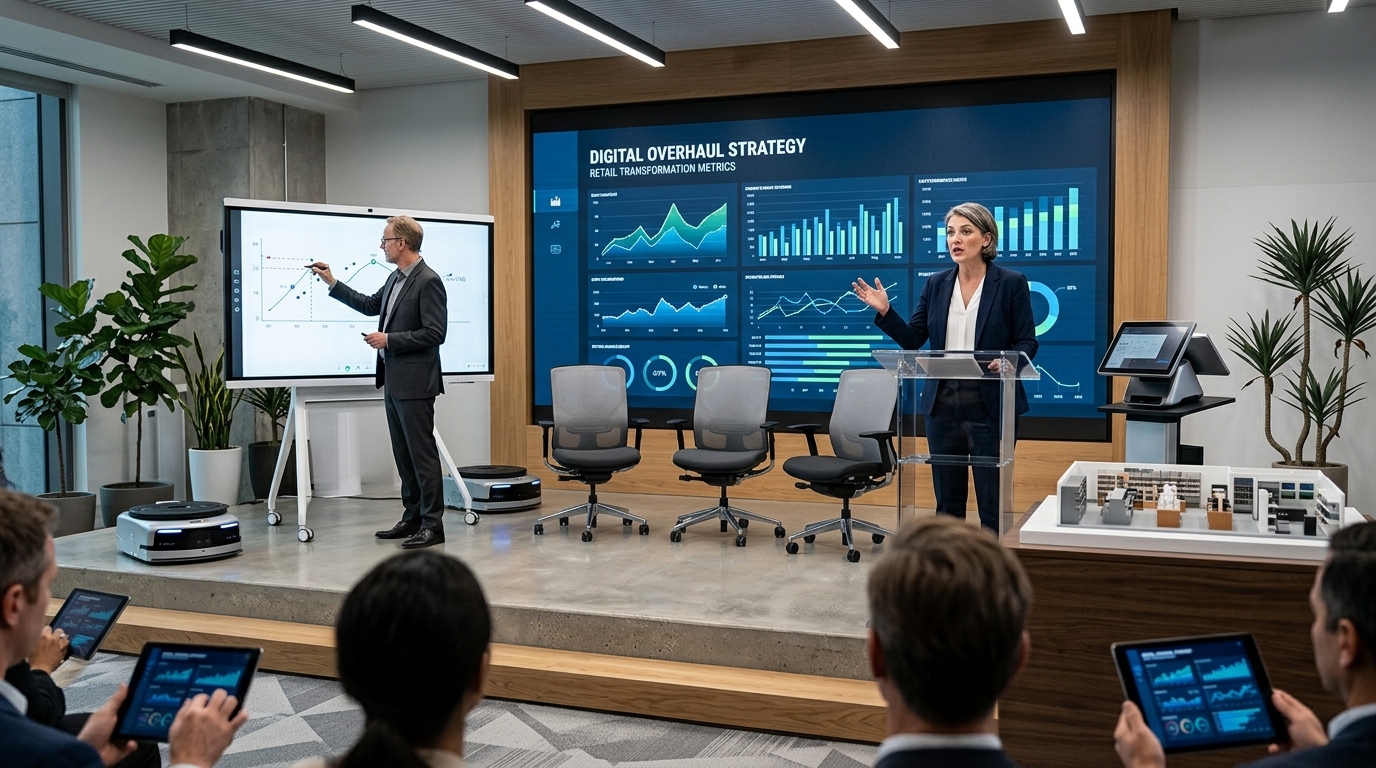
The centerpiece of this massive investment is the adoption and implementation of the advanced SAP S/4HANA system. This is not merely a software upgrade, but a radical shift in how the Group manages data, the supply chain, and customer relations. In modern retail, decision-making speed and forecast accuracy are the elements that separate winners from losers. With the new system, Fourlis aims to unify the operations of IKEA, Intersport, and Foot Locker under a single, agile digital umbrella.
This transition, however, is not without its challenges. The €10.7 million "one-off cost" covers not only the cost of licenses and technical implementation but also extensive staff retraining and the reorganization of internal processes. Mr. Fourlis emphasized that the decision to recognize this cost as a one-off expenditure is an honest approach toward investors, separating organic profitability from the necessary structural changes that will bear fruit in the coming years.
Logistics and Omnichannel: The Battle for Customer Experience
Beyond software, the restructuring also concerns the Group's physical presence. The "omnichannel" strategy is no longer an option but a necessity. Fourlis Group is investing in new logistics centers and automated sorting systems to drastically reduce delivery times for online orders. The customer experience must be seamless, whether they are buying a sofa from IKEA via their mobile phone or trying on shoes at an Intersport store.
- Optimization of stock management to reduce storage costs.
- Enhancement of click-and-collect services gaining ground in the Greek market.
- Automation of returns, one of the largest costs in e-commerce.
- Integration of loyalty schemes for a better understanding of consumer habits.
The organizational restructuring also includes merging departments and simplifying the administrative structure. The goal is a more agile organization that can react immediately to market fluctuations, such as inflationary pressures or changes in household disposable income. The Group's ability to maintain competitive prices, especially at IKEA, depends directly on the efficiency of these internal changes.
The Economic Semiology of the Investment
The market received the news with cautious optimism. While the €10.7 million expenditure affects the fiscal year's net profits, analysts recognize that staying on legacy systems would cost much more in the long run. Fourlis Group seems to choose the difficult path of self-reflection and renewal over stagnation. Upon completion of this program, the Group expects a significant improvement in EBITDA margins from 2027 onwards, as economies of scale and digital efficiency begin to pay off.
"This is not just an expense; it is the foundation of the Group for the next twenty years," Vasilis Fourlis noted characteristically.
In conclusion, Fourlis Group's move serves as a case study on how traditional retail players in Greece are called to transform. In an environment where Amazon and other international giants squeeze profit margins, technological superiority is not a luxury but a prerequisite for survival. The question that remains to be answered is the speed at which these new systems will be assimilated into daily operations and whether the consumer will ultimately receive an improved and more affordable shopping experience.