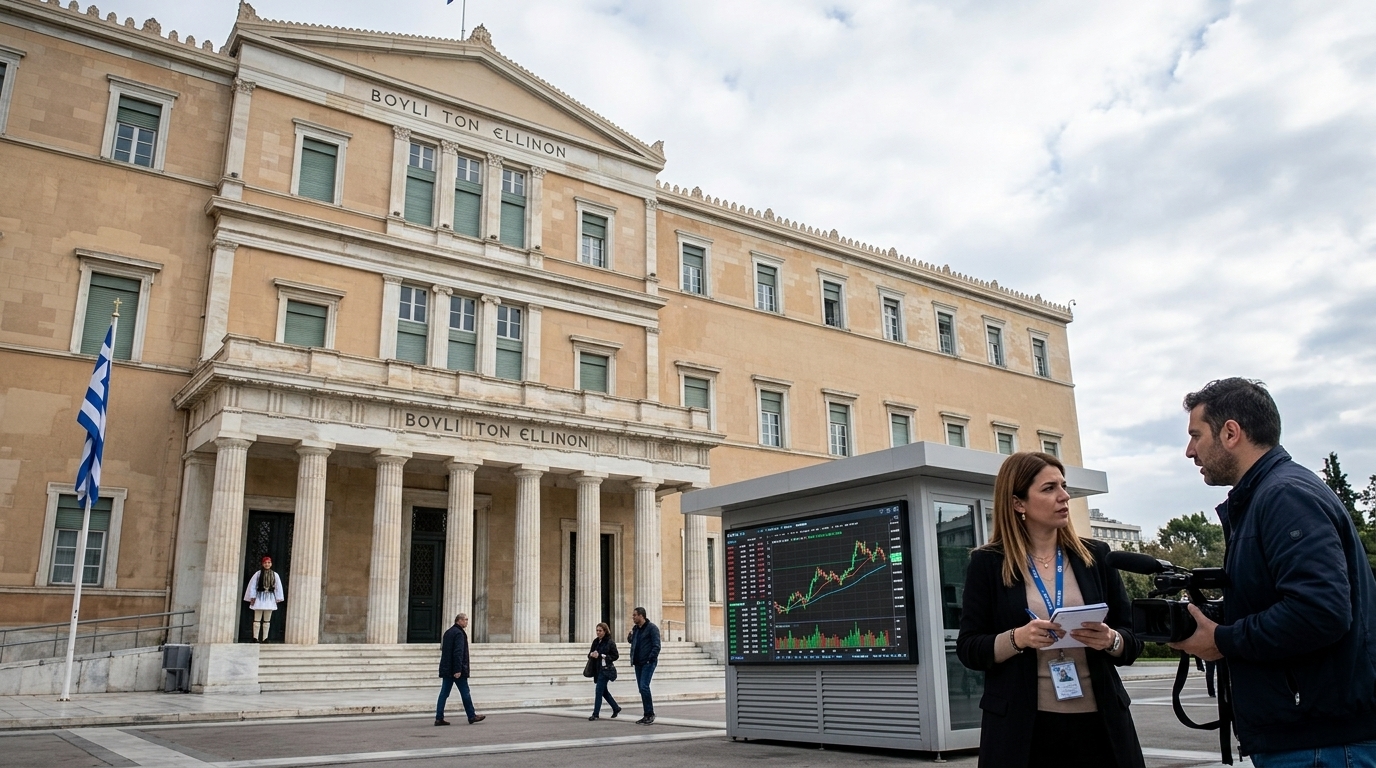
In a global economic landscape fraught with uncertainty, Fitch Ratings' decision to affirm Greece's Long-Term Foreign-Currency Issuer Default Rating (IDR) at 'BBB+' with a stable outlook serves as a significant endorsement of the country's fiscal trajectory. This affirmation, coming in May 2026, reinforces the narrative of a Greek economy that has successfully transitioned from the 'pariah' of the Eurozone to a model of fiscal discipline and resilience.
Fitch’s analysis points to a combination of robust growth, disciplined spending, and a clear commitment to structural reforms. As Greece navigates the midpoint of 2026, the focus has shifted from mere survival to sustainable expansion, heavily underpinned by the strategic deployment of the Recovery and Resilience Facility (RRF) funds. The rating agency acknowledges that Greece’s fiscal performance continues to exceed expectations, providing a necessary buffer against external shocks.
Fiscal Consolidation and Debt Dynamics
The cornerstone of Fitch's positive assessment is Greece's impressive pace of debt reduction. The debt-to-GDP ratio is projected to continue its downward trend, fueled by primary surpluses and nominal GDP growth. Unlike previous years where growth was driven primarily by consumption, the current phase shows signs of increased fixed capital formation, a crucial ingredient for long-term stability.
- Projected decline of the debt-to-GDP ratio toward 140% by the end of 2026.
- Consistent primary surpluses exceeding 2.1% of GDP.
- Successful implementation of digital tax reforms increasing state revenue.
- Stable political environment ensuring policy continuity and investor confidence.
However, Fitch cautions that the sheer volume of public debt remains a structural vulnerability. While the maturity profile is favorable and the interest rate burden is manageable due to the high proportion of official sector debt, any significant slowdown in growth or a reversal in fiscal policy could reignite concerns about long-term sustainability. The agency emphasizes that maintaining the current momentum is non-negotiable for future upgrades.
The Banking Sector: From Weak Link to Growth Engine
A pivotal factor in the BBB+ affirmation is the continued improvement of the Greek banking sector. The reduction of Non-Performing Loans (NPLs) has been nothing short of dramatic, with major institutions now boasting single-digit ratios. This cleanup has restored the banks' ability to access international capital markets and, more importantly, to start lending to the domestic economy again.
"The normalization of the Greek banking system is perhaps the most visible indicator of the country's departure from the crisis era," the report notes.
Despite this progress, the transmission of monetary policy remains a challenge. High interest rates, while beneficial for bank margins, have increased the cost of capital for small and medium-sized enterprises (SMEs). Fitch notes that for Greece to achieve a higher rating, the financial sector must demonstrate it can facilitate broad-based investment beyond the tourism and real estate sectors, fostering a more diversified economic base.
Structural Headwinds: Demographics and Productivity
Looking beyond the immediate fiscal successes, Fitch identifies significant long-term risks. Chief among these is Greece's demographic profile. An aging population and a shrinking labor force pose a direct threat to the pension system and the country's potential growth rate. The "brain drain" of the previous decade has left a gap in specialized skills that is only now beginning to be addressed through repatriation incentives and educational reforms.
Furthermore, labor productivity remains a laggard compared to Eurozone peers. The Greek economy is still heavily dependent on low-complexity services. Fitch argues that the next stage of Greece's economic evolution must involve a significant increase in high-value-added exports and technological integration. Delays in judicial reforms and bureaucratic inefficiencies continue to act as a drag on the business environment, potentially deterring high-quality foreign direct investment.
In conclusion, while the BBB+ rating confirms that Greece is on the right track, it also highlights that the "last mile" of economic transformation is often the most difficult. The stable outlook suggests that Fitch expects policy continuity, but the path to an 'A' grade will require tackling the deep-seated structural issues that have historically hampered Greek competitiveness.