On Sunday afternoon, the asphalt of the Peloponnese was once again stained with blood. A tragic accident on the Tripoli-Corinth National Highway, near the Nemea junction, claimed the life of a woman, adding another name to the long list of victims on Greek roads. This incident, while seemingly another isolated event, is a symptom of a deeper systemic failure: our inability to guarantee the fundamental right to safe travel.
The Anatomy of the Tragedy in Nemea
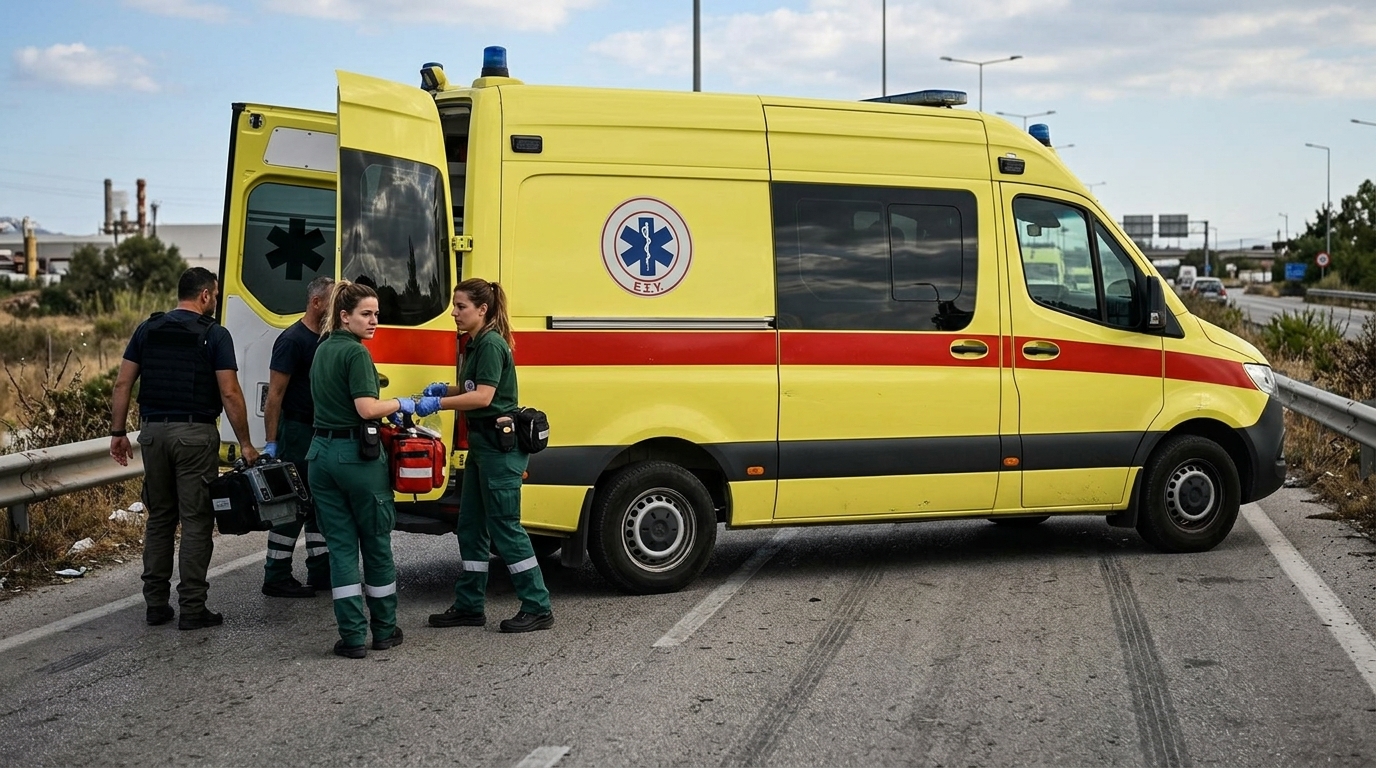
According to initial reports from authorities and local media, the accident occurred under circumstances currently being investigated by the Central Peloponnese Highway Traffic Department. The collision was severe, and despite the immediate mobilization of the National Emergency Center (EKAB) and the Fire Service, the unfortunate woman could not be saved. Rescuers arriving at the scene faced a harrowing sight, with the vehicle reduced to a mangled mass of metal.
The Nemea junction, though modern in its design as part of the "Moreas" motorway, requires particular caution due to the flow of traffic and the speeds involved. The official investigation is expected to clarify whether mechanical failure, human error, or road conditions played a decisive role in this fatality.
Greece's Road Safety Deficit: A Statistical Anomaly
Despite significant improvements to the national road network over the past two decades, Greece continues to exhibit high mortality rates in road accidents compared to the European Union average. Data from ELSTAT and the European Transport Safety Council (ETSC) consistently show that Greece records more deaths per million inhabitants than countries like Sweden or the Netherlands.
- A lack of continuous driver education and re-evaluation.
- An aging fleet of vehicles on the roads.
- Hazardous spots in the secondary road network.
- A culture of "impunity" regarding violations such as speeding and mobile phone use.
The specific section of the Corinth-Tripoli motorway is considered one of the most modern in the country, which makes the fatality even more concerning. When deaths occur on roads with median barriers and controlled access, the problem shifts from infrastructure to driver behavior and enforcement.
AI Technology as a Protective Shield
At The AI Chronicle, we believe technology is not just a tool for convenience but a critical survival factor. Artificial Intelligence can play a pivotal role in preventing such tragedies. Intelligent Transport Systems (ITS) can analyze traffic in real-time and warn drivers of hazards before they become visible.
"Road safety in the 21st century depends not only on concrete and asphalt but on data and the response speed of our systems," industry experts note.
Systems like eCall, which automatically notifies authorities in the event of a crash, are just the beginning. The implementation of accident prediction algorithms based on historical data and weather patterns could allow Traffic Police to make proactive interventions, such as dynamically reducing speed limits via digital signage.
Conclusion: A Collective Responsibility
Every death on the road is a failure of our system and our society. The accident in Nemea must serve as another reminder that road safety requires constant vigilance. From the state's perspective, stricter policing and investment in cutting-edge technologies are mandatory. From the citizens' perspective, a radical change in mindset is required. The tarmac is unforgiving, and technology, no matter how advanced, cannot replace prudence and respect for human life.