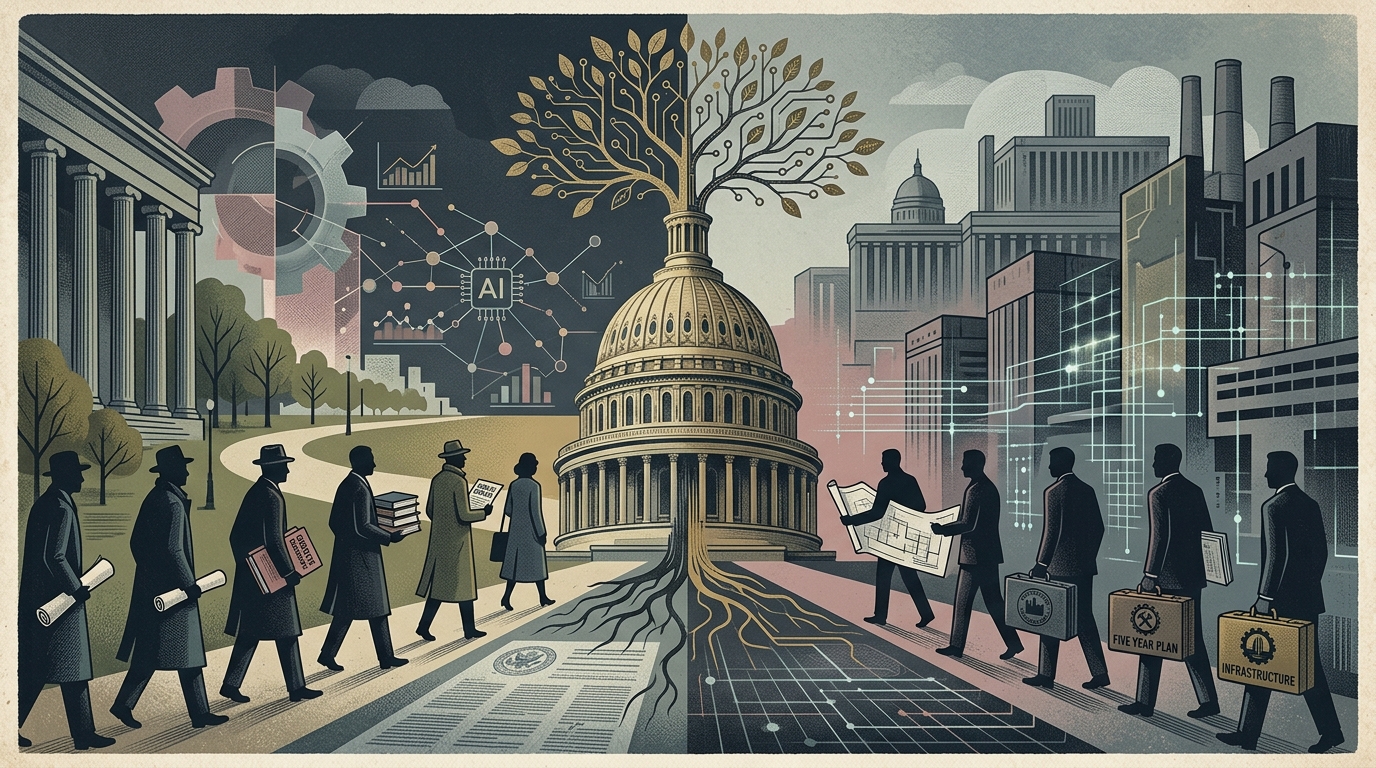
In politics, time is never a neutral dimension; it is either the ultimate weapon or the most dangerous trap. For Kyriakos Mitsotakis' government, the discussion surrounding early elections has become a persistent "noise" that the Maximos Mansion is struggling to silence. Despite the Prime Minister's repeated assurances that the polls will open at the end of the four-year term in 2027, the political temperature is rising, fueled by internal party balances, the upcoming presidential election, and social pressure stemming from the cost-of-living crisis.
The Trap of Election Speculation and Government Stability
The government's effort to put the brakes on election scenarios is not accidental. Experience has shown that when a government enters a prolonged pre-election period, the state machinery becomes paralyzed, investors adopt a wait-and-see attitude, and internal introversion takes hold. Within New Democracy (ND), this introversion manifests as "blue dilemmas," as MPs and officials try to determine whether the erosion of power will be reversible over the next two years or if a surprise move would be the optimal solution.
The primary argument from Maximos in favor of completing the term is institutional seriousness. In a period of geopolitical instability and economic challenges, Greece must signal stability. However, the reality is more nuanced. The decline in polling numbers, although ND remains dominant due to the lack of a strong opponent, is causing nervousness within the party's base. "Blue" MPs, especially in rural areas, are facing dissatisfaction over high prices and the agricultural crisis, leading them to wonder if time is now working against them.
The Presidential Election as a Catalyst
One of the most critical milestones on the horizon is the election of the President of the Republic in early 2025. Although the Constitution has been revised so that a failure to elect a President no longer automatically leads to the dissolution of Parliament, the process remains a top-tier political test. The choice of the candidate will be the ultimate test of the New Democracy parliamentary group's cohesion.
- The right-wing flank of the party is pushing for a candidate with clear center-right characteristics, seeking to "repatriate" voters who feel alienated by the shift toward the Center.
- The leadership group seems to prefer a figure who could garner broader consensus, maintaining the profile of "multi-collectivism."
- The stance of the two former prime ministers, Kostas Karamanlis and Antonis Samaras, remains the unpredictable factor that could accelerate developments.
The selection of the person will not merely be a symbolic move but a message about the direction Kyriakos Mitsotakis intends to follow until the end of his mandate. A choice that causes a rift within the party could, de facto, make early elections the only way out to renew the government mandate.
The Right-Wing Front and Social Dissatisfaction
Beyond the corridors of power, social reality poses its own dilemmas. The rise of parties to the right of New Democracy creates "pressure from below." The government is called upon to balance its reformist discourse with the need to satisfy the conservative audience on issues such as security, migration, and national interests. "Blue" introversion is fed by the perception that the government has moved away from the traditional values of its base.
"Stability is not immobility, but the ability to adapt to society's needs without losing your strategic goal," government sources state, attempting to manage impressions.
However, the economy remains the ultimate judge. Despite regaining investment grade status and positive growth rates, the "micro-economics" of the household are suffering. If the government determines that the wear and tear from inflation is irreversible, the scenario of an "electoral surprise" before dissatisfaction becomes entrenched will return forcefully to the meeting tables.
Conclusion: Mitsotakis' Strategic Timing
At this stage, Kyriakos Mitsotakis is betting on the "clear corridor" provided by the state of the opposition. With SYRIZA in a state of internal turmoil and PASOK trying to stabilize as the alternative pole, the Prime Minister has the advantage of choosing the moment of the showdown. The "blue dilemmas" are real, but for now, they function more as levers of internal pressure than as an immediate threat to government cohesion. The challenge for Maximos is to turn time from an enemy into an ally, proving that staying in power produces results and not just political survival.