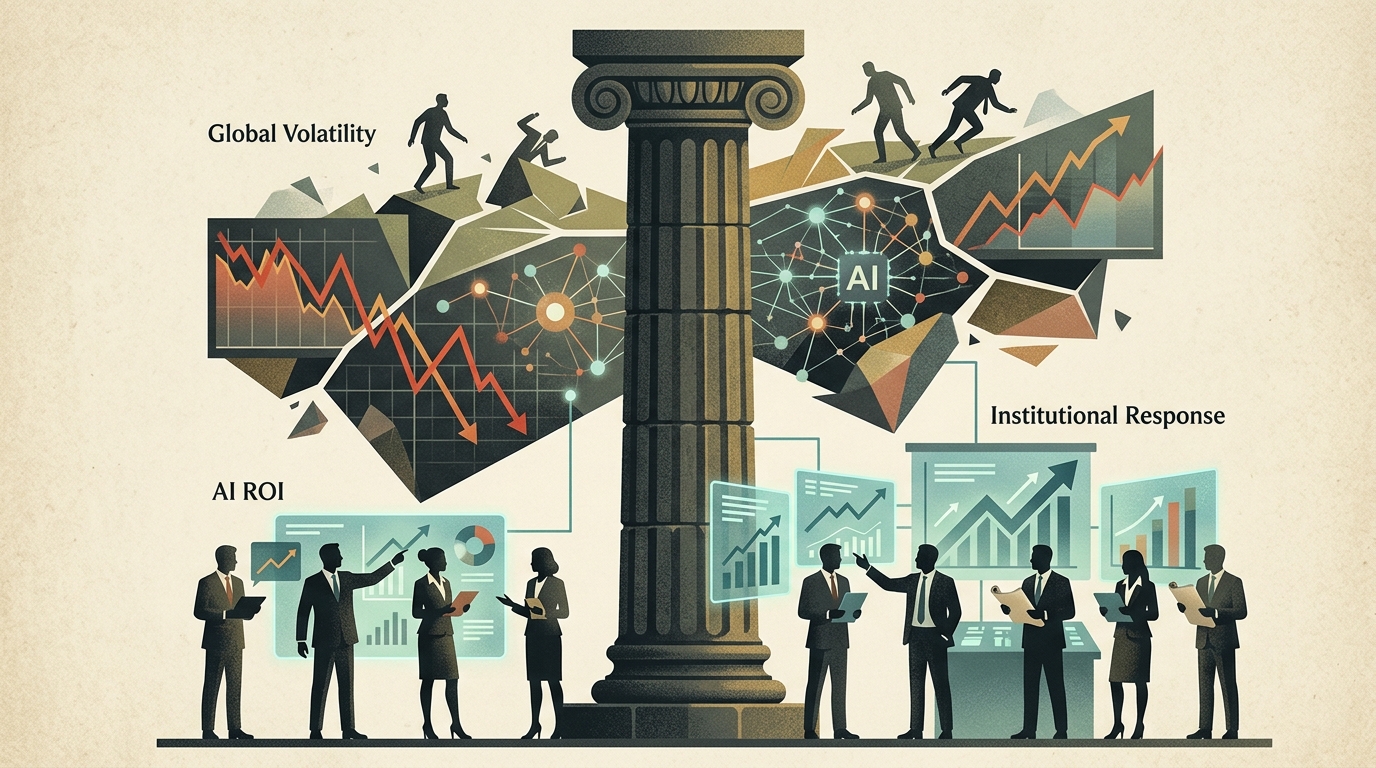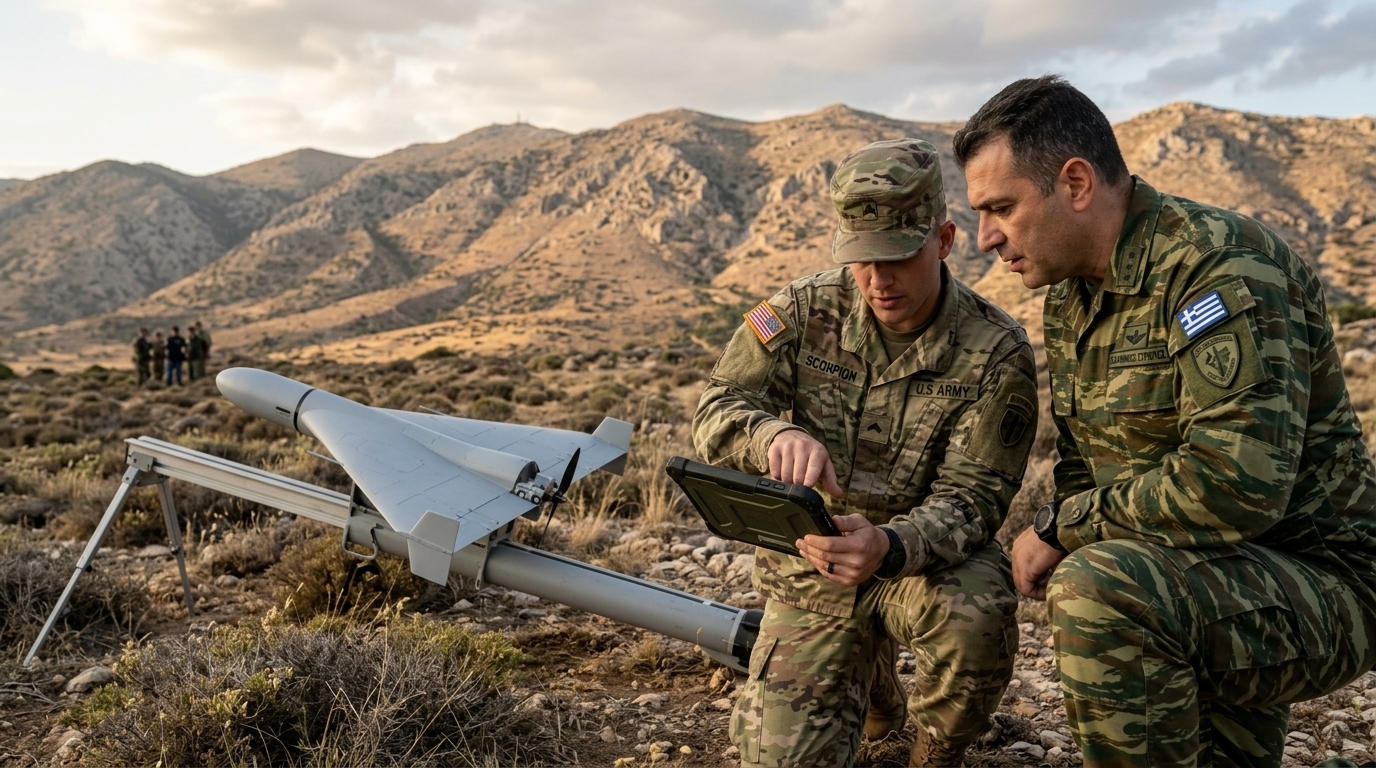
In an era where the battlefield shifts faster than ever, Greece is attempting a leap into the future. Defense Minister Nikos Dendias' visit to the United States is not a standard diplomatic engagement, but the starting point for integrating Artificial Intelligence (AI) and robotics into the core of national defense strategy. With 'Agenda 2030' as its compass, Athens seeks to transform the Armed Forces from a traditional structure into an agile, technologically advanced organization.
The Strategic Pivot: From F-35s to Algorithms
While the acquisition of F-35 fighter jets remains high on the agenda, Mr. Dendias recognizes that air superiority alone is no longer sufficient. His trip includes meetings with leading companies in Silicon Valley and the broader US defense industry, aiming to build an 'innovation ecosystem.' The focus has shifted to autonomous systems (drones), counter-drone systems, and, most importantly, the use of AI for real-time data processing.
Experience from the fronts in Ukraine and the Middle East has demonstrated that the quantity of equipment is secondary to the quality of information. Dendias aims to adopt systems that can identify threats before they are visible to the human eye, utilizing machine learning algorithms that analyze satellite imagery and radar signals at speeds of billions of calculations per second.
The Hellenic Center for Defense Innovation (ELAKAK)
A central role in this new architecture is played by the newly established Hellenic Center for Defense Innovation (ELAKAK). During his contacts in the US, the Minister seeks to build bridges between ELAKAK and American research centers, such as DARPA. The goal is the transfer of know-how and the co-development of systems to be produced in Greece. This approach changes the paradigm: Greece ceases to be merely an 'off-the-shelf' buyer and seeks to become a co-producer of cutting-edge technology.
- Development of domestic Unmanned Aerial Vehicles (UAVs) and underwater drones.
- Strengthening cyber defense to protect critical infrastructure.
- Creating 'smart' border surveillance systems.
Collaboration with companies like Anduril or Palantir, which are at the forefront of defense technology, could offer Greece the capability to develop solutions tailored to the unique geographical needs of the Aegean, where the archipelagic environment requires different approaches than the plains of Central Europe.
Geopolitical Footprint and Challenges
This move also carries deep geopolitical significance. Greece is positioning itself as the main pillar of stability and technological pioneering in the Eastern Mediterranean. Close cooperation with the US in the high-tech sector shields the country against revisionist powers that are also investing heavily in drones and AI. However, challenges remain. Bureaucracy, the need for specialized personnel, and the high maintenance costs of such systems require long-term commitment rather than just PR moves.
"We are not just buying weapons; we are investing in a new defense philosophy where man and machine collaborate for national security," ministry sources state.
In conclusion, Nikos Dendias' trip signals Greece's entry into the age of 'Digital Warfare.' If these contacts translate into action, the country could gain a strategic advantage based not just on the steel of tanks, but on the silicon of processors.