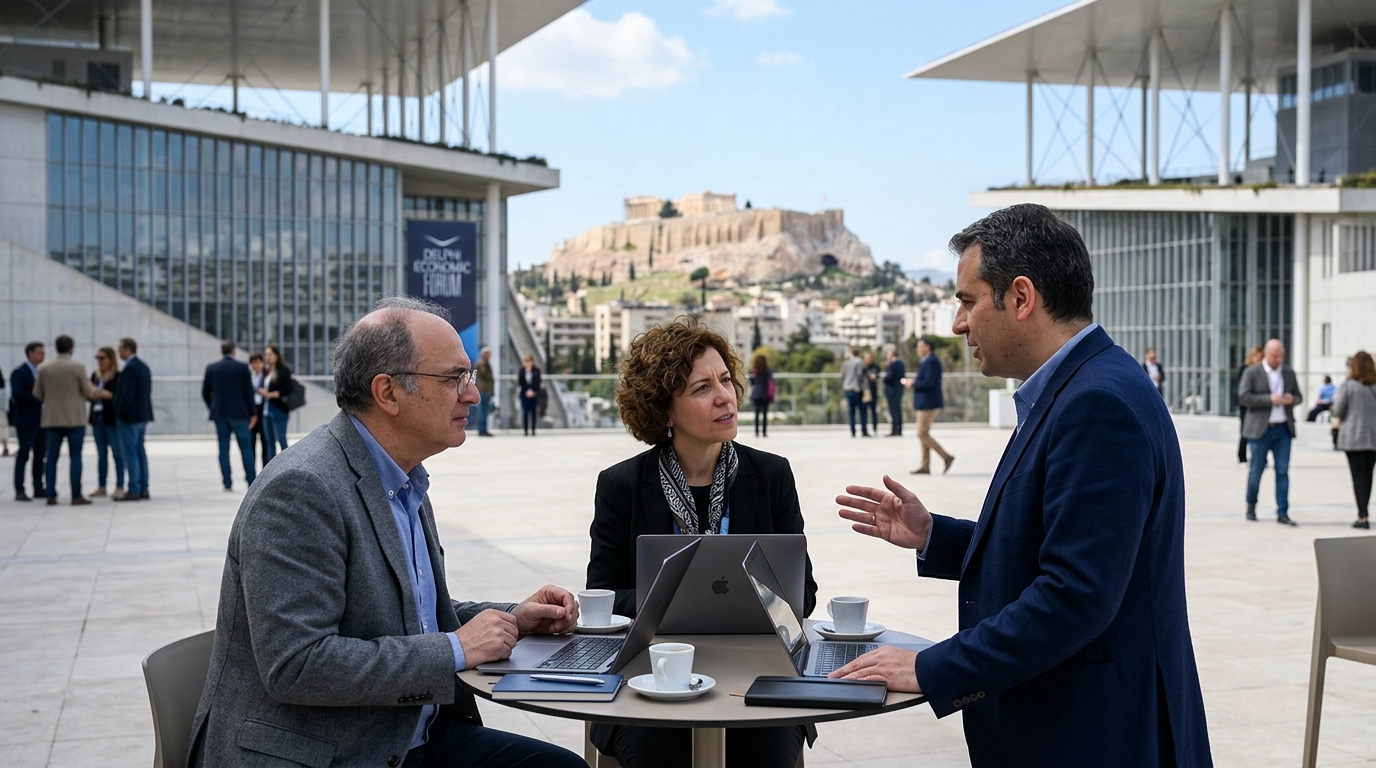
In the evocative landscape of Delphi, where the ancients once sought oracles to glimpse the future, today's political and technological elite gathered to confront one of the most enigmatic challenges of our era: Artificial Intelligence (AI) and the unchecked rise of deepfakes. This year's Delphi Economic Forum transcended mere investment plans and digital transformation narratives, focusing with a dramatic intensity on the erosion of truth in a world where audiovisual material is no longer a reliable testament to reality.
The Erosion of Trust and the Electoral Peril
Panelists in the cybersecurity and digital integrity sessions emphasized that 2026 marks a critical turning point. Following a global wave of elections where AI-driven misinformation played a starring role, the discussions at Delphi took on a sense of urgency. Deepfakes—AI-generated videos, images, and audio clips that depict individuals saying or doing things that never occurred—are no longer a theoretical threat but a potent tool for geopolitical destabilization.
As highlighted during the forum, the ease with which this content is now produced means that even amateurs can incite social unrest. The "democratization of deception," as one speaker labeled it, requires a new form of "digital immunity" from citizens. Greek government representatives from the Ministry of Digital Governance stressed the importance of media literacy, noting that technological countermeasures against deepfakes often lag behind the rapid pace of their creation.
Regulatory Frameworks and the EU AI Act
A central pillar of the discussions was the implementation of the European AI Act. Participants analyzed how the new regulations impose strict transparency obligations on AI content creators. Specifically, the mandatory watermarking of AI-generated content is seen as a necessary first step, though many experts at Delphi expressed skepticism about whether this will suffice to deter malicious actors operating outside EU jurisdiction.
The conversation extended to the responsibilities of major tech platforms. There was a consensus that social networks must play a more proactive role in identifying and removing content aimed at manipulating public opinion. However, the fine line between protecting against disinformation and imposing censorship remains a field of intense debate, with legal advisors warning against the risk of over-regulation that could stifle innovation within Europe.
Economic Implications and Corporate Ethics
Beyond politics, deepfakes pose a significant threat to the business world. Incidents of fraud where corporate executives "appear" in video calls to authorize fund transfers have surged. At the Delphi Forum, banking giants and tech firms discussed the necessity of investing in next-generation biometric security systems.
- Investment in real-time deepfake detection algorithms.
- Staff training to recognize digital manipulations.
- Public-private partnerships for sharing information on cyber threats.
The Greek business community appears to realize that security is no longer a cost but an investment in reputation and credibility. Consumer trust is the most valuable currency in the age of AI, and as it was poignantly stated, "a business that cannot prove the authenticity of its communication is a business without a future."
Conclusions from the "Navel of the World"
The conclusion of the AI sessions at Delphi left a bittersweet impression. On one hand, the technology offers incredible potential for medicine, energy, and productivity. On the other, the shadow of deepfakes serves as a reminder that human nature tends to weaponize every advancement in the pursuit of power. The challenge for Greece and Europe is to lead not only in AI development but also in establishing an ethical code that ensures truth remains the foundation of our social fabric.