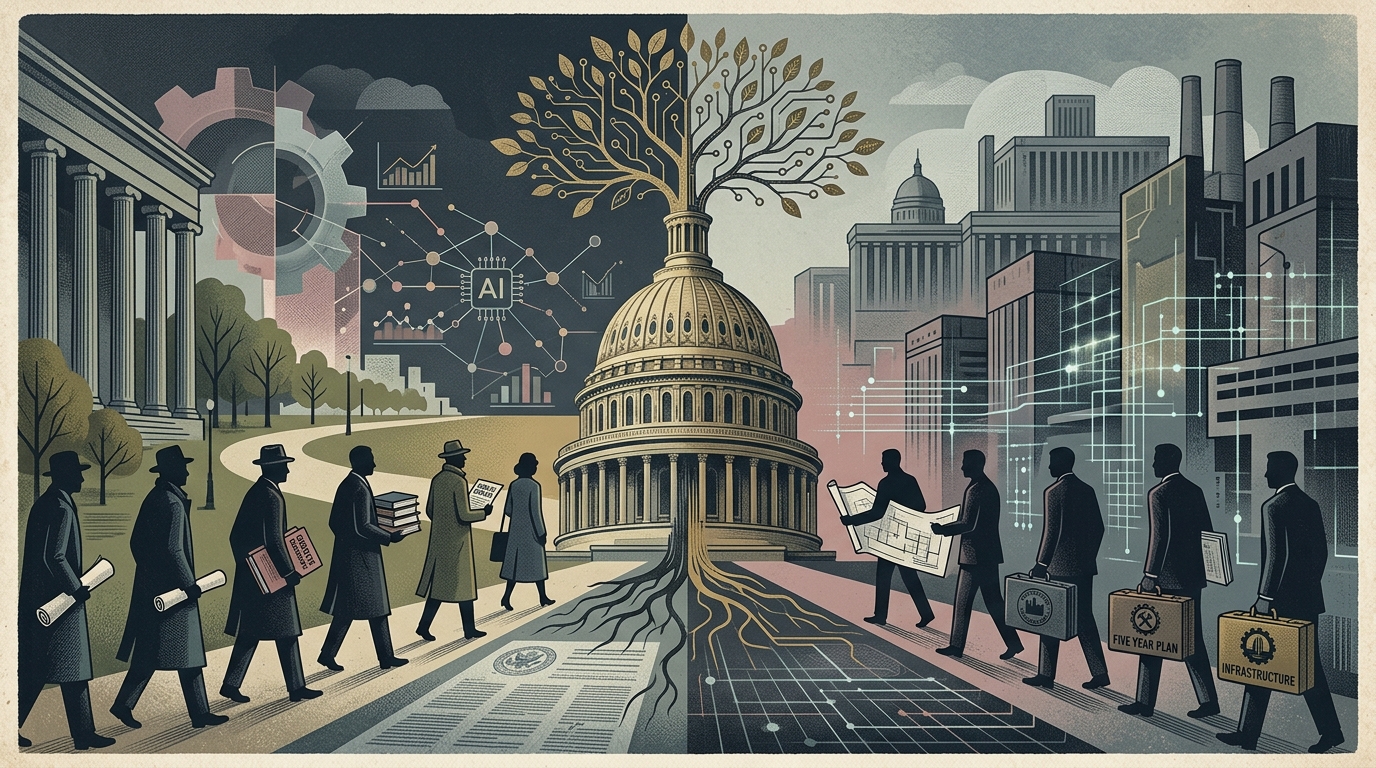
The European Commission’s recent assessment of the Greek economy brings a breath of relief, but also a stark reminder. On one hand, Greece appears as the Eurozone’s "star pupil" regarding fiscal discipline. The deficits of the past, which led to the decade-long crisis, are closing at rates that garner admiration in Brussels. However, beneath the surface of the numbers, another, more concerning image emerges: the gap of tomorrow—the gap in technology, innovation, and the productive model—remains not only open but potentially widening.
The Fiscal Comeback: A Victory of Yesterday
It is undeniable that Greece has traveled an impressive distance. Regaining investment grade status, reducing the debt-to-GDP ratio, and achieving primary surpluses are milestones that seemed unattainable just a few years ago. The European Commission recognizes that the country is no longer the "black sheep," but a pillar of stability in Southeast Europe. This success, however, primarily concerns correcting the mistakes of the past. It is the clearing of accounts for an era that ended violently in 2010.
The problem lies in the fact that fiscal consolidation, while a necessary condition, is not sufficient on its own to guarantee prosperity in a world being transformed by Artificial Intelligence and the green transition. As analysts note, "we are fixing our balance sheets, but we are not upgrading our engine." Growth based on consumption, tourism, and construction has an expiration date, especially when our competitors are investing billions in the "knowledge economy."
The Productivity Gap and Digital Lag
While fiscal deficits are shrinking, the "innovation deficit" remains alarmingly high. Greece still ranks low in the EU's Digital Economy and Society Index (DESI), despite significant steps in the digital transformation of the state (gov.gr). The difference is that the digital modernization of bureaucracy is not equivalent to the digital transformation of production.
- Investment in Research and Development (R&D) remains below the European average.
- Greek businesses, mostly small and medium-sized (SMEs), struggle to integrate cutting-edge technologies like cloud computing and data analytics.
- The lack of specialized personnel (ICT specialists) creates a "ceiling" on the growth potential of domestic tech companies.
This gap is what will determine Greece’s position in the international division of labor over the next twenty years. If we remain a low-value-added service economy, fiscal stability will merely be the prelude to a new marginalization.
The Recovery Fund: An Opportunity Not to Be Missed
The Recovery and Resilience Facility (RRF) is Greece's "weapon" to close this gap. However, the criticism leveled concerns the direction of these resources. There is a risk that funds will be channeled into infrastructure projects that simply maintain the existing model, rather than financing "explosive" innovation. The challenge is to move from the absorption of funds to their utilization in terms of a multiplier effect.
"It is not enough to build roads and ports; we must build the ecosystems that will produce the technology of tomorrow. Otherwise, we will be the best customers of foreign tech giants, paying with the surpluses we worked so hard to collect."
Human Capital and the Demographic Crisis
Finally, the largest gap of tomorrow is the demographic crisis and the brain drain. Greece is aging faster than most European countries, and its educational system remains disconnected from the needs of the modern labor market. The return of young scientists will not happen through subsidies, but through the creation of high-skill jobs that offer commensurate pay. If this gap is not bridged, fiscal health will apply to a country without dynamism—a "society of retirees" that will struggle to support the very welfare state it is trying to save.
Conclusion
Greece stands at a crossroads. Success on the front of yesterday's deficits is a necessary victory, but it is a tactical one. The strategic victory will be decided by whether we manage to turn fiscal security into a springboard for a radical economic transformation. The gap of tomorrow waits for no one, and the time to close it is running out.