In an era where geopolitical balances are shifting rapidly and technology is redefining every facet of the global economy, Christos Stylianides, the man at the helm of the Ministry of Maritime Affairs and Insular Policy, is tasked with managing one of the most critical transitions in the history of the Greek merchant fleet. Recent reports on Capital.gr regarding legislative initiatives to modernize the operational framework of ports highlight a clear direction: Greek shipping can no longer rely solely on its traditional prowess; it must become a pioneer in the digital and ecological revolution.
Artificial Intelligence as a Catalyst in Greek Ports
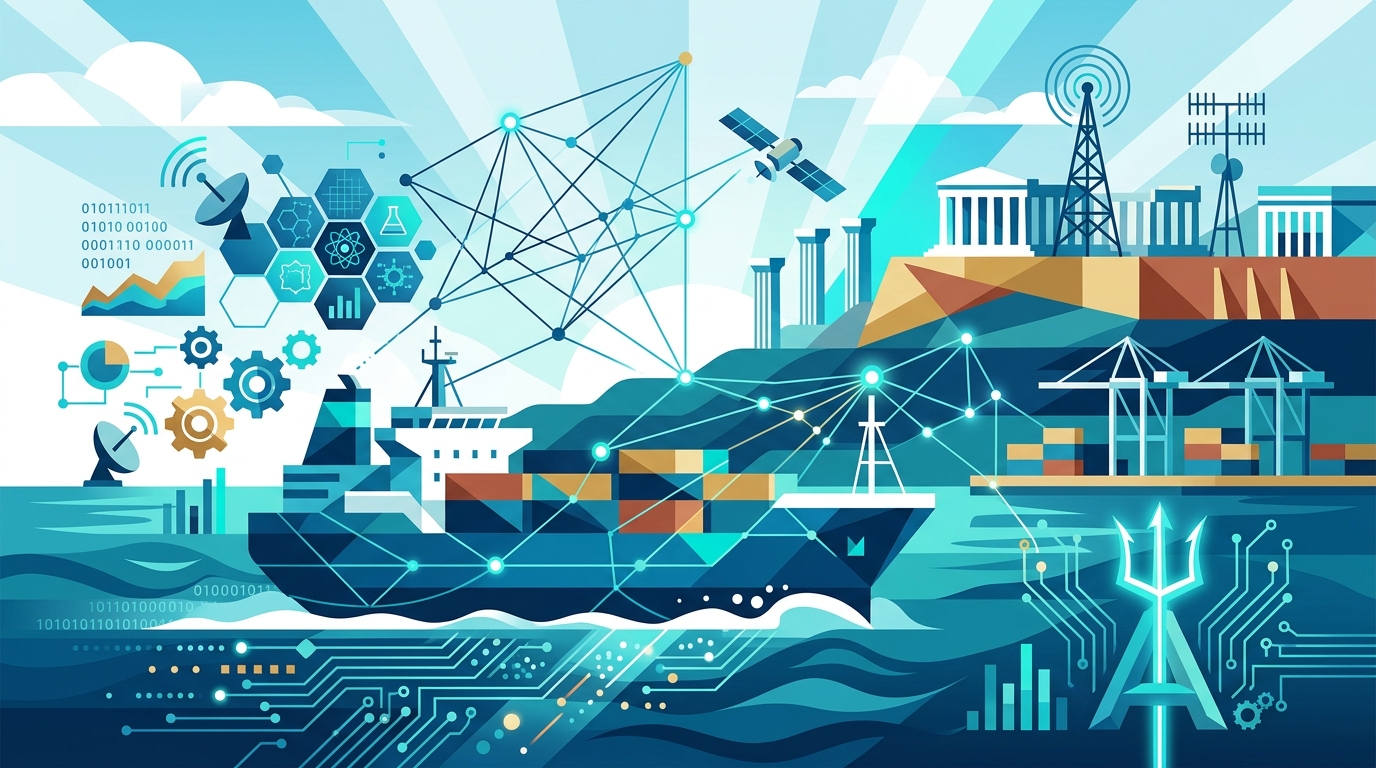
The implementation of Artificial Intelligence (AI) in Greek ports is no longer a science fiction scenario but an imperative for maintaining competitiveness. Minister Stylianides has repeatedly emphasized that the digitalization of processes in major port hubs, such as Piraeus and Thessaloniki, will allow for the optimization of the supply chain. Through machine learning algorithms, container management can be executed with split-second precision, reducing waiting times and the carbon footprint of vessels.
Furthermore, the integration of AI systems for predictive infrastructure maintenance and maritime safety is a central pillar of the Ministry's strategy. The use of sensors and real-time data analysis enables the early detection of risks, ranging from collision avoidance to addressing marine pollution, making Greek waters safer and "smarter."
The Green Transition and the Decarbonization Challenge
Perhaps the greatest challenge facing Christos Stylianides is the compliance of the Greek fleet with the stringent environmental regulations of the International Maritime Organization (IMO) and the European Union. "Green" shipping requires massive investments in new fuels and propulsion technologies. Here, AI plays a key role, as it can optimize fuel consumption by analyzing weather conditions and sea currents, offering the most efficient routes (weather routing).
- Development of infrastructure for alternative fuels (LNG, ammonia, hydrogen) in Greek ports.
- Digitalization of the Greek ship registry for faster service to shipping companies.
- Strengthening maritime education with an emphasis on new technologies and digital literacy for seafarers.
Stylianides, having served as a European Commissioner, is well-versed in the corridors of Brussels and the need to balance environmental goals with the economic viability of businesses. His strategy aims to attract capital for the modernization of the coastal ferry fleet, which forms the backbone of the cohesion of the Greek islands.
Geopolitical Stability and Digital Surveillance
In an environment of geopolitical instability in the Eastern Mediterranean, shipping is not just an economic metric but also a tool of power. Christos Stylianides is promoting the use of advanced surveillance systems (VTMIS) that incorporate AI to monitor vessel traffic. This enhances not only maritime safety but also national security, allowing for the real-time detection of illegal activities.
"Greek shipping must lead in the digital age, transforming challenges into opportunities for sustainable growth and global excellence," the Minister often remarks in his addresses.
In conclusion, the path charted by Christos Stylianides is one of modernization and adaptation. The success of this endeavor will be judged by the speed at which the state apparatus and the private sector adopt new technologies, ensuring that Greece remains the dominant force in the seas of the 21st century.