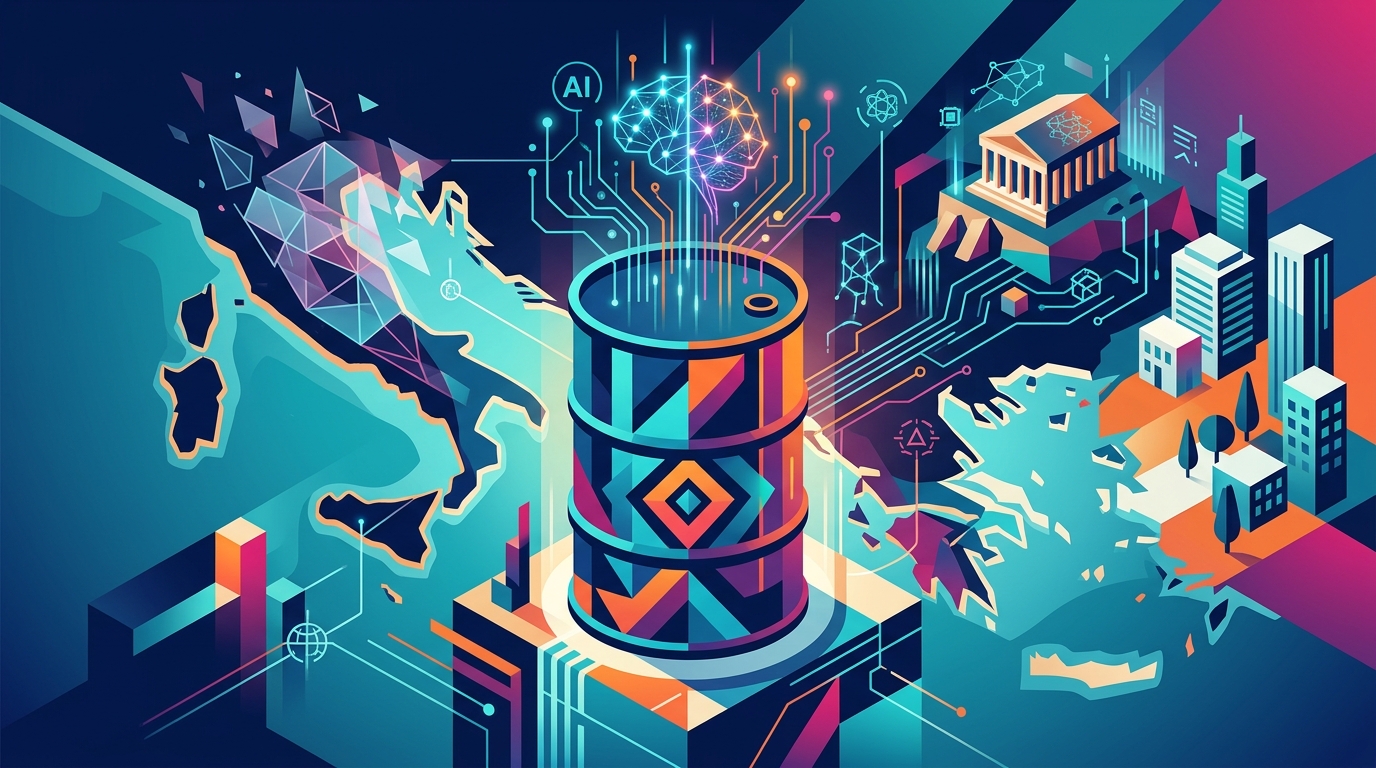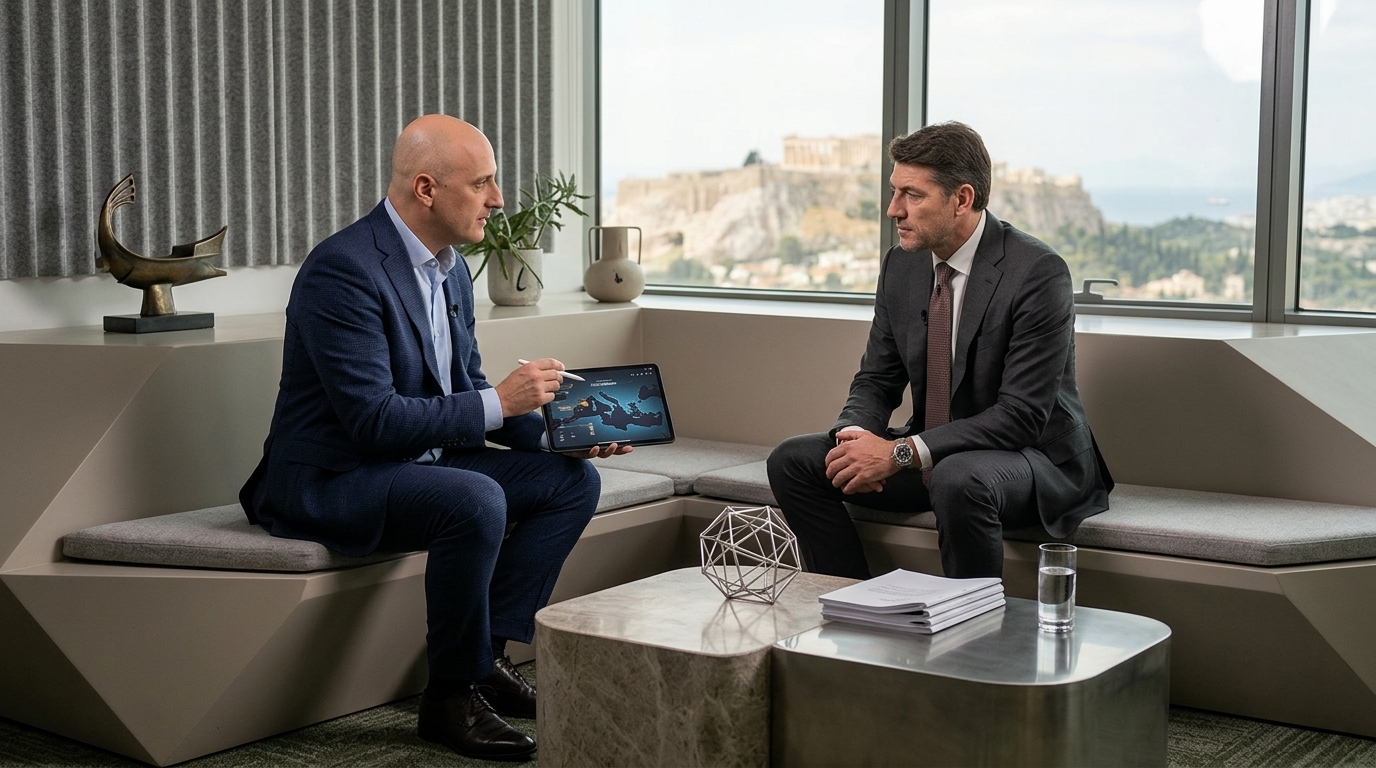
Greece is no longer merely a world-class tourist destination; it is steadily evolving into a critical player on the digital map of Southeast Europe. In an insightful interview with Fortune Greece's Business Monitor, Charles Calestroupat, Vice President and Area Lead for Microsoft Europe South, outlined how the country can emerge as the next Artificial Intelligence (AI) hub for the region. According to Calestroupat, Greece possesses the rare blend of talent, geopolitical stability, and political will required to lead in the Fourth Industrial Revolution.
Strategic Investment and the Data Center Cluster
The discussion regarding Greece's role in the technology sector is far from theoretical. Microsoft has already committed to one of the largest investments in the country's history: the creation of a three-data-center cluster in Attica. This infrastructure, part of the "GR for GRowth" initiative, serves as the backbone upon which the Greek AI ecosystem will be built. As Calestroupat explained, data centers are more than just buildings filled with servers; they are the "lungs" of the modern economy, enabling low-latency data processing and providing the cloud services essential for training Large Language Models (LLMs).
The Microsoft VP emphasized that the choice of Greece was strategic. The country acts as a bridge between Europe, the Middle East, and Africa. By strengthening subsea fiber optic cables and leveraging its strategic position in energy corridors, Greece offers an environment that minimizes risks for tech giants. However, infrastructure is only the first step. The real value, according to Calestroupat, lies in the application of AI across both the public and private sectors.
Talent and the Upskilling Challenge
One of Greece's strongest advantages, according to Calestroupat, is its human capital. Greek engineers and data scientists are globally recognized, yet the challenge remains in scaling this talent. Microsoft has set a goal to train thousands of Greeks in digital skills, recognizing that the shortage of specialized personnel is the primary hurdle for AI adoption worldwide.
"AI is not going to replace humans, but humans using AI will replace those who do not," he noted emphatically.
Collaboration with universities and the creation of certification programs are critical elements in ensuring that the Greek labor market remains competitive. Calestroupat sees an opportunity for "Brain Regain," as the presence of companies like Microsoft, Google, and Amazon in Greece creates high-skill jobs that can lure back scientists who left during the economic crisis.
Challenges: Energy, Bureaucracy, and Speed
Despite the optimism, the path to becoming an AI hub is not without obstacles. Calestroupat indirectly touched upon the challenges faced by all Southern European nations. The first is energy. Data centers are energy-intensive, and the need for green, affordable power is imperative. Greece, with its investments in Renewable Energy Sources (RES), has an advantage, but grid stability remains a concern.
Furthermore, the speed of public administration is decisive. Although significant strides have been made in digitizing the state, the licensing of large infrastructure projects often hits bureaucratic snags. Calestroupat highlighted that international competition is fierce; countries like Spain and Italy are also vying for a share of the cloud investment pie. Greece must maintain its reform momentum to avoid losing its current edge.
The Future: From AI Consumption to Production
The vision described by Charles Calestroupat is not limited to Greek businesses using tools like ChatGPT or Copilot. The goal is for Greece to become a producer of AI solutions. Already, Greek startups in shipping, tourism, and agritech are utilizing Microsoft technologies to develop specialized algorithms that solve both local and global problems.
In conclusion, the Microsoft executive's positioning confirms that Greece is at a turning point. The country is no longer viewed as a "digital laggard" but as a promising power that, if it invests correctly in infrastructure and its people, can lead the technological scene in the Mediterranean.