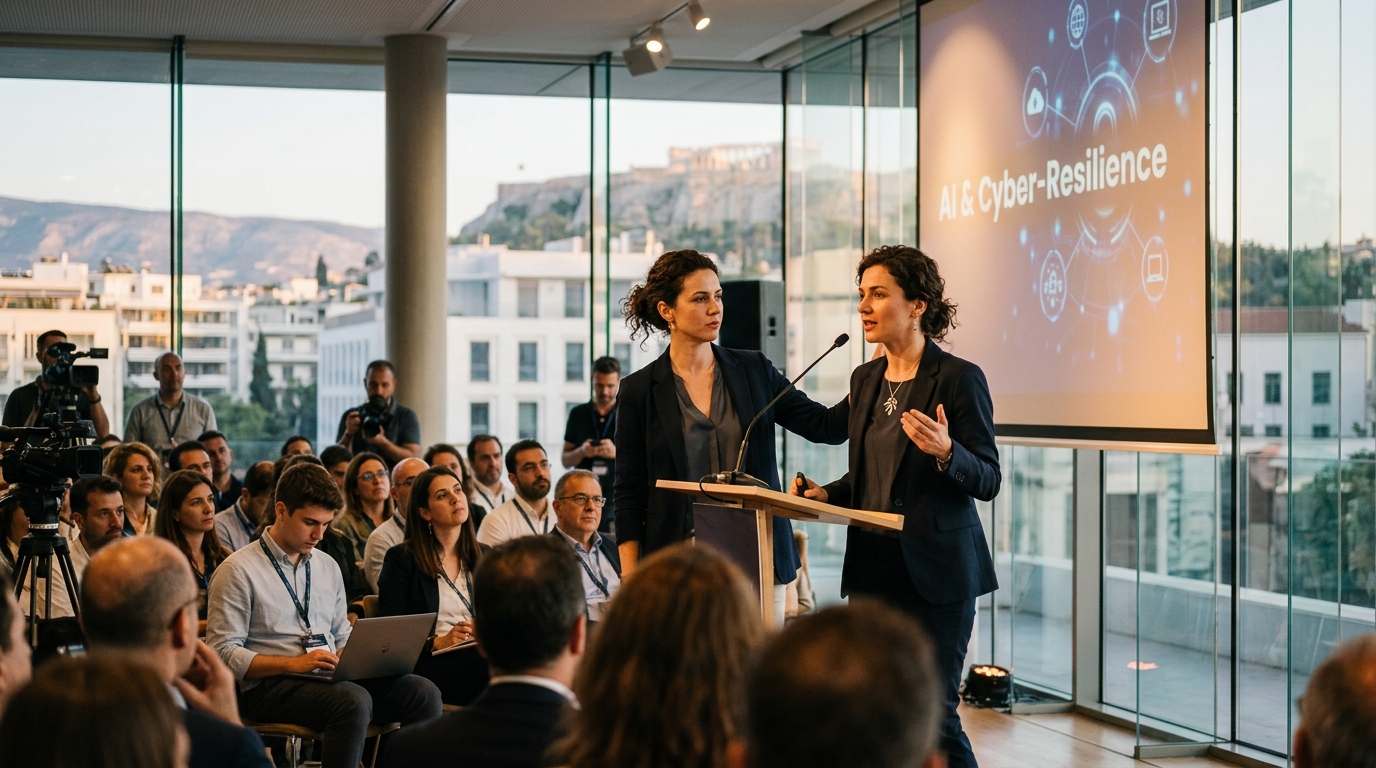
In an era where digital technology permeates every facet of social and economic activity, the concept of cybersecurity is evolving. It is no longer about simply fortifying systems, but about a continuous 'Odyssey' toward cyber-resilience. Recent analysis highlighted by Odyssey, a leading information security organization, underscores a critical reality: Artificial Intelligence (AI) is no longer a future factor, but the central protagonist in the arena of cyber threats and defense.
The Double-Edged Sword: AI as Weapon and Shield
Artificial Intelligence acts as a powerful force multiplier. On one hand, cybercriminals are utilizing Generative AI to create highly convincing phishing attacks, automate the discovery of vulnerabilities in code, and develop polymorphic malware that mutates to evade detection. The speed and scale of these attacks render traditional defense methods obsolete.
On the other hand, the same technology constitutes the most powerful tool in the hands of defenders. AI systems can analyze vast amounts of data in real-time, identifying anomalies that would be impossible for a human to discern. The ability of AI to predict attacks before they fully manifest is the cornerstone of the new resilience strategy. However, this 'arms race' requires constant vigilance and investment in specialized personnel.
From Protection to Resilience: A Strategic Shift
The traditional approach to cybersecurity focused on preventing intrusion. Cyber-resilience, however, accepts the inevitable: at some point, a system will be breached. The question is no longer 'if' an attack will happen, but 'how' the organization will react when it does. Resilience is about an organization's ability to maintain operations during an attack and recover swiftly afterward.
- Automated Response: Utilizing AI for the immediate isolation of infected network segments.
- Continuous Monitoring: Shifting from periodic audits to a state of perpetual surveillance.
- Personnel Training: Recognizing that the human factor remains the weakest yet most critical link.
Odyssey emphasizes that businesses in Greece and Cyprus must adopt a holistic approach, integrating AI not as an isolated tool, but as the connective tissue of their survival strategy in the digital environment.
The Regulatory Landscape and Compliance Challenges
The European Union is leading the way with strict regulations, such as the NIS2 directive and the EU AI Act. These legislative acts are not merely bureaucratic hurdles but a framework that forces businesses to take risk management seriously. Compliance requires a deep understanding of where and how AI is used within an organization, as well as ensuring that the data feeding these systems is secure and free from bias.
"Cyber-resilience in the age of AI is no longer a technical issue, but a fundamental business value that determines customer trust and long-term viability," industry analysts note.
In conclusion, the challenge for modern businesses is to view AI not as a threat to be contained, but as an opportunity to upgrade their defensive capabilities. The 'Odyssey' of the digital age requires courage, strategic thinking, and the acceptance that technology, however dangerous it may seem, is the only path toward a secure and resilient future reality.