The geopolitical standoff between Washington and Tehran has once again shifted to the battlefield of high-tech supply chains. The U.S. Department of the Treasury's Office of Foreign Assets Control (OFAC) recently announced a new round of sanctions targeting ten individuals and entities accused of being the critical link in the production of Iran's notorious Shahed-type drones. This move is not merely a bureaucratic exercise but a strategic attempt to sever the umbilical cord allowing Iran to export its military might to Ukraine and the Middle East.
Tehran's Labyrinthine Procurement Network
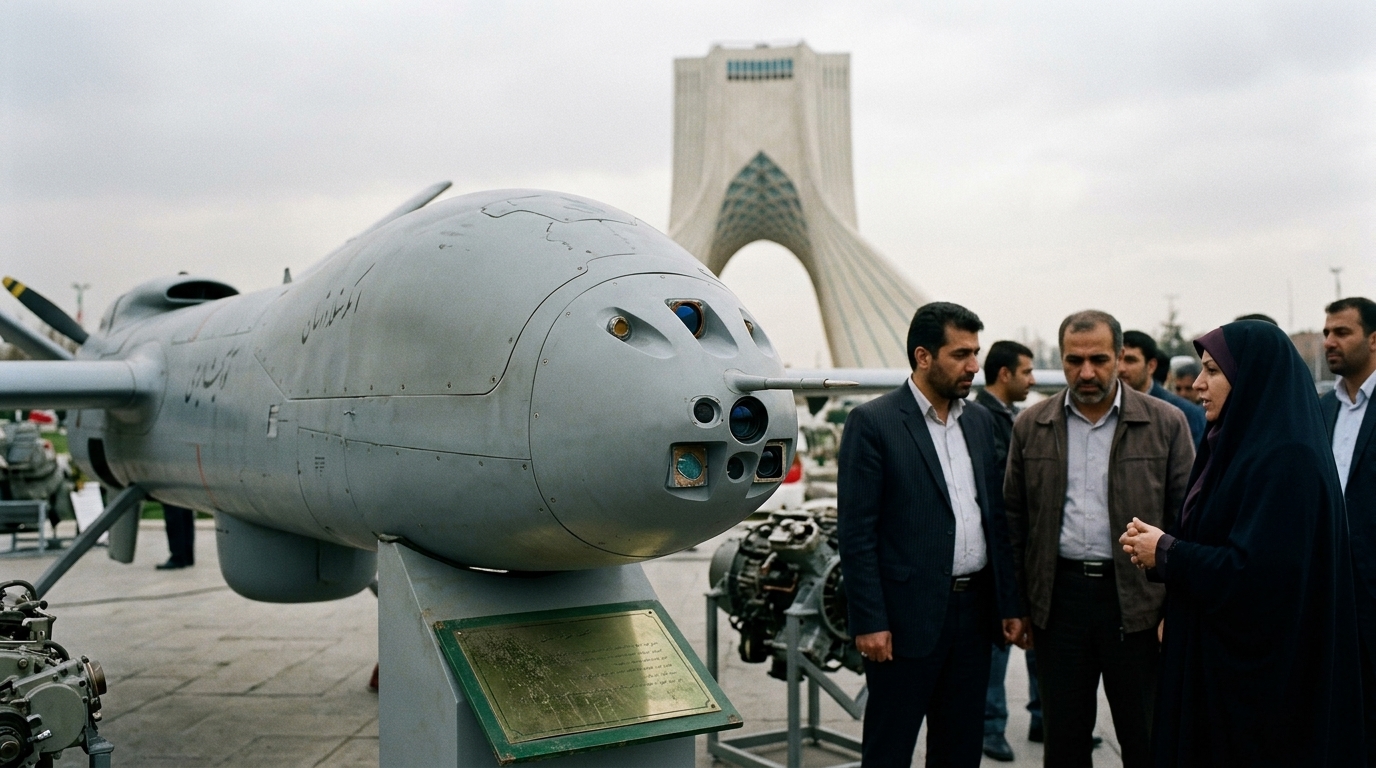
According to U.S. authorities, this network operated as a shadow procurement enterprise, centered in China and Hong Kong. The blacklisted entities allegedly facilitated the acquisition of crucial components, such as engines, electronic navigation systems, and sensors, which are essential for the construction of unmanned aerial vehicles (UAVs). Despite decades of international isolation, Iran has managed to develop a robust domestic drone industry that relies heavily on "dual-use" components—technology that can be utilized for both civilian and military purposes.
- Utilization of shell companies to conceal end-users.
- Fund transfers through the banking systems of third-party countries.
- Falsification of shipping documents to evade export controls.
Iran's strategy is clear: it exploits gaps in global trade oversight to fuel its military machine. Shahed drones, also known as "suicide drones," have become the hallmark of modern asymmetric warfare, offering a cost-effective yet lethal solution for precision strikes.
The Role of China and Hong Kong
The targeting of companies based in China and Hong Kong highlights a deeper friction in Sino-American relations. While Beijing officially maintains that it adheres to international obligations, Washington argues that Chinese authorities are turning a blind eye to networks serving U.S. strategic rivals. Hong Kong, due to its status as a global financial hub, remains a vulnerable gateway for such illicit activities.
"The proliferation of Iranian UAVs poses a threat to international security and stability," stated a senior U.S. Treasury official. "We will continue to use every tool at our disposal to expose and dismantle these networks."
The imposition of sanctions means that all assets of the involved individuals and entities within the U.S. are frozen, and any U.S. citizen or business is prohibited from transacting with them. More importantly, "secondary sanctions" can effectively cut off any foreign bank that continues to service these entities from the U.S. financial system.
From Ukraine to the Red Sea: Field Impact
The significance of these sanctions transcends economic figures. Iranian drones have fundamentally altered the dynamics of the war in Ukraine, where Russia employs them extensively to strike energy infrastructure and urban centers, exhausting Ukrainian air defenses. Simultaneously, in the Red Sea, Houthi rebels in Yemen utilize similar technology to attack commercial vessels, causing significant disruption to global trade routes.
Analysis of wreckage from drones downed in Ukraine has revealed the presence of Western-made components, raising urgent questions about the effectiveness of current export controls. The new sanctions specifically target the intermediaries who manage to source technology from the West and funnel it to Tehran via Asia.
Conclusions and Future Outlook
Despite the mounting pressure of sanctions, Iran has proven to be remarkably adaptable. Each time a network is dismantled, a new one appears to take its place. This underscores the need for a more coordinated international response that is not limited to the U.S. but includes allies in Europe and Asia. The battle against drone proliferation is not just military; it is primarily economic and technological. The success of these measures will be judged by the West's ability to make the cost of illicit activity prohibitive for the intermediaries and the supply chains that sustain them.