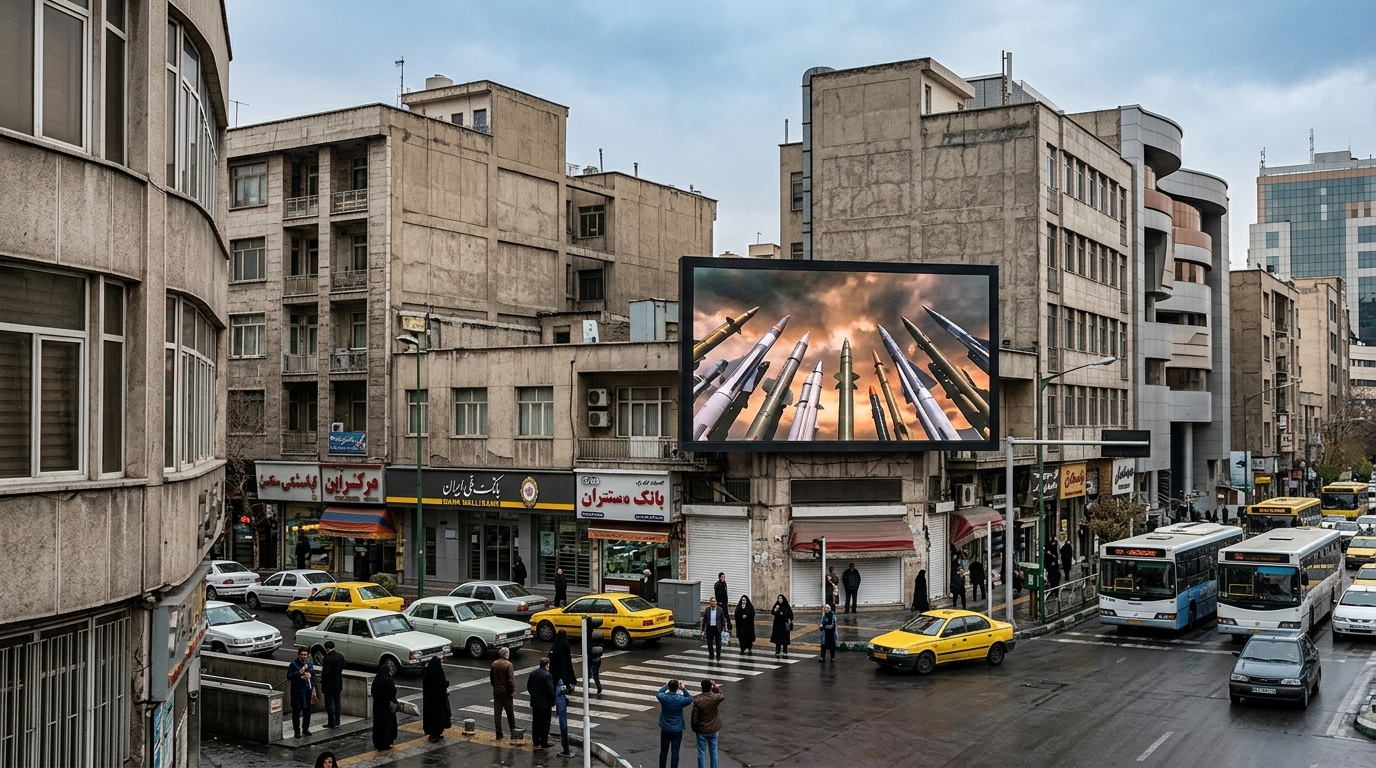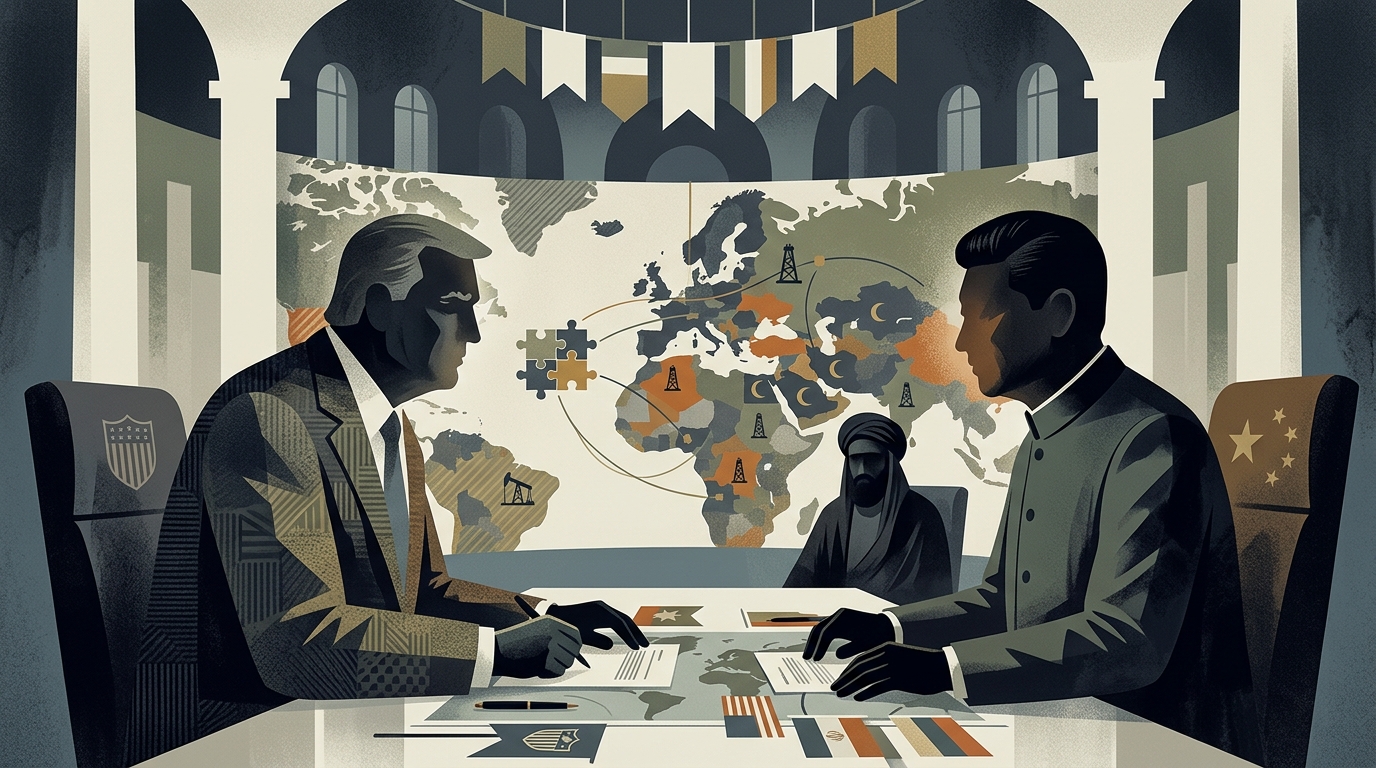
Diplomatic history is often written not through friendship, but through the mutual recognition of existential danger. As President Donald Trump and his Chinese counterpart Xi Jinping prepare for another pivotal summit, global attention is shifting beyond the trade war to a region in turmoil: the Middle East. Iran, a country that serves as both a strategic partner for Beijing and a primary adversary for Washington, is emerging as the unexpected catalyst that could define the course of Sino-American relations in 2026.
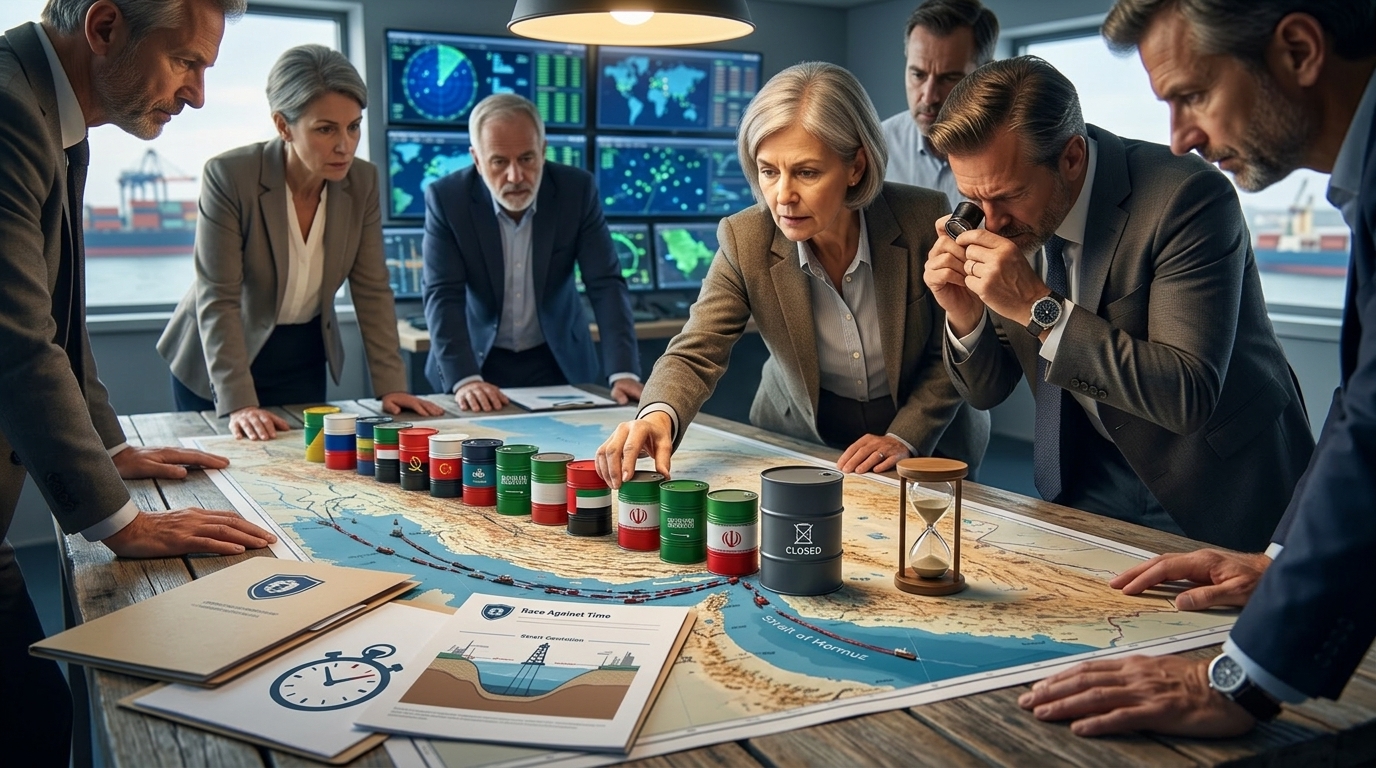
The Strait of Hormuz: The Vein That Binds
Despite their deep ideological and economic differences, the US and China share a common nightmare: the closure of the Strait of Hormuz. For Beijing, Iran is a top oil supplier and a critical node in the Belt and Road Initiative. Any escalation leading to a maritime blockade would send a shockwave through the Chinese industrial machine. On the other hand, Trump, faithful to his 'America First' doctrine, knows that a spike in energy prices would undermine his domestic economic agenda and political standing.
Progress on the Iran issue is unlikely to come through a comprehensive treaty, but rather through a 'Realpolitik' understanding. Washington might offer a temporary easing of sanctions on oil exports to China in exchange for Beijing using its leverage in Tehran to restrain Iranian proxies across the region. It is a balancing act where China is invited to play the role of the 'honest broker'—a role Xi has been systematically cultivating to bolster China’s profile as a global peace power.
AI Security as a Safety Valve
One of the most compelling aspects of the upcoming summit is the focus on Artificial Intelligence (AI) security. As both powers integrate AI into their weapons systems, the fear of an accidental escalation triggered by an algorithm is no longer science fiction. Reports suggest that Trump and Xi are prepared to agree on a framework ensuring that the 'human-in-the-loop' principle remains paramount for nuclear and strategic decision-making.
- Establishing a 'red line' communication channel for AI-related incidents.
- Common protocols to prevent AI use in cyberattacks against critical infrastructure.
- Transparent rules for the training of military AI models.
This convergence on technology is not a sign of trust, but an effort to avoid mutual destruction. In a world where AI speed outpaces human cognition, both leaders seem to recognize that competition must have guardrails. If they can de-escalate the 'algorithmic arms race,' it could serve as a blueprint for wider technological cooperation.
The Taiwan Thorn and Red Lines
While Iran and AI offer potential areas of cooperation, Taiwan remains the ultimate deadlock. Trump has made it clear that he will not make concessions that could be interpreted as a sign of weakness. His strategy is transactional: Taiwan is a powerful chip that he is not willing to play cheaply. For Xi, Taiwan is a matter of national sovereignty and historical restoration, a 'core interest' that is non-negotiable.
"We do not trade our sovereignty for commercial conveniences," seems to be the underlying message from Beijing.
Analysis of both sides' maneuvers suggests they will seek to maintain the 'status quo ante.' Trump will continue to arm the island, while Xi will persist with military exercises, but both will avoid a final rupture as long as their economies remain deeply intertwined. Taiwan will remain the 'silent threat' in the background of every conversation, a reminder that peace between the two superpowers is perpetually fragile.
Conclusion: A Fragile Equilibrium
The Trump–Xi summit of 2026 will not end Cold War 2.0. However, it may provide a necessary reprieve. The focus on Iran and AI security indicates that geopolitics is returning to the basic principles of survival. In a multipolar world, success is not measured by the triumph of one over the other, but by the ability of both to manage crises before they become uncontrollable. The question remains: can Trump’s transactional nature find common ground with Xi’s long-term strategic vision? The world, and especially the energy markets, will be watching closely.