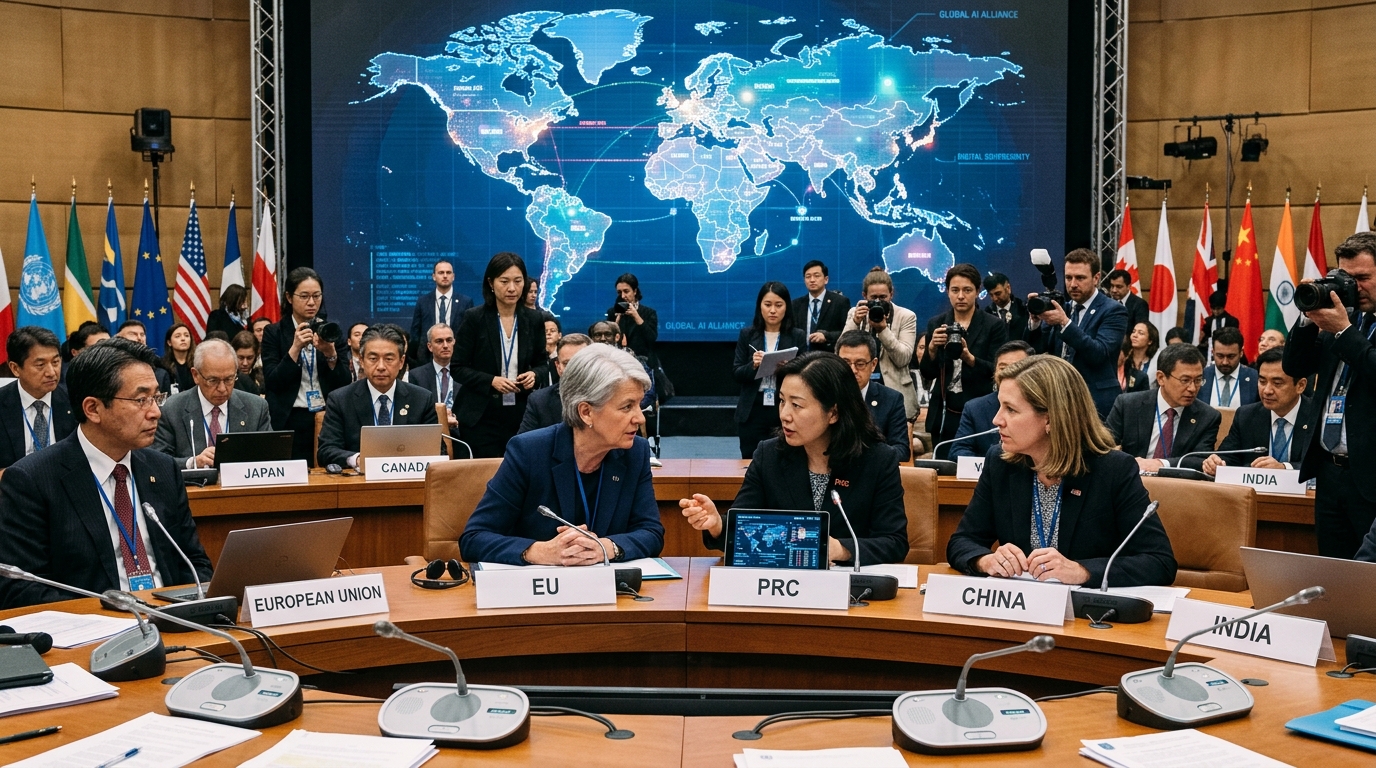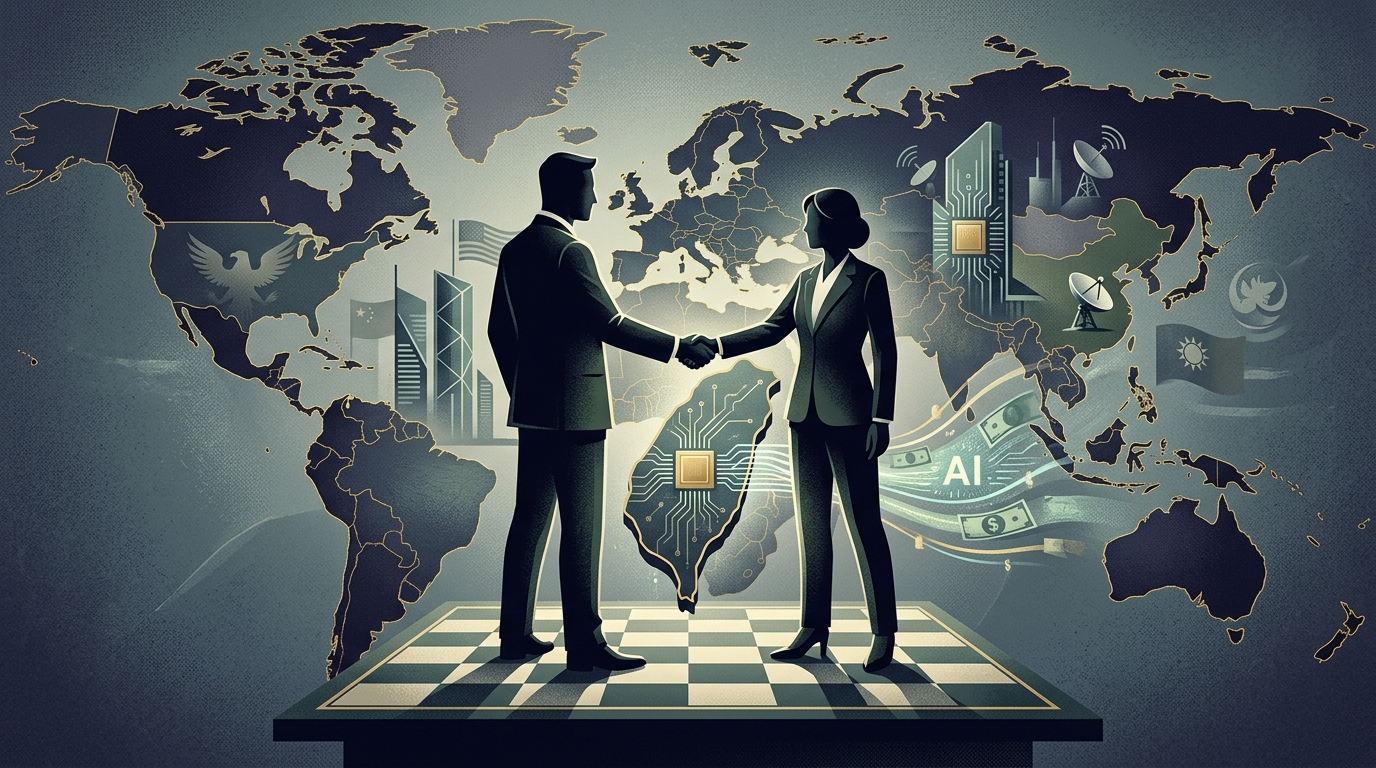
In the heart of Beijing, under the shadow of the Forbidden City, the global geopolitical chessboard is being rearranged. Today's meeting between President Donald Trump and his Chinese counterpart Xi Jinping is not merely a diplomatic formality, but an attempt to redefine the relationship between the two superpowers in an era where Artificial Intelligence (AI) is transforming the very nature of power. With an agenda spanning from trade and Taiwan to the crisis in the Strait of Hormuz, the stakes are nothing less than avoiding a total conflict that could destabilize the global economy.
AI as the New 'Nuclear' Stake
For the first time in the history of Sino-American relations, AI is not being discussed solely as an economic tool, but as a matter of existential security. According to diplomatic sources, Trump is seeking a "red line" regarding the use of AI in the control of nuclear arsenals. Washington is concerned that integrating autonomous decision-making systems into China's military infrastructure could lead to accidental escalation. For his part, Xi Jinping appears willing to discuss shared security protocols, provided that the US eases restrictions on the export of advanced semiconductors (chips), which serve as the "fuel" for Chinese AI development.
The discussion also extends to Lethal Autonomous Weapons Systems (LAWS). The international community is watching with bated breath, as an agreement between the two major players could form the basis for a new "Non-Proliferation Treaty," this time for algorithms. However, distrust remains deep. China accuses the US of "technological hegemonism," while the White House insists that protecting intellectual property and preventing cyber-espionage are non-negotiable prerequisites for any cooperation.
Trade and the Shadow of Protectionism
On the economic front, the meeting takes place during a period of intense pressure. President Trump, faithful to his "America First" doctrine, has already put trade deficits on the table, demanding greater access for American products to the Chinese market. China, on the other hand, faces internal economic challenges and seeks stability to continue its "Dual Circulation" vision. The use of AI in supply chains and manufacturing is key: whoever controls the standards of industrial AI will control 21st-century trade.
- Imposition of tariffs on high-tech products incorporating Chinese software.
- Potential lifting of sanctions on specific Chinese telecom companies in exchange for investment on US soil.
- Creation of a joint observatory on the impact of AI on global employment.
Market dynamics have changed. It is no longer just about steel and soybeans, but about data. Controlling the flow of data between the two continents is the new point of friction, with Beijing imposing strict "data sovereignty" laws and Washington fearing the weaponization of its citizens' personal data.
Taiwan and the Strait of Hormuz: Geopolitical Volcanoes
Beyond technology, traditional flashpoints remain volatile. Taiwan is the most sensitive issue. Xi Jinping reiterated that reunification is a "historical necessity," while Trump signaled that peace in the region is vital for the global semiconductor trade. The use of AI in surveillance systems and drones in the area has increased the risk of a "hot" incident caused by an algorithmic miscalculation.
Meanwhile, the situation in the Strait of Hormuz adds a new layer of complexity. With China's energy security largely dependent on oil flows through the Strait, and the US maintaining a strong naval presence, both leaders are looking for a way to de-escalate. A proposal for a "digital maritime safety zone," where tanker traffic would be monitored by joint AI systems to prevent collisions and piracy, is under consideration.
"Peace in the 21st century will not be secured only by diplomats, but by the transparency of the algorithms that govern our weapons,"a senior Pentagon analyst noted.
In conclusion, the Beijing summit marks the beginning of a new era of "managed competition." Artificial Intelligence serves simultaneously as the greatest point of friction and perhaps the only bridge of communication. The ability of Trump and Xi to find common ground will determine whether the world moves toward a new technological renaissance or a digital dark age fraught with conflict.