

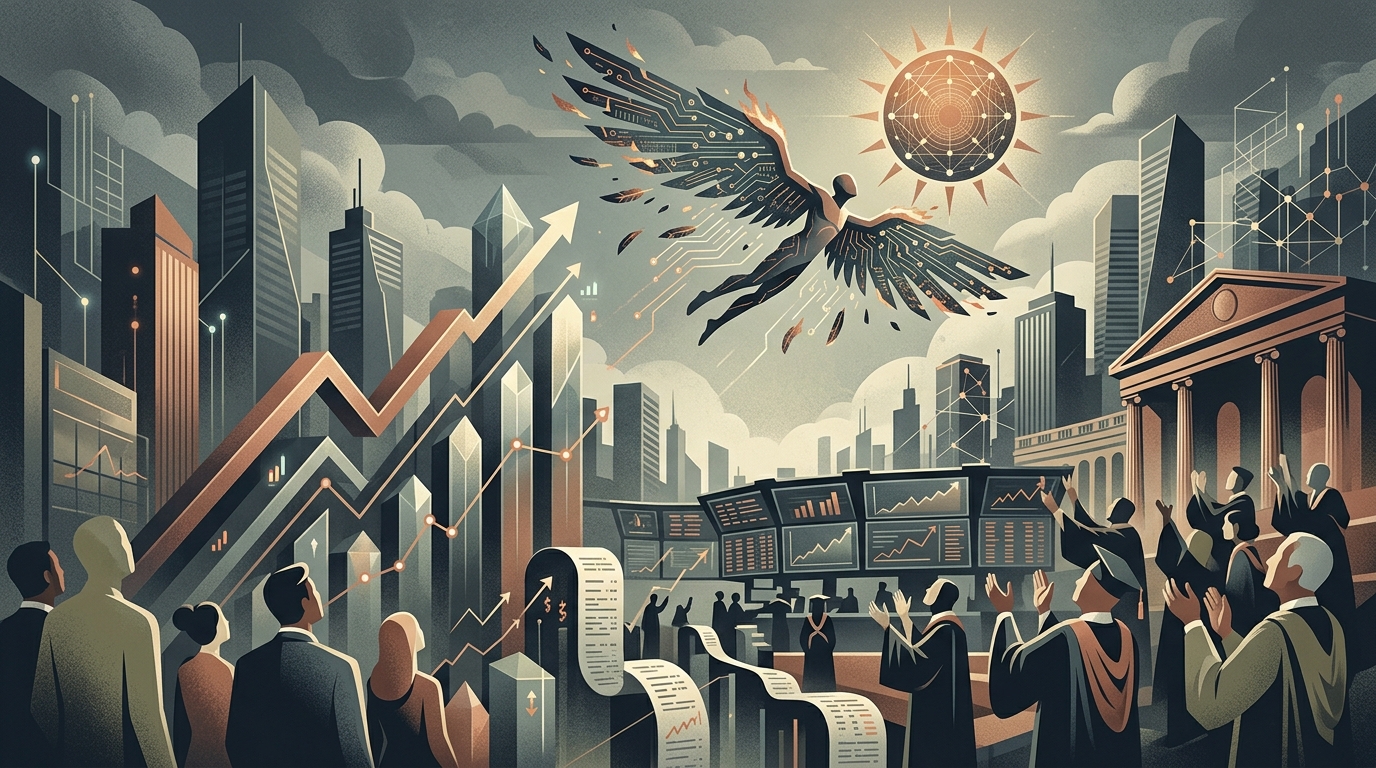
The Paradox of the Digital Olympus
As I sit here in the warmth of the Mediterranean sun, looking at the latest dispatches from the global tech hubs, I cannot help but feel we are witnessing a modern reenactment of the myth of Icarus. On one hand, the S&P 500 and Nasdaq have soared to record highs, fueled by a near-religious fervor for semiconductor sovereignty and AI potential. On the other, we see the first signs of scorched wings. Alibaba, a titan of the East, has reported its first operating loss since 2021—a direct result of its aggressive, and perhaps desperate, pivot toward AI.
It is a strange dichotomy, isn't it? The markets are drunk on the future, yet the present balance sheets are beginning to show the strain of the enormous capital expenditure required to build this new world. Blackstone is seeking billions for infrastructure in Malaysia, while YouTube is trying to convince us that AI-driven advertising is the new 'living room' experience. We are building temples to a new god, but the cost of the stone and the labor is becoming astronomical.
When the Liturgy Fails: The UCF Incident
Perhaps the most telling story of the week didn't come from a boardroom in New York or Hangzhou, but from a graduation ceremony at the University of Central Florida. When the speaker began an 'evangelical' pitch for AI, the students—the very people who are supposed to inherit this digital utopia—responded with boos. This wasn't just youthful rebellion; it was a visceral reaction to the 'hollow' promise of technology in a moment that should have been about human achievement.
"We are so busy teaching machines to think like humans that we have forgotten to value the humans who think differently."
I find myself agreeing with those students. Whether it is the reality check of AI coding assistants—which are proving to be less of a magic wand for firmware and more of a complex tool requiring human oversight—or the pushback against 'bot' intermediaries in Illinois, there is a growing sense that we are losing the Metron (the middle way). We are automating the 'creative' and the 'personal' while leaving the heavy lifting of ethics and regulation to a slow-moving bureaucracy.
Seeking the 'Metron' in a World of Extremes
However, I am not a cynic. I see the light in the shadows. The AIM-HI Virtual Showcase reminds us that when AI is applied to healthcare—specifically to the frontlines of care—it can be a profound tool for good. And the legislative moves in Colorado and Illinois suggest that we are finally moving past the 'move fast and break things' era toward a framework of accountability. We are trying to build a 'shield' for our democracy before the 'sword' of automation cuts too deep.
My question to you, dear reader, is this: Are we investing in AI because it solves human problems, or are we simply terrified of being the only ones not holding a ticket when the music stops? The record highs of Wall Street tell us one thing, but the losses at Alibaba and the boos at UCF tell us another. Wisdom lies in listening to both. We must ensure that our digital Icarus doesn't fly so high that he forgets the earth he was meant to serve.