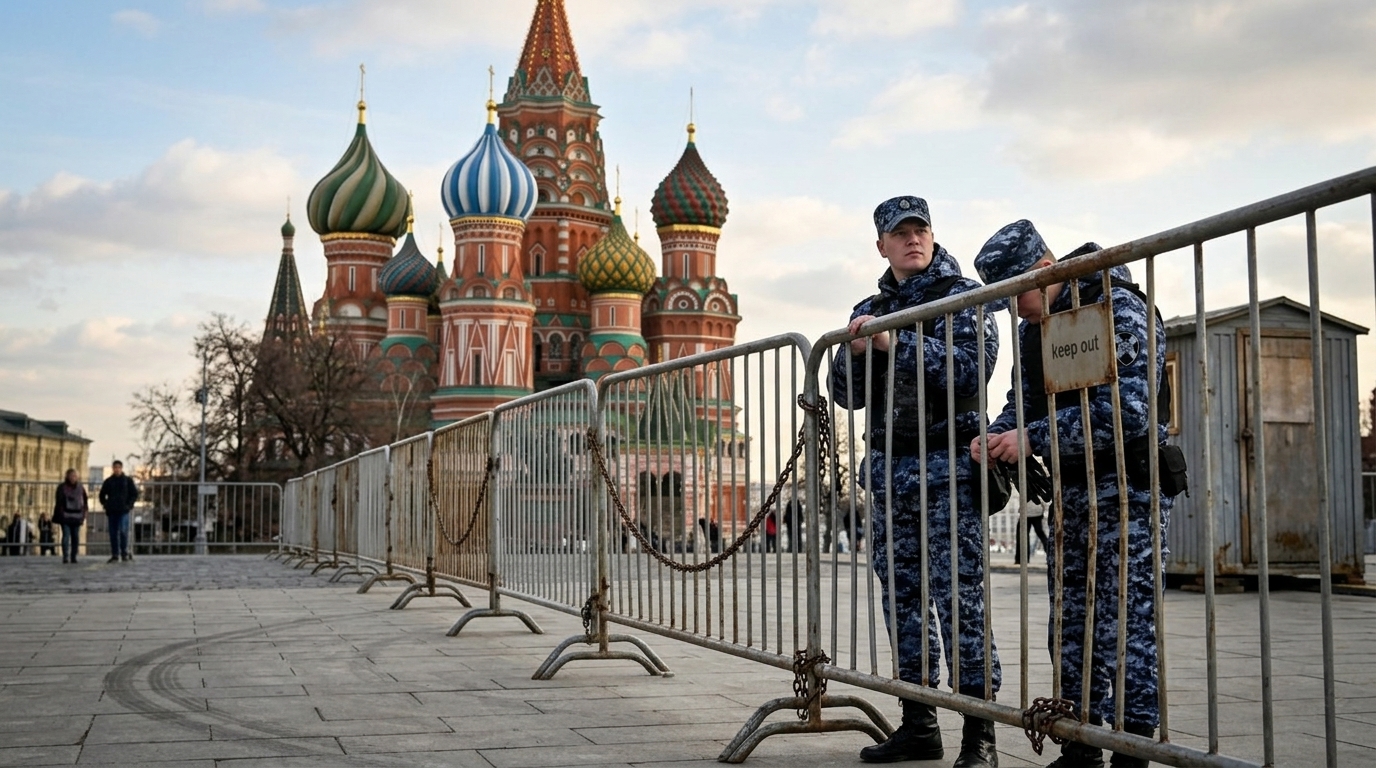
The image of an "impregnable" Russian economy, weathering sanctions and thriving amidst conflict, appears to be one of the Kremlin's most successful propaganda constructs. However, a revealing new study based on alternative indicators—specifically nighttime luminosity—suggests the reality is diametrically opposed. While Russia’s official statistics agency (Rosstat) claims GDP expanded by 13% between 2020 and 2024, satellite data analysis points to a real contraction of approximately 8%.
The Luminosity Method: Satellites Don't Lie
Why is nighttime luminosity considered a reliable proxy? In autocratic regimes, where economic data is often manipulated for political optics, economists turn to physical markers. Energy consumption and light intensity at night are inextricably linked to economic activity: factory production, retail operations, logistics, and household consumption. The study by the Stockholm Institute of Transition Economics (SITE) utilized this method to bypass Moscow's official narrative.
The discrepancy is staggering. Russia claims its economy has surpassed pre-pandemic and pre-war levels, primarily due to massive state funding of the defense industry. Yet, if the economy were truly growing, Russian cities should be glowing brighter. Instead, the "darkness" captured by satellites tells the story of an economy bleeding out, with the private sector strangled by labor shortages and capital flight.
Military Keynesianism or Economic Cannibalism?
The Kremlin has pivoted Russia into a total war economy, employing what analysts call "Military Keynesianism." The massive injection of liquidity into the production of tanks, missiles, and shells creates an illusion of growth. However, this type of spending is economically unproductive. A tank manufactured only to be destroyed on the Ukrainian front within days adds nothing to the long-term wealth of the nation. On the contrary, it "cannibalizes" resources that could have been invested in education, healthcare, or technology.
Furthermore, inflation is rampant. With Central Bank interest rates kept at punishingly high levels to prevent a ruble collapse, borrowing costs for non-military businesses are prohibitive. Russian elites—both the oligarchs and government technocrats—see this dead end approaching. Reports from Moscow circles suggest deep alarm: the economy isn't "holding up"; it is simply "burning its reserves" to sustain the war effort.
The Dependency Trap and the Road Ahead
Russia has become dangerously dependent on China and India to offload its hydrocarbons, often at significant discounts. The "shadow fleet" of tankers used to bypass G7 price caps is a costly and risky workaround. Lack of access to Western technology means even the critical energy sector faces maintenance and modernization crises.
- Rosstat reports 13% growth; satellites show an 8% decline.
- Inflation and high interest rates are choking the real market.
- Labor shortages due to mobilization and brain drain are becoming irreversible.
- Elites fear a sharp "hard landing" once war spending inevitably tapers off.
Ultimately, the Russian economy resembles a Potemkin village: an impressive facade for the Tsar and the world to see, while behind it lies structural decay. The moment this facade collapses under the weight of its own imbalances may be closer than the Kremlin is willing to admit.