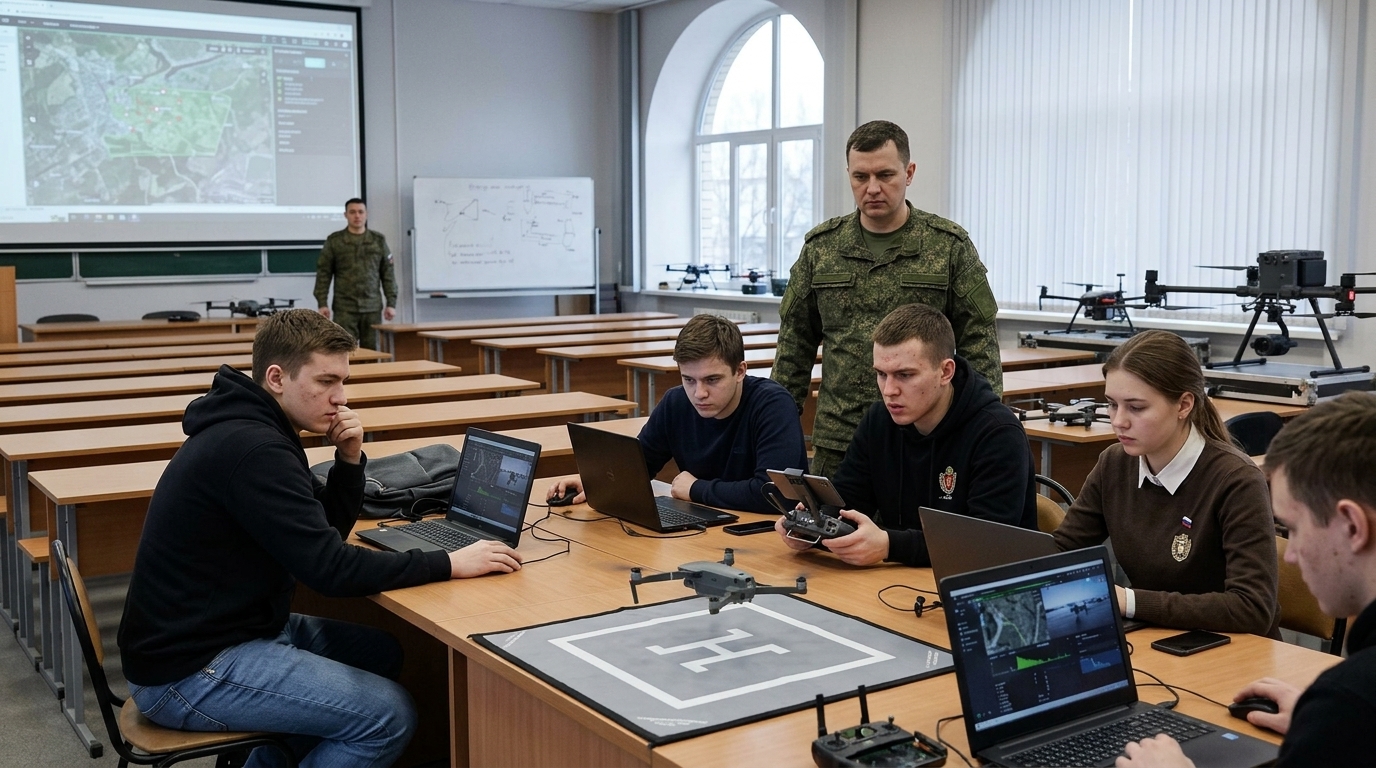
In the Russia of 2026, the distance between the lecture hall and the battlefield has vanished. According to recent reports and investigations, such as those highlighted by Ars Technica, the Kremlin is exerting systematic pressure on university students to enlist as Unmanned Aerial Vehicle (UAV) or drone operators. This strategy is not merely an attempt to bolster troop numbers; it represents a fundamental restructuring of Russian higher education to serve the needs of the war machine.
The Illusion of 'Digital Warfare'
Russian authorities, in collaboration with university administrations, are approaching STEM (Science, Technology, Engineering, and Mathematics) students with a tempting but dangerous promise: the opportunity to serve their country without ever setting foot on the "front line." The rhetoric used presents drone piloting as a desk job, an extension of the video games these young people already know, where the risk is minimal and the perks are substantial.
However, the reality is far grimmer. Drone operators have become primary targets on the modern battlefield. Signal triangulation technology and sophisticated electronic warfare allow adversaries to pinpoint a pilot's location within minutes of a drone's takeoff. The promise of "safe service" crumbles under the weight of technological reality, leaving students exposed to lethal risks that were never disclosed during recruitment.
Carrots and Sticks: Incentives and Coercion
To persuade students, universities offer a package of incentives that is difficult to ignore in a pressured economy. These include:
- Full tuition waivers and academic scholarships.
- Guaranteed employment in state defense industries after service.
- High salaries that far exceed the average for recent graduates.
- Exemption from mandatory general mobilization.
Behind these incentives, however, lies a veiled threat. Reports indicate that students who struggle with exams or face disciplinary issues are often pressured into these "voluntary" drone training programs as a way to avoid expulsion. Academic success is now inextricably linked to military compliance, effectively turning higher education institutions into branches of the Ministry of Defense.
"Turning students into drone operators is the ultimate admission that Russia is sacrificing its technological future for the sake of an immediate tactical advantage," says an international security analyst.
The Erosion of Russian Science
In the long term, this practice threatens to decimate the country's scientific potential. Instead of the brightest young minds working on artificial intelligence for medicine, energy, or civil aviation, they are being consumed by the development and operation of lethal systems. Russia risks ending up with a generation of experts who know how to destroy but have forgotten how to build.
Furthermore, the integration of military curricula into universities further isolates the Russian academic community from the international stage. Collaborations with Western universities have already frozen, and the transformation of campuses into training grounds permanently seals the doors to global scientific exchange.
Conclusion: A Heavy Price to Pay
Recruiting students for drone warfare is an act of desperation masquerading as technological modernization. The Kremlin is betting that the youth, charmed by technology and squeezed by necessity, will accept the role of the "digital soldier." But the cost of this choice—in human lives, moral erosion, and the loss of intellectual capital—will weigh on Russia for decades after the hostilities end. Education, once the ticket to progress, has now become a tool for prolonging a conflict that shows no signs of abating.