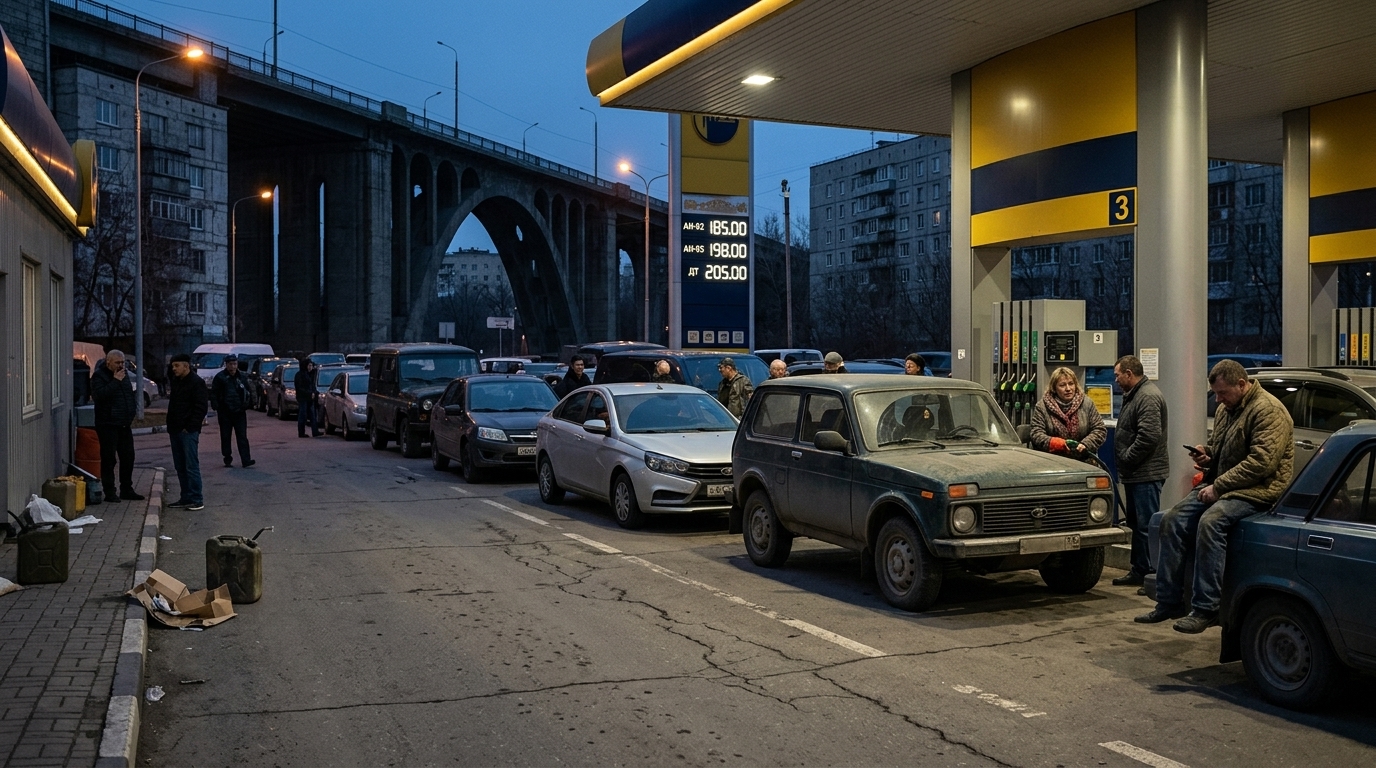
The image of a mother waiting in a fuel line for 18 hours with her infant in the backseat is not a scene from a dystopian novel, nor is it a relic of the 1980s. It is the harsh reality of Russia in July 2026. The country that once boasted of holding Europe 'hostage' through its energy resources is now facing a humiliating domestic fuel crisis that threatens to shake the foundations of social stability.
According to recent reports and analyses by energy experts, systematic Ukrainian drone strikes have dealt critical blows to Russian oil infrastructure. It is estimated that at least 25% of the country’s total refining capacity has been knocked offline. This production gap is not merely a statistical figure; it is a daily ordeal for Russian citizens, who see prices at the pump skyrocket and availability vanish.
The Strategy of Asymmetric Attrition
Ukraine, lacking a traditional navy or an air force capable of competing with Russia’s, has turned to long-range drone technology. By precisely targeting distillation towers and critical units of refineries deep within Russian territory, Kyiv has managed to transfer the cost of the war directly to the pocket of the average Russian. The success of this strategy lies in its asymmetry: a drone costing a few thousand dollars can cause hundreds of millions in damage to infrastructure that takes years to repair.
- Technological Deficit: Due to Western sanctions, Russia is struggling to source the necessary spare parts and high-precision technology required to repair modern refineries, which were largely built with Western equipment.
- Logistical Nightmare: Transporting fuel from the Far East to the European part of Russia strains an already stressed railway network, which prioritizes military shipments.
- Front-line Priority: The Russian government is forced to reserve massive quantities of diesel and gasoline for military needs, leaving the domestic market as a secondary concern.
The Ghost of the Soviet Union
For many older Russians, the lines at gas stations evoke traumatic memories of the collapse of the Soviet Union. The word 'defitsit' (shortage), which had been almost forgotten during the oil-fueled prosperity of the last decades, is making a powerful comeback in everyday vocabulary. 'Are we in the Soviet Union again?' citizens ask on social media, expressing deep frustration over the Kremlin's broken promise that the war would not affect the lives of ordinary people.
"Energy was the last bastion of Russian power. When a country that exports oil to the whole world cannot fill its citizens' tanks, the message of failure is deafening," says an international relations analyst.
The crisis is not limited to transportation. Agriculture, the backbone of the Russian provinces, is at risk. Without cheap and abundant diesel, the 2026 harvest is threatened, which could lead to food shortages and further inflation. The government has imposed gasoline export bans, but these measures look like aspirin for a patient who needs major surgery.
Economic and Political Implications
The economic hemorrhage is twofold. On one hand, Russia is losing revenue from the export of refined petroleum products, which have higher added value than crude oil. On the other, domestic social discontent forces the state to spend vast amounts on subsidies to keep prices artificially low, straining a budget already groaning under war expenditures.
Politically, this crisis strikes at the heart of the 'invincible Russia' narrative. The inability to protect critical infrastructure from low-cost drones exposes holes in the country's air defenses. As the winter of 2026 approaches, the pressure on the leadership will mount, as the fuel shortage will no longer be just a transportation problem, but a matter of survival. Russia finds itself at a critical crossroads, where its energy might is transforming into its Achilles' heel.