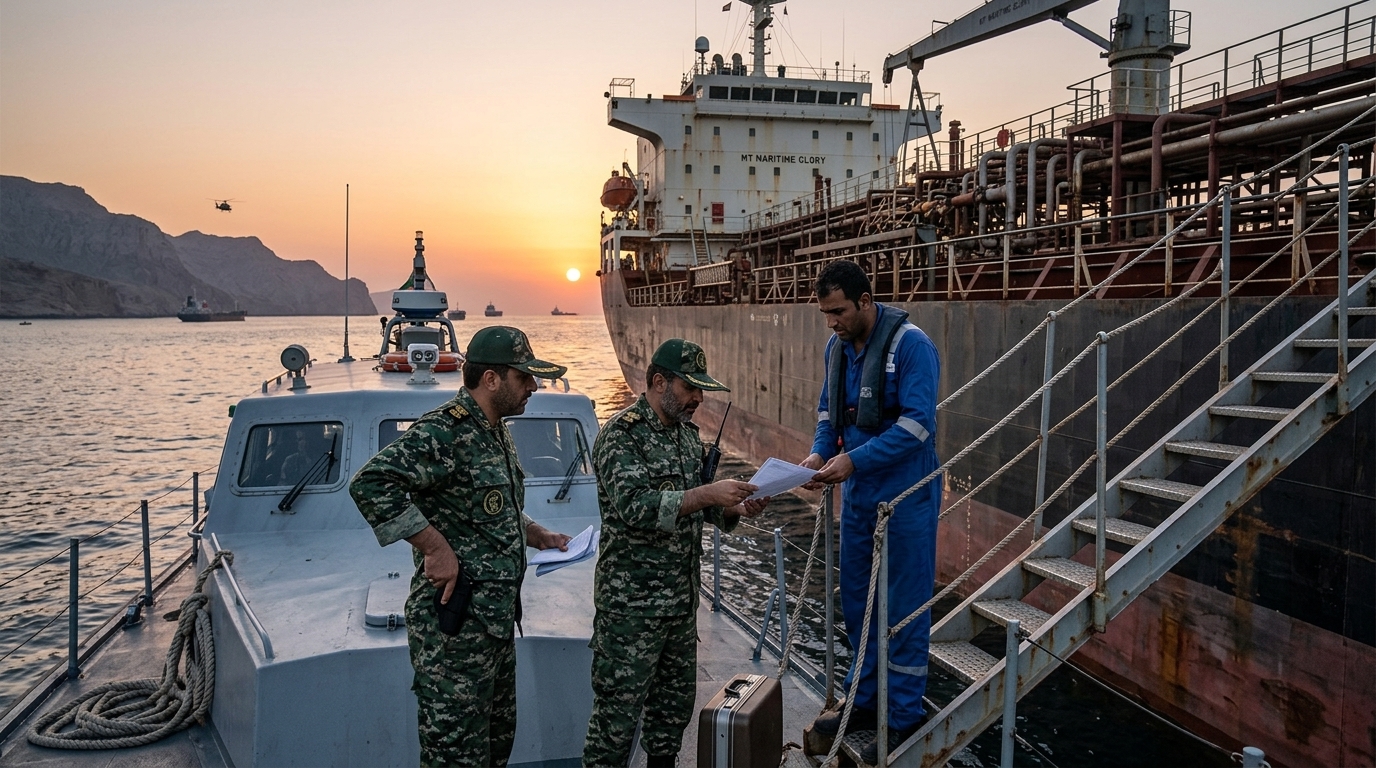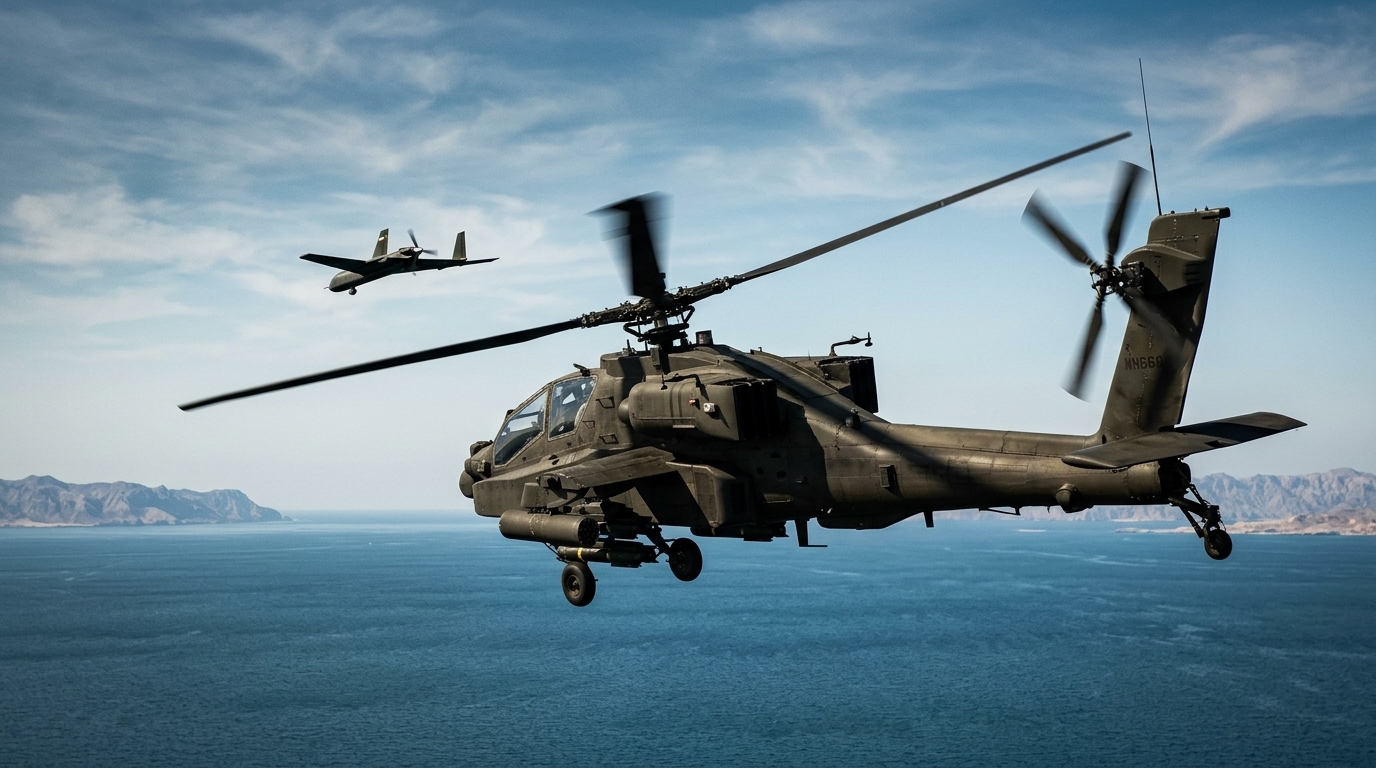
In a development that sends shockwaves through the power balances of the Persian Gulf, it has been confirmed that the US AH-64 Apache helicopter that recently went down in the Strait of Hormuz was not the victim of mechanical failure, but of a targeted strike by an Iranian Shahed unmanned aerial vehicle (UAV). The news, initially reported by the New York Times and corroborated by anonymous Pentagon sources, highlights a new and dangerous reality: the ability of low-cost drones to neutralize expensive and technologically advanced manned assets.
Anatomy of the Incident: A Technological Paradigm Shift
The incident occurred during a routine flight in international airspace, according to Washington, although Tehran claims there was a violation of its territorial waters. The Apache, a helicopter considered the "iron fist" of the US military, was struck by a Shahed variant equipped with advanced guidance systems. This operational success demonstrates that Iranian drones are no longer merely "loitering munitions" for static targets but can engage in dynamic aerial combat with manned aircraft.
Military analysis suggests the Iranian drone utilized an aerial "ambush" tactic, leveraging its low radar cross-section and its ability to remain undetected until the final moment. This event is causing intense concern among NATO planners, as the AH-64 Apache boasts some of the world's most advanced self-protection suites. If a $30,000 drone can down a $35 million helicopter, the doctrine of air superiority must be fundamentally re-evaluated.
Geopolitical Implications and the Strategic Chokepoint
The Strait of Hormuz is the world's most critical energy artery, with approximately 20% of global oil consumption passing through daily. Any incident here triggers a chain reaction in international markets and global diplomacy. Iran's move to deploy a drone against a US helicopter serves as a clear message of power and deterrence toward the West.
- Strengthening Iran's position as a regional power with A2/AD (Anti-Access/Area Denial) capabilities.
- Applying pressure on the US to reduce its naval and aerial footprint in the Gulf.
- Demonstrating the efficacy of Iranian weapon systems to potential international buyers.
Tehran appears to be testing the "red lines" of the US administration, betting that Washington has no appetite for a full-scale conflict in the region. However, the downing of a manned platform sharply increases the risk of a miscalculation or an "accident" that could lead to rapid escalation.
"We are no longer in an era where technological superiority is guaranteed by the cost of the platform. Asymmetry is the new norm," says a senior defense analyst.
The Future of Warfare and the US Challenge
The US response to this incident is expected to be multi-layered. Beyond diplomatic condemnations, an acceleration of counter-drone (C-UAS) programs is anticipated. The American defense industry is now tasked with finding solutions that are economically sustainable. It is no longer viable to use multi-million dollar missiles to intercept drones costing only a few thousand dollars.
Furthermore, this incident underscores the need for integrating Artificial Intelligence into helicopter self-defense systems, enabling them to identify and neutralize threats in fractions of a second without relying solely on human reaction. The conflict in the Strait of Hormuz is shifting toward a digital and asymmetric battlefield, where innovation and adaptability will determine the victor.
In conclusion, the downing of the Apache is a wake-up call. The geopolitical chessboard of the Middle East is becoming increasingly complex, with actors using technology to bypass traditional military might. The coming months will be critical for regional stability and the security of global energy flows.