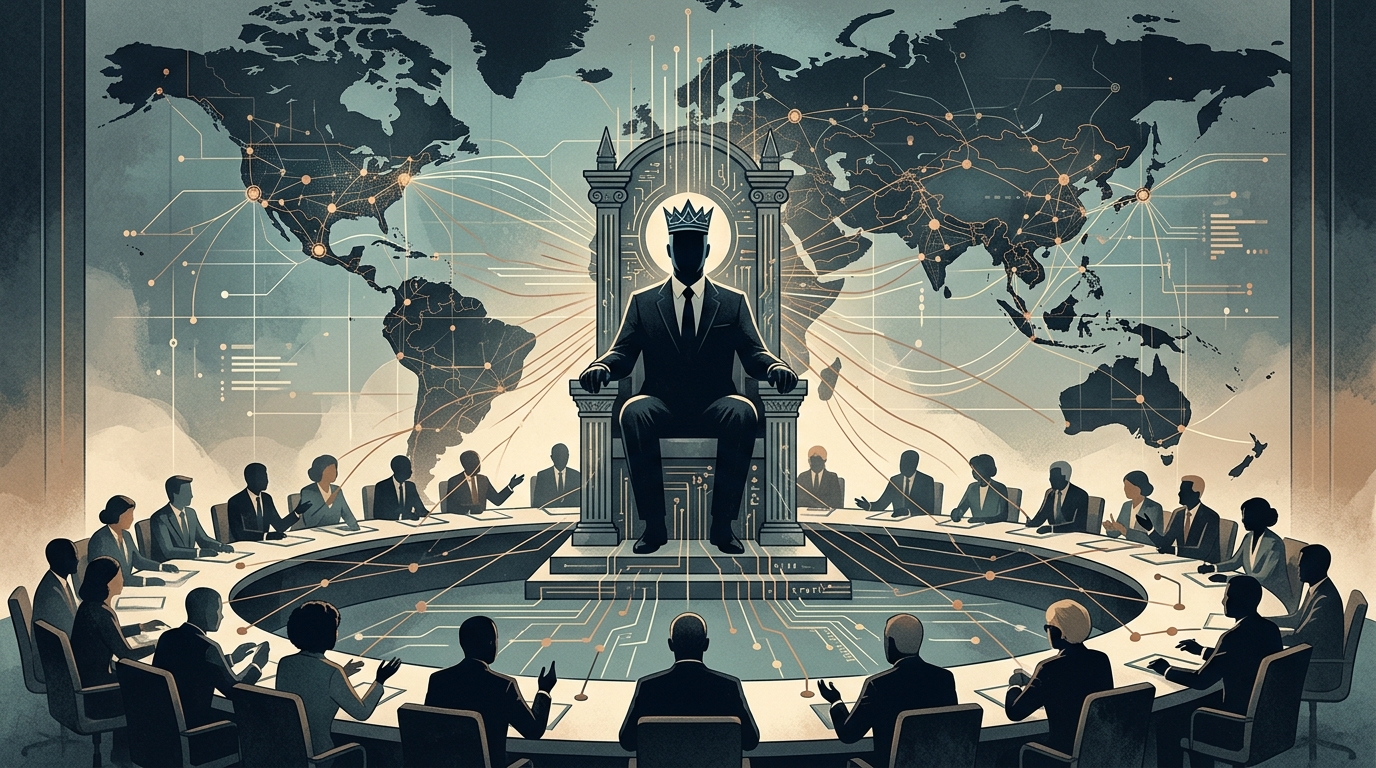
In a move that reshapes the global artificial intelligence chessboard, Chinese AI firm DeepSeek has announced the launch of V4, a large language model boasting a staggering 1.6 trillion parameters. However, the headline is not merely the model’s scale, but the revelation that its training and inference are powered entirely by domestic Huawei silicon, bypassing U.S. export restrictions. This development has triggered a fierce backlash from Washington, with the U.S. government explicitly accusing DeepSeek and other Chinese firms of systematic intellectual property (IP) theft.
Technical Prowess and the MoE Architecture
DeepSeek V4 utilizes an advanced Mixture-of-Experts (MoE) architecture, which allows the model to maintain its massive 1.6 trillion parameter capacity while activating only a fraction of those parameters for any given request. This makes it exceptionally efficient compared to traditional "dense" models. DeepSeek’s success in reaching this level of performance—placing it in the same league as OpenAI’s GPT-4 and Anthropic’s Claude 3.5—is being hailed as a major technical milestone.
The company claims that V4 excels in specialized domains such as software engineering, advanced mathematics, and logical reasoning—areas where DeepSeek has already built a formidable reputation within the open-source community. Its strategy of providing "open weights" has allowed developers worldwide to adopt its technology, fostering an ecosystem that directly challenges the closed-source models dominant in the West.
The Silicon Great Wall: The Huawei Alliance
Perhaps the most concerning aspect for U.S. officials is the disclosure that V4 was trained on clusters of Huawei’s Ascend processors. Following the stringent restrictions imposed by the U.S. Department of Commerce on Nvidia and AMD chip exports to China, many analysts predicted a significant slowdown in Chinese AI progress. DeepSeek V4 proves the opposite.
Huawei, despite heavy sanctions, has managed to develop a software and hardware stack (CANN and Ascend) that, while perhaps lagging in raw per-chip power compared to Nvidia’s H100, offers robust scalability at the data center level. The successful training of a 1.6 trillion parameter model on this ecosystem is proof that China is achieving strategic autonomy, decoupling its AI ambitions from Western supply chains faster than previously anticipated.
Allegations of Intellectual Property Theft
The U.S. response was swift, but this time it went beyond economic sanctions. In a series of official statements, the U.S. government alleges that DeepSeek’s progress is not merely the result of domestic innovation but the product of "massive and orchestrated IP theft." The accusations focus on three primary areas:
- Architectural Reverse Engineering: Allegations that DeepSeek used outputs from OpenAI and Google models to "distill" and train its own models—a practice considered a gray area but ethically and legally contentious at this scale.
- Training Data Exfiltration: Claims that Chinese entities gained unauthorized access to proprietary datasets used by Western firms to enhance model reasoning capabilities.
- Semiconductor Patent Infringement: Suspicions that Huawei integrated chip architecture technologies belonging to U.S. firms through illicit technology transfer networks.
"We are not witnessing a competition of innovation, but a competition of duplication subsidized by state resources," stated a senior official from the U.S. Department of Justice.
Geopolitical Implications and the Path Ahead
This conflict transcends the boundaries of a commercial dispute. It is a battle for the technology that will define the 21st century. If China can produce V4-class models using its own hardware, then the U.S. strategy of "containment" via chip embargoes has largely failed. This suggests that the technological moat the U.S. sought to build is narrower than expected.
Conversely, DeepSeek categorically denies the allegations, emphasizing that its algorithms are original and that the use of publicly available data is standard practice globally. The company argues that U.S. accusations are a politically motivated attempt to stifle a competitor offering superior technology at a lower cost. What is certain is that AI has become the new frontline of a Cold War, where code is the weapon and data is the ammunition. The era of global AI cooperation is rapidly giving way to a fractured world of digital sovereignties.