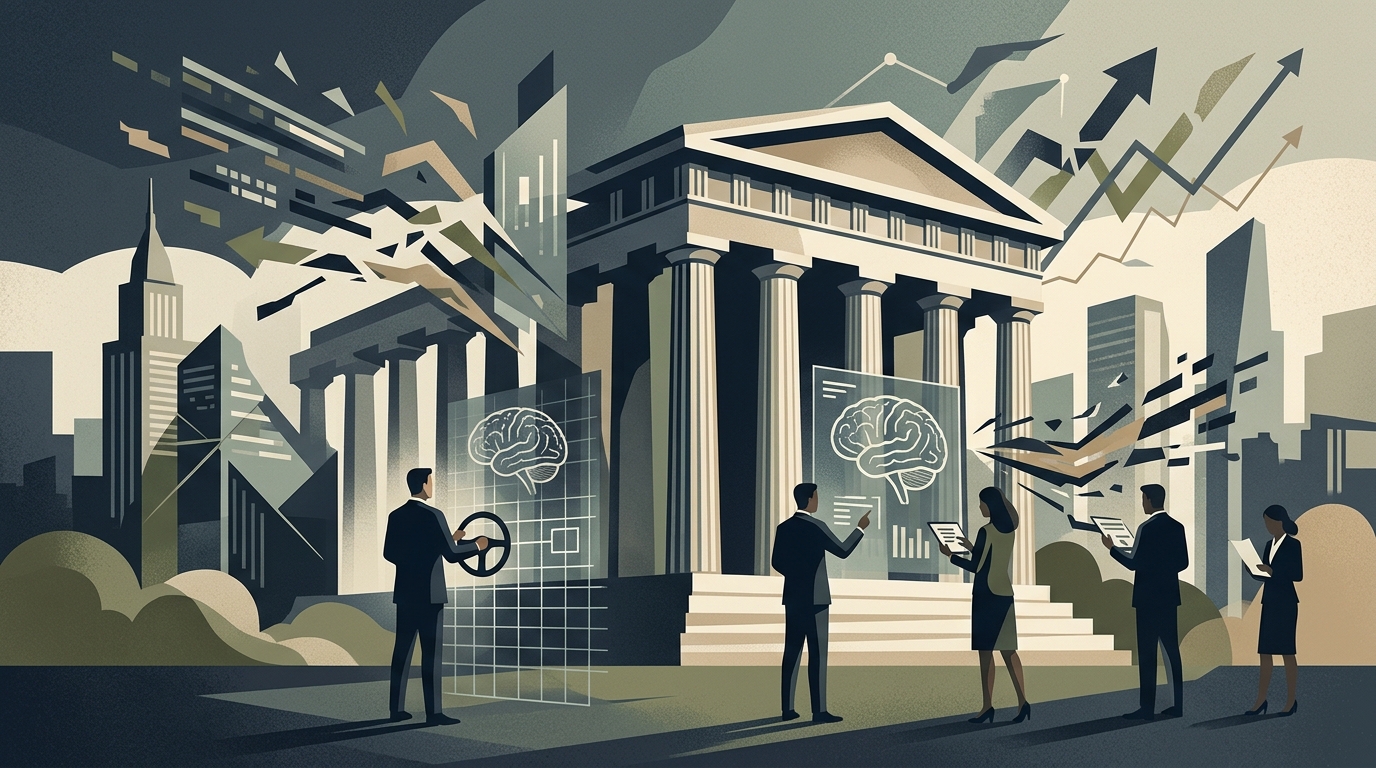
In the quiet corridors of Langley, where silence and paper files once formed the bedrock of security, a new, invisible force is reshaping the foundations of global espionage. The Central Intelligence Agency (CIA) is not merely undergoing a modernization phase; it is in the midst of an existential transformation. Artificial Intelligence (AI) is no longer a futuristic tool but the central pillar upon which the 21st-century 'super-spy' is being built.
From James Bond to the Osiris Algorithm
The traditional image of the spy, relying solely on intuition and personal connections (HUMINT), is giving way to a hybrid model. The CIA has already deployed its own generative AI system, internally referred to as 'Osiris.' Unlike the public-facing ChatGPT, Osiris operates within a strictly classified environment, fed by oceans of both clandestine and Open Source Intelligence (OSINT). The objective is not to replace humans but to dramatically augment their capabilities.
A CIA analyst today is required to process volumes of data that would take a human decades to read. AI can identify patterns in satellite imagery, translate hundreds of dialects in real-time, and connect seemingly unrelated events—such as offshore capital movements and sudden troop deployments in Central Asia—within seconds. This capability creates the 'super-spy': an operational officer possessing the intellectual clarity of a thousand analysts.
The Counter-Intelligence Battle and the AI 'Great Wall'
However, technology is a double-edged sword. As the CIA bolsters its capabilities, its adversaries—notably China and Russia—are using AI to 'blind' the American intelligence network. The pervasive use of biometric data and AI-driven facial recognition in modern megacities makes traditional undercover work nearly impossible. Agents can no longer rely on a simple wig or a forged passport to remain undetected.
In response, the CIA is developing 'synthetic cover' systems. AI helps generate digital footprints so convincing they can withstand the scrutiny of hostile algorithms. Espionage is evolving into a game of 'algorithm versus algorithm,' where victory is determined by one side's ability to deceive the other's neural networks. The digital shadows are becoming as complex as the physical ones once were.
Ethical Dilemmas and the 'Human-in-the-Loop' Strategy
One of the most critical issues facing CIA leadership is the problem of AI 'hallucinations.' In the intelligence world, a false conclusion doesn't just result in a bad answer; it can trigger an international crisis or an unintended military escalation. CIA Director William Burns has repeatedly emphasized that the final decision-making power must remain with humans. AI proposes, the analyst judges, and the policymaker decides.
Furthermore, the use of deepfakes and AI-generated disinformation represents a new frontier for the agency. The CIA must now discern whether a video of a foreign leader declaring war is authentic or the product of an algorithm designed to destabilize markets and alliances. The agency’s ability to verify the truth in a 'post-truth' world is perhaps its most vital mission in the coming years.
Conclusion: The New Age of Shadows
The integration of AI into the CIA is not just a technical upgrade; it is a fundamental reassessment of what power means in the digital age. The spies of the future will be less 'lone wolves' and more 'system orchestrators,' capable of navigating an ocean of information with the aid of advanced technology. Espionage remains the art of understanding an adversary's intentions, but today, that art requires the seamless collaboration of human intellect and machine processing power.