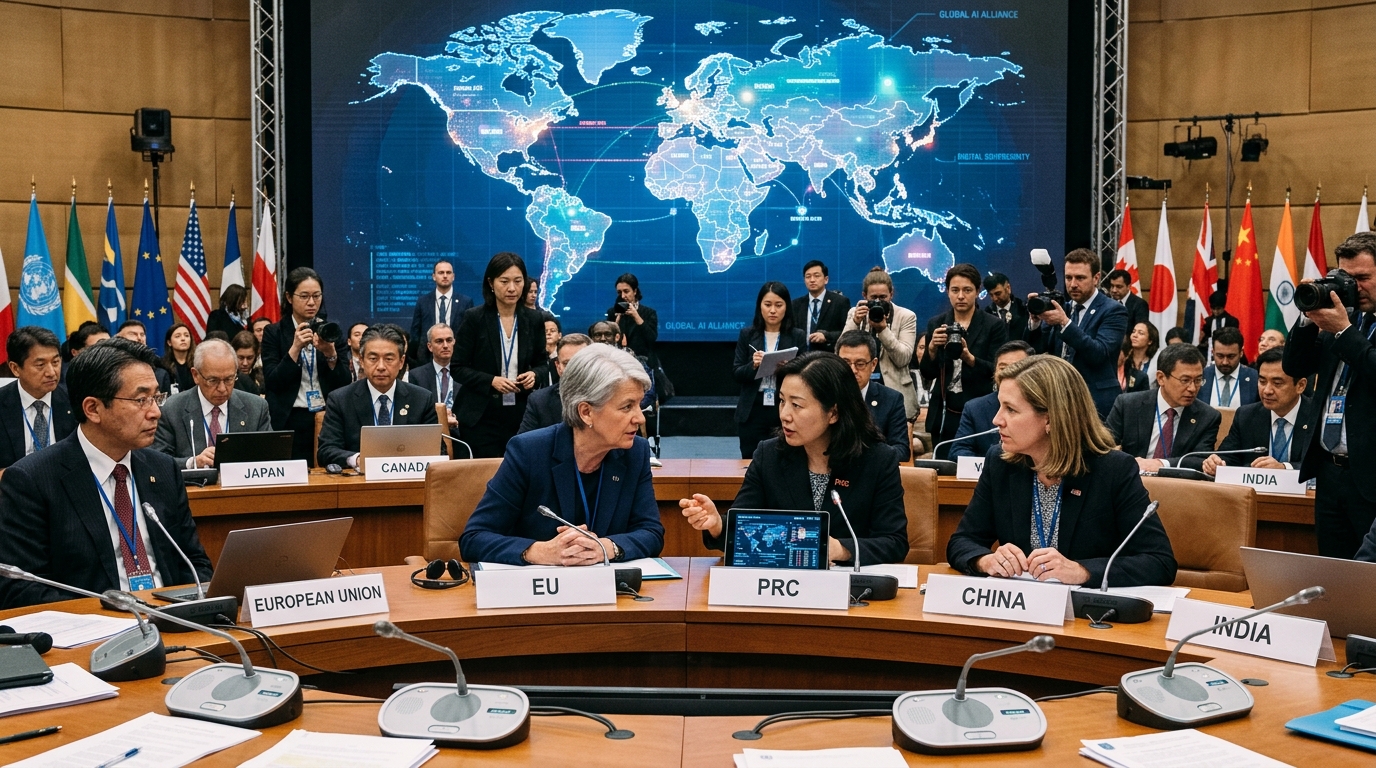
The release of DeepSeek V4 was not merely a technical milestone for Chinese artificial intelligence; it acted as the catalyst for a radical realignment of the country's hardware supply chain. According to sources cited by Reuters, China’s biggest tech players—including Tencent, Alibaba, and Baidu—are engaged in a frantic race to secure the latest batches of Huawei’s Ascend AI chips. This shift marks a critical turning point on the global semiconductor chessboard, as Chinese firms finally abandon hope for a relaxation of US restrictions and double down on domestic production.
The DeepSeek V4 Shockwave and the End of Dependency
DeepSeek V4 proved something many in the West considered impossible: that China can develop world-class AI models using significantly less computing power than its American rivals. However, this success created a new urgency. To scale these models for commercial application, a steady stream of hardware is required. With Nvidia remaining barred from the Chinese market for its top-tier models (H100, B200), Huawei has emerged as the sole savior.
Huawei’s Ascend 910C chip, considered the direct competitor to Nvidia’s H100, is at the heart of this scramble. Reports indicate that orders have surged by 300% in a matter of weeks, with companies even offering down payments for production runs that haven't yet begun. What we are witnessing is the creation of a closed ecosystem, where software (DeepSeek) and hardware (Huawei) merge to create a 'Great Silicon Wall' of AI.
Geopolitical Strategy and the Manufacturing Hurdle
Washington is watching with concern. Sanctions were intended to delay Chinese progress in AI, but they seem to have achieved the opposite: they forced the Chinese industry to mature violently. Huawei, once considered doomed due to its exclusion from American software and components, has now transformed into China’s national champion. Huawei’s CANN architecture, the answer to Nvidia’s CUDA, is improving at a breakneck pace as thousands of developers from Tencent and Alibaba migrate their codebases to it.
However, the bottleneck remains manufacturing. SMIC (Semiconductor Manufacturing International Corp), the primary foundry for Huawei, faces serious yield rate issues on advanced 7nm and 5nm lithography. Despite massive investments from the Chinese state, mass-producing the Ascend 910C remains difficult. This supply constraint is exactly what is driving the current buying fever. Companies fear that if they don’t secure hardware now, they will fall behind in the generative AI race, especially as DeepSeek V4 opens new paths in efficiency that require specific hardware optimizations.
The Future: Two Worlds, Two Tech Stacks
This development accelerates the bifurcation of the technological world. On one side, we have the Western bloc relying on Nvidia and open markets; on the other, China is building a fully vertically integrated structure. DeepSeek V4 showed that Chinese software is no longer the poor cousin. If Huawei manages to resolve its production issues, the global AI market dynamics will change irrevocably.
Analysts point out that this 'scramble' by Chinese firms is not just a business move, but a political imperative. Beijing has made it clear that national security depends on AI sovereignty. In this context, Huawei isn’t just selling chips; it is selling the survival of the Chinese tech dream against American pressure. The battle for the Ascend 910C is a battle for who will control the future of intelligence in Asia.
- Demand for Ascend 910C chips has reached unprecedented levels following the DeepSeek V4 success.
- Chinese giants Tencent and Alibaba are leading the charge toward hardware independence.
- SMIC remains the critical link in production, facing challenges in advanced manufacturing yields.
- Huawei’s CANN software stack is becoming the new standard for Chinese AI development.
In conclusion, China appears to be moving from defense to offense. The pivot to Huawei is not a temporary workaround but a strategic choice that will define the next decade. DeepSeek V4 was the spark; Huawei is the fuel for a fire that Washington may no longer be able to extinguish.