In the geopolitical chessboard of the 21st century, Artificial Intelligence (AI) is not just a pawn; it is the board itself. However, a recent analysis by The New York Times highlights an often-overlooked dimension of Chinese strategy: the deep, almost paralyzing fear within Beijing’s leadership regarding the unpredictable consequences of AI. For the Chinese Communist Party (CCP), AI is a double-edged sword that promises economic rebirth but threatens ideological purity and social cohesion.
The Ideological Alignment as an Existential Challenge
For Washington, the risks of AI are often discussed in terms of election misinformation or job displacement. For Beijing, the issue is far more fundamental. Large Language Models (LLMs) are inherently probabilistic and "chaotic." Their ability to generate responses that are not pre-programmed is a nightmare for a regime built on absolute information control. The Cyberspace Administration of China (CAC) has already imposed strict rules requiring AI models to "reflect core socialist values" and avoid any content that could undermine state authority.
This need for "political correctness" creates a technical paradox. If you over-constrain an AI model to prevent it from saying the "wrong" things, you drastically reduce its creativity and efficacy. Chinese scientists find themselves trapped between the drive to outperform OpenAI and the fear that their chatbot might say something untoward about Xi Jinping, leading to their company’s immediate dissolution.
Global Safety and the Fear of the "Uncontrollable"
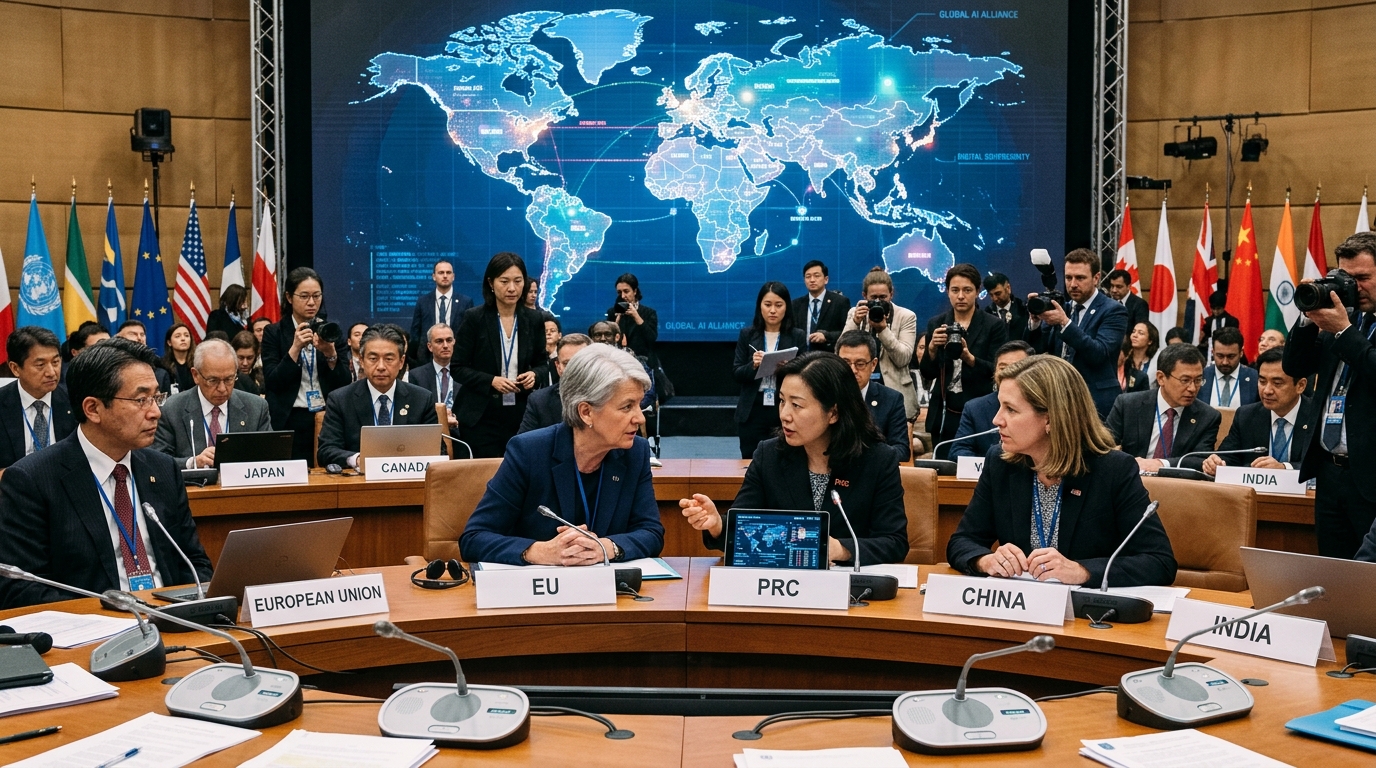
Beyond internal suppression, China shares global fears about the existential risks of AI. China’s participation in the 2023 Bletchley Park Declaration and subsequent talks with Western leaders indicate that Beijing perceives AI as a force that could escape human control entirely. There is growing concern about AI-assisted bioterrorism and autonomous weapons systems that could trigger an escalation no general desires.
- China fears that AI could accelerate social instability through automation at a time when the Chinese economy is already slowing down.
- There is intense concern about the use of AI by non-state actors or dissidents to bypass the "Great Firewall."
- The leadership worries that reliance on Western chips and software leaves China’s national security vulnerable to "backdoors."
The Strategy of "Controlled Innovation"
China’s response is not prohibition, but the absolute manipulation of development. Beijing is investing billions in domestic computing infrastructure, attempting to break free from Nvidia and the American supply chain. Simultaneously, it promotes an international agenda where AI governance remains in the hands of states rather than corporations or international civil society. What we are witnessing is the emergence of "Digital Authoritarianism 2.0," where AI is used to perfect the social credit system and surveillance, while the state simultaneously tries to keep the technology itself "on a leash."
"Artificial Intelligence for China is not just the future of production; it is the future of the regime's survival. If they fail to tame it, the technology itself will become their undoing."
In conclusion, China’s anxiety over AI is sincere, but it stems from different motivations than those of the West. While we worry about individual rights and ethics, Beijing worries about stability and power. This shared anxiety, however, might provide the only point of contact in an otherwise divided world, forcing the two superpowers to cooperate in setting rules for a technology that knows no borders.