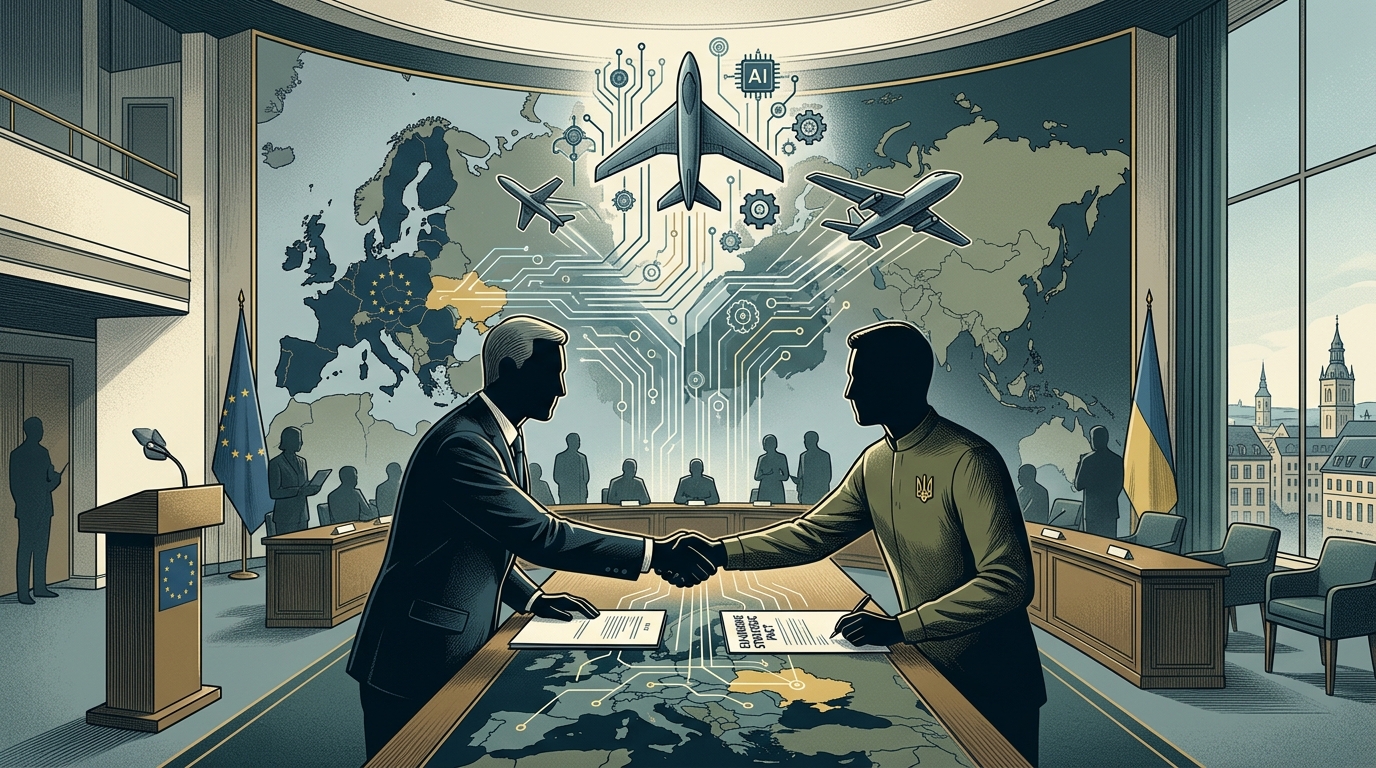
In the heart of 2026, the global technological map is no longer drawn solely by borders and tariffs, but by the invisible flows of data powering large language models. The recent news that Chinese giant Alibaba has banned its employees from using tools developed by the American firm Anthropic (creator of Claude) is not merely an internal security decision; it is the confirmation of a new form of espionage and intellectual property theft known as a 'distillation attack.'
The Anatomy of 'Distillation': Intelligence Theft or Optimization?
To understand the friction between Alibaba and Anthropic, one must delve into the technique of Knowledge Distillation. In the AI world, this is an established method where a smaller, more efficient model (the 'student') is trained using the outputs of a larger, more sophisticated model (the 'teacher'). While this method is legitimate for internal model optimization, it becomes an 'attack' when a company uses a competitor's model to 'steal' its logic and response structure without incurring the massive costs of original training.
The allegations against Alibaba suggest that Chinese developers used Anthropic's Claude to refine their own model, Qwen. Anthropic, backed by Amazon and Google, maintains some of the industry's strictest safety and 'ethical alignment' protocols. Using its data to bolster a Chinese rival model is viewed by Washington and Silicon Valley as a form of digital parasitism that undermines the US's strategic advantage.
Geopolitics and the Strategy of Self-Reliance
Alibaba's move to ban Claude for its employees is interpreted by many analysts as a preemptive defensive measure and a show of compliance with Beijing's pressures. The Chinese government is pushing domestic tech firms to decouple completely from Western AI infrastructure. In an environment where the US restricts China's access to advanced Nvidia semiconductors, possessing superior algorithms is the last bastion of defense.
However, the irony is palpable. While Alibaba bans Claude to protect itself from accusations or to prevent its own data from leaking to Anthropic, the very nature of LLM training relies on open access to information. China finds itself in a difficult balancing act: it needs the knowledge generated in the West to close the technological gap, yet it must simultaneously demonstrate that its own models, such as Qwen 2.5, are products of indigenous innovation.
Implications for Global Competition
This incident signals the end of the 'romantic' period of AI, where research was largely collaborative and open. We are now entering an era of compartmentalization.
- API Restrictions: Companies will become even more cautious with API access, implementing filters to detect if a user is a human or another bot attempting to 'distill' knowledge.
- Digital Borders: Alibaba's move reinforces the scenario of a bifurcated internet, where Western AI and Eastern AI operate in entirely different ecosystems with minimal interaction.
- Legal Battles: 'Distillation attacks' will become the new frontier for intellectual property litigation, as it is notoriously difficult to legally prove that one model was trained on the outputs of another.
"Artificial intelligence is no longer a productivity tool, but the ultimate geopolitical weapon. Whoever controls the quality of the response, controls the narrative of the future," notes a Beijing-based market analyst.
In conclusion, the Alibaba-Anthropic clash is just the tip of the iceberg. As Alibaba seeks to clear its name and protect its internal integrity, the message is clear: trust between the two technological superpowers has definitively collapsed. 'Distillation' is no longer a technical term, but a battle cry in the struggle for 21st-century digital supremacy.