In an era where the power of nations is no longer measured solely by the size of their armies but by the computational strength of their servers, Emmanuel Macron and Narendra Modi are emerging as architects of a new form of statecraft: "AI Diplomacy." Recent movements between the Élysée Palace and New Delhi’s decision-making hubs reveal a concerted effort to bypass traditional bureaucratic channels in favor of personal connections with Silicon Valley titans and domestic tech ecosystems.
The French Strategy: From 'Startup Nation' to AI Superpower
Emmanuel Macron has made it clear that France does not wish to be merely a consumer of American or Chinese technologies. Through the annual "Choose France" summits, the French President has cultivated personal relationships with figures like Elon Musk and OpenAI’s Sam Altman. His strategy is built on the premise that the personal intervention of a head of state can unlock billions in investments that might otherwise flow to Ireland or Germany.
The success of Mistral AI, the French answer to ChatGPT, is no accident. It was nurtured in an environment Macron personally crafted, offering tax incentives and, crucially, direct access to political leadership. During his recent engagements, Macron has championed the vision of "sovereign European AI," convincing investors that France is the safest and most innovative harbor within the European Union. His approach blends the French tradition of dirigisme with a modern, aggressive entrepreneurship.
India: Demographic Power Meets Digital Transformation
On the other side of the globe, Narendra Modi is using his personal gravity to transform India from the world’s "back office" into a global AI laboratory. Modi has leveraged the vast Indian diaspora in Silicon Valley—including the likes of Sundar Pichai (Google) and Satya Nadella (Microsoft)—as a bridge for knowledge and capital transfer. His rhetoric of "Viksit Bharat" (Developed India) by 2047 relies heavily on integrating AI into daily governance and the economy.
Modi’s relationship with tech leaders is more than ceremonial. During his visits to the U.S. and while hosting foreign leaders in New Delhi, the Indian Prime Minister presents AI as a tool for social inclusion, attracting investments aimed at India’s massive internal market. The iCET (Initiative on Critical and Emerging Technology) agreement with the U.S. is the pinnacle of this personal diplomacy, bypassing traditional defense pacts to focus on semiconductors and AI.
The Paris-Delhi Axis: An Alternative Narrative
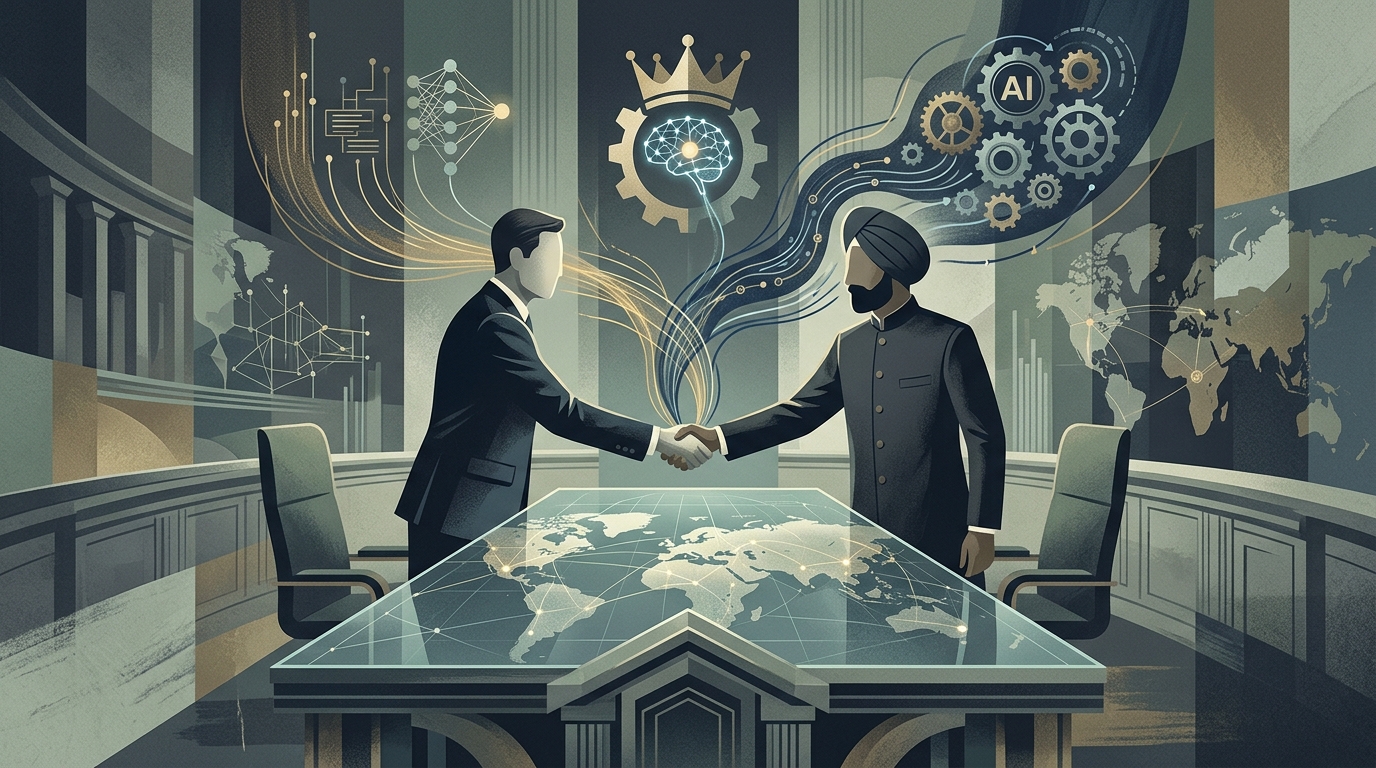
What makes the Macron-Modi dynamic particularly compelling is their mutual collaboration. France and India have developed a strategic partnership that goes far beyond Rafale fighter jets. The two leaders are now discussing the joint development of open AI standards and the creation of a "third way" that does not depend on the U.S.-China duopoly.
- Joint investments in green-energy-powered data centers.
- Collaboration between French research institutes and Indian Institutes of Technology (IITs).
- Talent exchange through specialized visa programs for data scientists.
"Artificial Intelligence is not just a technological evolution; it is the new battlefield for national sovereignty," a French Ministry of Economy official recently noted.
The challenge for both leaders remains the balance between attracting foreign capital and protecting national data. While Macron grapples with the EU's stringent regulations (AI Act), Modi faces infrastructure and digital literacy hurdles. However, their ability to speak the language of CEOs and investors gives them a distinct advantage in the global race for technological supremacy.