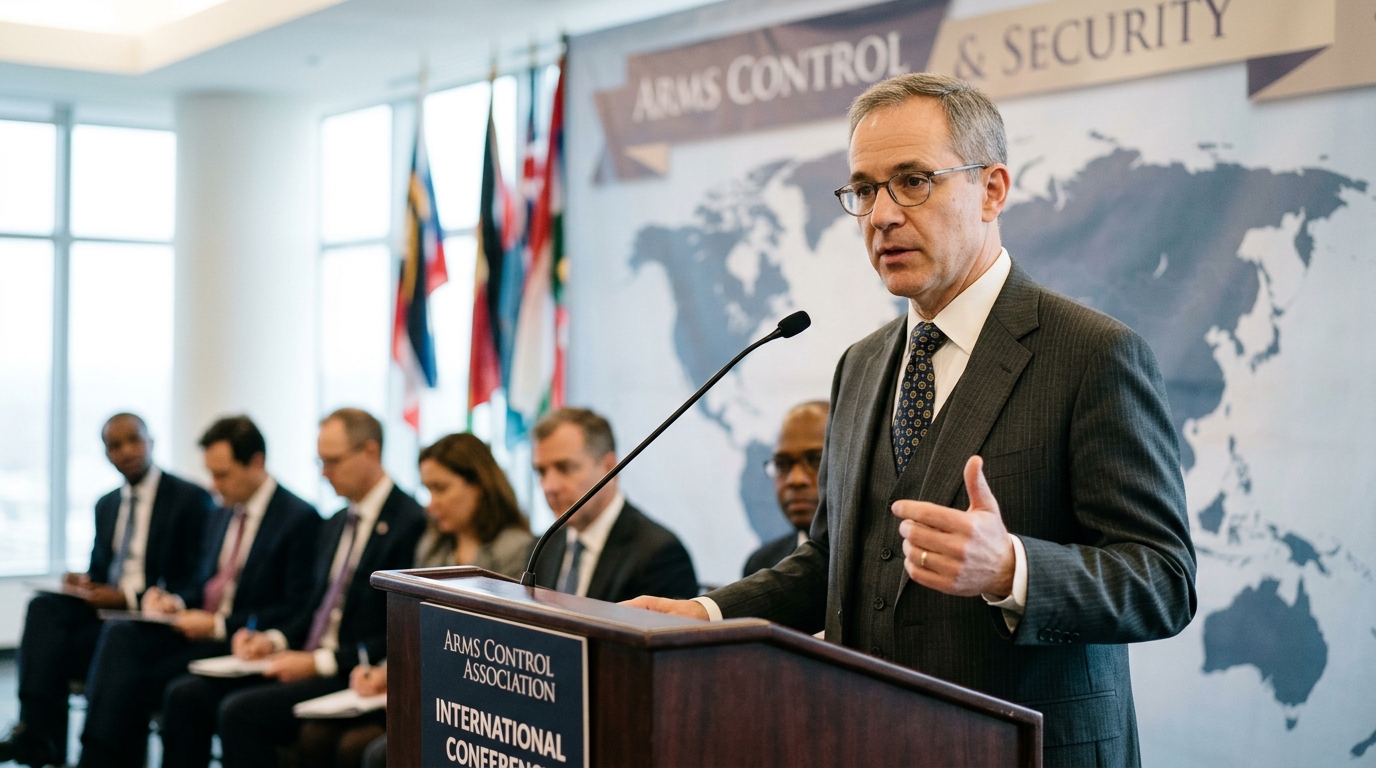
The nature of modern warfare is undergoing a tectonic shift as Artificial Intelligence (AI) transitions from a supporting tool to a central protagonist in military operations. According to a recent analysis by the Arms Control Association (ACA), the ongoing geopolitical tension involving Iran serves as the first real-world testing ground for the large-scale integration of algorithmic systems in high-intensity environments. The report emphasizes that AI usage is no longer confined to data analysis but has expanded to target selection and the management of drone swarms, creating an environment where human judgment is increasingly marginalized.
The Algorithmic Battlefield and Targeting
At the heart of the conflict lies the ability of AI systems to process vast amounts of data from satellites, sensors, and signals intelligence in real-time. The ACA points out that forces involved in the confrontation with Iran are utilizing advanced machine learning models to identify mobile missile launchers and underground facilities. The speed at which these systems can recognize and suggest targets far exceeds human capabilities, drastically reducing the 'OODA loop' (Observe, Orient, Decide, Act) time.
However, this speed comes with inherent risks. The 'black box' nature of these algorithms means that commanders are often asked to approve strikes without fully understanding the reasoning behind a target selection. In the case of Iran, where military infrastructure is frequently embedded within civilian areas, the probability of an algorithmic error significantly increases the risk of collateral damage, despite promises of 'surgical precision.'
Drone Swarms and Autonomous Response
Iran has for years developed a sophisticated Unmanned Aerial Vehicle (UAV) industry, which now incorporates AI capabilities for electronic warfare resilience and autonomous navigation. The response from its adversaries relies equally on AI-driven defense systems capable of intercepting drone swarms in fractions of a second. The ACA warns that we are witnessing a 'battle of algorithms,' where escalation can occur automatically before diplomats even have a chance to react.
"The speed of AI on the battlefield creates a new dynamic where human intervention becomes the weak link in the chain, pushing states to cede more autonomy to their weapons to remain competitive," the report states.
The use of 'loitering munitions'—drones that can loiter over an area and autonomously search for and destroy targets—has become common practice. This erodes the traditional concept of accountability. In the event of a war crime or an erroneous strike, it remains legally and ethically unclear who bears responsibility: the programmer, the commander, or the machine itself?
The Escalation Trap and the Need for Control
One of the most concerning findings of the Arms Control Association concerns the risk of a 'Flash War.' Just as algorithms in financial markets can trigger a sudden crash, military AI systems could misinterpret an adversary's move as an imminent attack, triggering a chain reaction that leads to full-scale conflict. In the context of tensions with Iran, where communication channels are already strained, this scenario is particularly nightmarish.
The ACA calls on the international community to immediately establish strict frameworks for AI arms control. It proposes a ban on fully autonomous lethal systems (LAWS) and the enforcement of 'meaningful human control' over every decision involving the use of force. However, verifying such treaties is exceptionally difficult. Unlike nuclear weapons, which require massive facilities and materials, AI is software that can be hidden on a simple server.
Conclusion: The Ethical Abyss
The conflict with Iran is not just a geopolitical crisis; it is a turning point for humanity. The integration of AI into warfare promises efficiency but threatens to remove the last vestige of humanity from the horrors of battle. The warning from the Arms Control Association is clear: if we do not set limits now, future wars will not be fought by generals, but by code that feels neither fear nor remorse. International security now requires a new 'digital diplomacy' that stays ahead of the developments in defense industry laboratories.