The promise of a world free from human driving errors faced another reality check as Waymo, Alphabet’s autonomous driving subsidiary, announced a recall of 3,871 vehicles. The cause is a critical software vulnerability regarding the handling of freeway construction zones, a flaw that could potentially lead to high-speed collisions. This incident is more than just a technical patch; it is a stark reminder that artificial intelligence, despite its exponential growth, still struggles with the unpredictable nuances of physical reality.
The Anatomy of the Recall
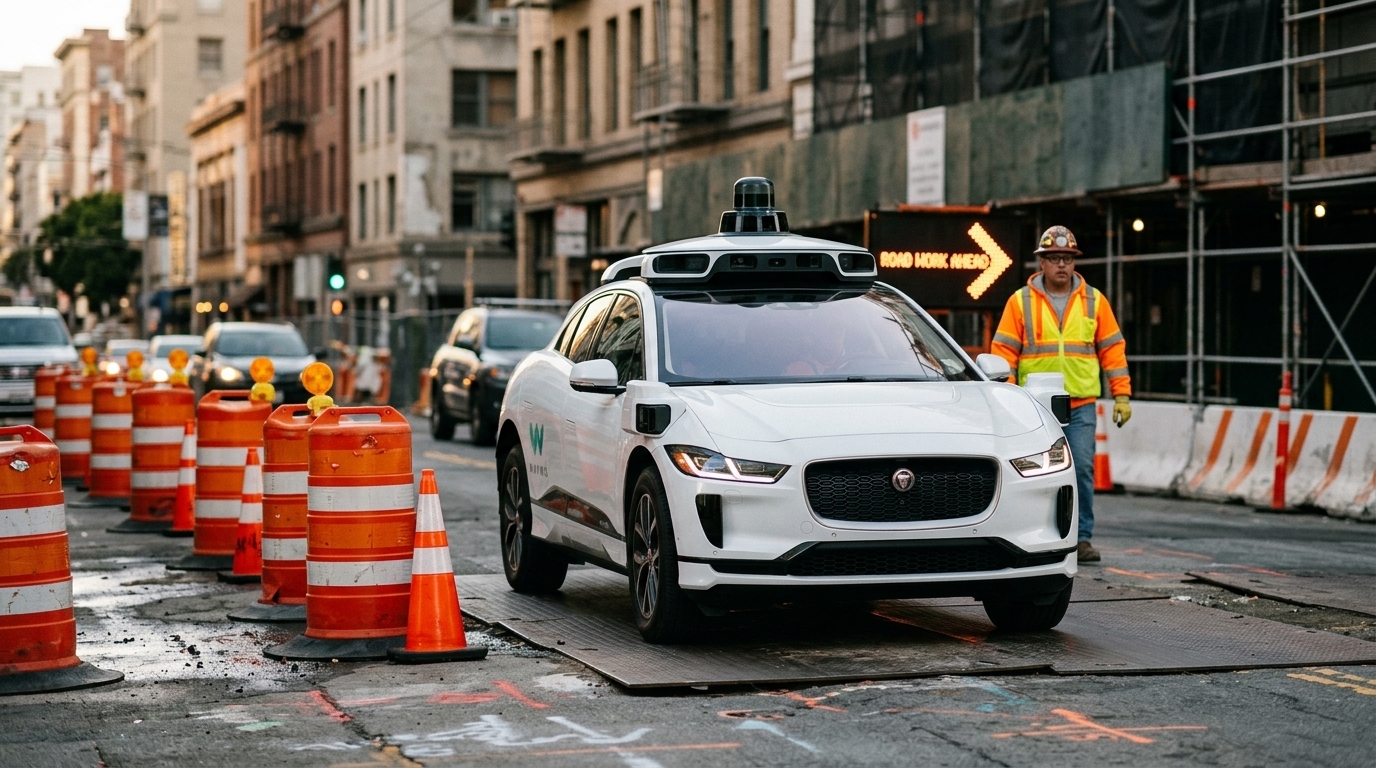
According to documents filed with the National Highway Traffic Safety Administration (NHTSA), the issue lies in how the Waymo Driver software prioritizes hazards. Under specific conditions, the system failed to correctly identify or react to traffic cones, signage, and barriers marking closed lanes on high-speed roads. In some instances, the vehicle’s logic prioritized other perceived hazards, effectively ignoring the structural changes to the roadway imposed by construction crews.
The recall affects software versions utilized between 2021 and 2024. While Waymo stated it has already deployed over-the-air (OTA) updates to rectify the bug, the underlying concern persists. The fact that an autonomous vehicle could "decide" to maintain its velocity while entering a zone where human workers or static obstacles are present is a nightmare scenario for regulators and safety advocates alike.
The 'Edge Case' Conundrum
For Waymo’s engineers, construction zones represent the ultimate 'edge case'—extreme or rare scenarios that deviate from the standard training data. While a human driver intuitively understands the difference between a permanent concrete wall and a temporary plastic pylon, AI must process thousands of data points from LiDAR, cameras, and radar to reach the same conclusion.
- Dynamic Environments: Construction zones change daily, often without appearing on high-definition digital maps.
- Sensor Ambiguity: Dust, poor lighting, or faded lane markings can confuse computer vision systems.
- Hazard Prioritization: The software must decide whether to brake hard (risking a rear-end collision) or maintain course, a binary choice that can have fatal consequences.
"Safety is a continuous learning process. Every mile driven teaches us something new about the complexity of our infrastructure," a Waymo spokesperson stated, attempting to manage the public fallout.
Regulatory Scrutiny and Public Trust
The NHTSA has significantly ramped up its oversight of autonomous vehicle (AV) companies following a string of incidents involving Tesla, GM’s Cruise, and now Waymo. The era of 'regulatory exceptionalism' for Big Tech appears to be closing. Authorities now demand total transparency and immediate corrective action when defects are identified, even if they haven't yet resulted in fatalities.
At stake is public trust. If robotaxis are to replace human drivers, they must prove they are not just as good, but substantially safer. Failing to recognize a construction zone at freeway speeds damages Waymo's reputation as the gold standard of the industry. The transition to Level 4 and Level 5 autonomy will likely be delayed as the chaos of the real world continues to outperform the safety of Silicon Valley simulators.
Conclusion: A Long Road Ahead
Waymo’s recall does not signal the death of the autonomous dream, but it does mark a new phase of maturity. Companies are now forced to solve problems that aren't just about code, but about the ethics and physics of the road. Until these 'edge cases' are fully mastered, the presence of a human safety net—whether in the car or via remote monitoring—remains the final line of defense against an AI that, in a moment of confusion, might choose the wrong priority.