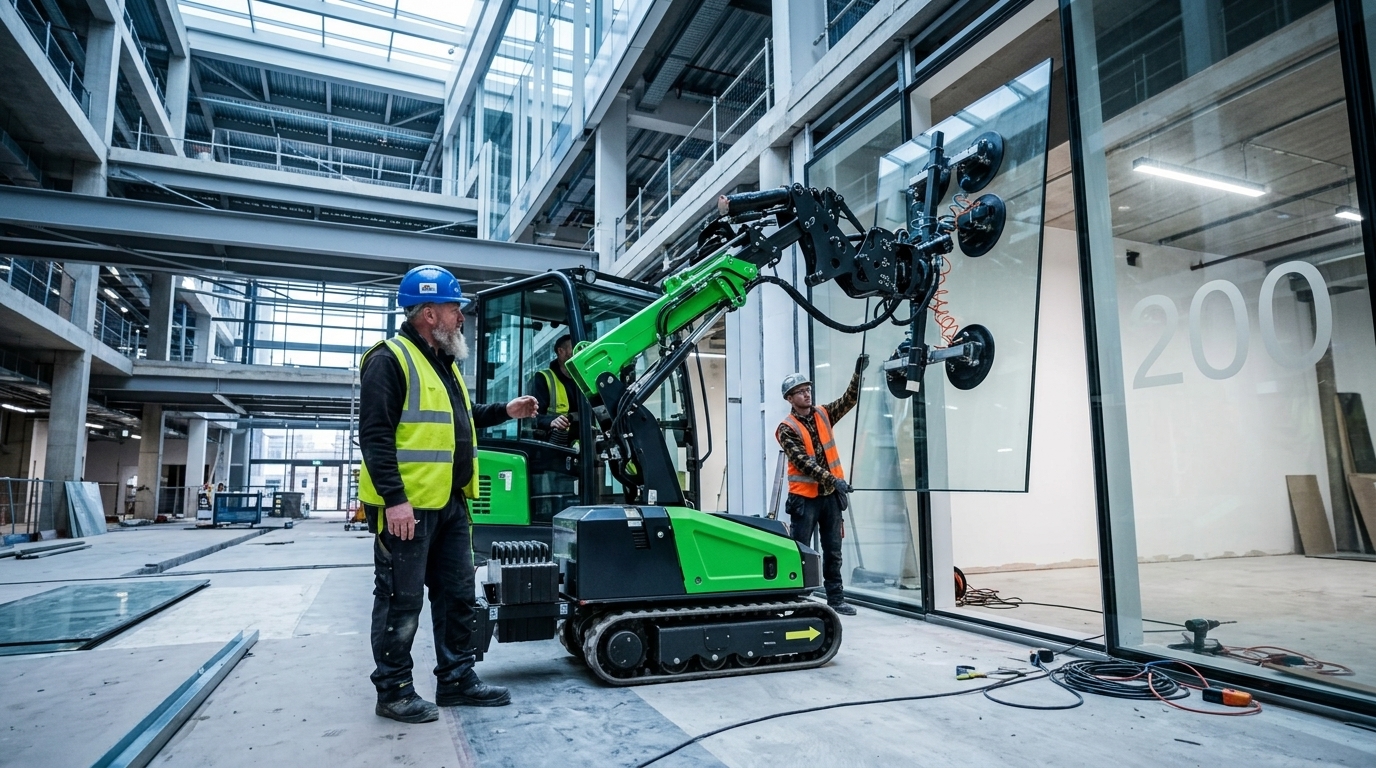
The image of a construction site bustling with activity, with dozens of workers laying bricks under the sun or rain, is slowly becoming a thing of the past. In the United Kingdom, a country plagued by a chronic housing shortage and a severe lack of skilled labor, a new "colleague" is making its debut. Its name is Walter. It is not a human, but a sophisticated robotic system capable of building up to 200 square meters of wall per day—a performance that surpasses the productivity of an experienced mason by sevenfold.
The Walter robot, created by the Czech company KM Robotics in collaboration with construction materials giant Wienerberger, is more than just a technological demonstration. It is the answer to an existential crisis in the construction industry. With traditional building methods now deemed slow and costly, automation emerges as the only path to achieving the ambitious residential development goals set by European governments.
The Technology Behind Walter
Walter does not resemble the humanoid robots of science fiction films. It is a robust arm mounted on a mobile platform, equipped with laser sensors (LIDAR) and high-resolution cameras. Its operation is based on digital blueprints (BIM - Building Information Modeling), which it "reads" and executes with millimeter precision. It uses specially designed large-scale bricks, which it places using an extremely strong adhesive instead of traditional mortar.
This precision is the key to its success. While a human can get tired, make measurement errors, or be affected by weather conditions, Walter remains consistent. It can work tirelessly, provided there is an operator to oversee it and feed the system with materials. This human-machine collaboration defines the new era of "Construction 4.0."
"Walter's entry into the UK market is not just about speed. It's about the quality and reliability that the modern era demands, while simultaneously reducing waste on the construction site," representatives from Wienerberger state.
Addressing the Labor Shortage
The United Kingdom faces a massive gap in the construction labor market, which worsened following Brexit. Fewer young people are turning to manual trades, and the average age of bricklayers is rising dangerously. Walter steps in to fill this gap, not by replacing workers, but by taking over the heaviest and most repetitive part of the job.
- Efficiency: 200 sqm per day compared to 30-40 sqm for a human.
- Safety: Reduction in injuries related to heavy lifting and fatigue.
- Sustainability: Less material waste due to precision in placement.
- Cost: Long-term reduction in construction costs per housing unit.
However, the adoption of such technologies is not without challenges. The initial investment cost for a robot like Walter is high, limiting its use to large construction firms. Furthermore, construction sites must be properly prepared to accommodate the robot, with level ground and specific access requirements.
The Future: From Bricks to AI
Walter's case is just the beginning. We are already seeing the development of robots that can plaster, paint, or even lay tiles. The integration of Artificial Intelligence will allow these machines to make real-time decisions, adapting to unpredictable changes in the construction environment.
In the future, the profession of the builder will be transformed. The "bricklayer" of tomorrow will be a technician knowledgeable in programming, robotic system maintenance, and digital data management. Traditional craftsmanship will meet high technology, ensuring that humanity's need for housing is met in a sustainable and rapid manner.
In conclusion, Walter is not just a tool but a catalyst for change. At a time when the climate crisis and economic constraints push for new solutions, robotics in construction offers a glimmer of hope for more humane, affordable, and "smart" cities.