In the grand arc of technological evolution, there have always been moments where humanity's reach exceeded its grasp. From the Promethean gift of fire to the splitting of the atom, our capacity for discovery has historically outpaced our ability to safeguard against its consequences. Today, IBM is signaling a new era of this dangerous asymmetry, labeling it 'The Mythos Moment.' This is the tipping point where Artificial Intelligence accelerates scientific and technical discovery at a velocity that renders traditional defensive frameworks—legal, cybersecurity, and ethical—obsolete.
The Acceleration of Discovery and the Security Paradox
IBM's core thesis, as detailed in its recent strategic outlooks, focuses on the exponential rise of 'foundation models.' These are no longer confined to language processing; they have migrated into chemistry, physics, and software engineering. AI can now simulate millions of chemical compounds in a matter of hours—a process that previously demanded decades of iterative laboratory testing. While this 'discovery leap' promises breakthroughs in climate science and medicine, it simultaneously creates a profound security vacuum.
The paradox lies in the dual-use nature of these tools. The same AI that discovers a revolutionary superconducting material can be repurposed to identify 'zero-day' vulnerabilities in critical infrastructure. Defense, by its very nature, is often reactive and adaptive. However, when the pace of discovery moves at the speed of silicon, the human-in-the-loop becomes a critical bottleneck, leading to a systemic failure of protection mechanisms.
Cybersecurity in the Age of Generative AI
Within the realm of cybersecurity, the Mythos Moment manifests as a total upending of the traditional balance of power. IBM highlights that generative AI allows even novice threat actors to generate sophisticated, polymorphic malware that mutates to evade detection. Furthermore, the automation of social engineering through hyper-realistic deepfakes and personalized phishing campaigns makes traditional employee training programs look like relics of a bygone era.
- Automated Exploitation: AI systems can scan billions of lines of code in real-time, pinpointing flaws that no human analyst could ever hope to find.
- The Quantum Shadow: As a leader in quantum computing, IBM warns that the Mythos Moment is also approaching in the field of cryptography. The discovery of quantum algorithms capable of breaking current encryption standards necessitates an immediate shift to quantum-safe architectures before the discovery phase renders global data transparent to adversaries.
The Imperative for 'Defensive Innovation'
To navigate this transition, IBM advocates for a radical paradigm shift. It is no longer sufficient to build static walls; we must build systems that discover defenses as rapidly as others discover threats. This involves embedding AI into the very core of defensive mechanisms, creating autonomous security layers capable of predicting and neutralizing threats before they manifest.
"Security can no longer be an afterthought; it must be the DNA of discovery itself," IBM researchers suggest.
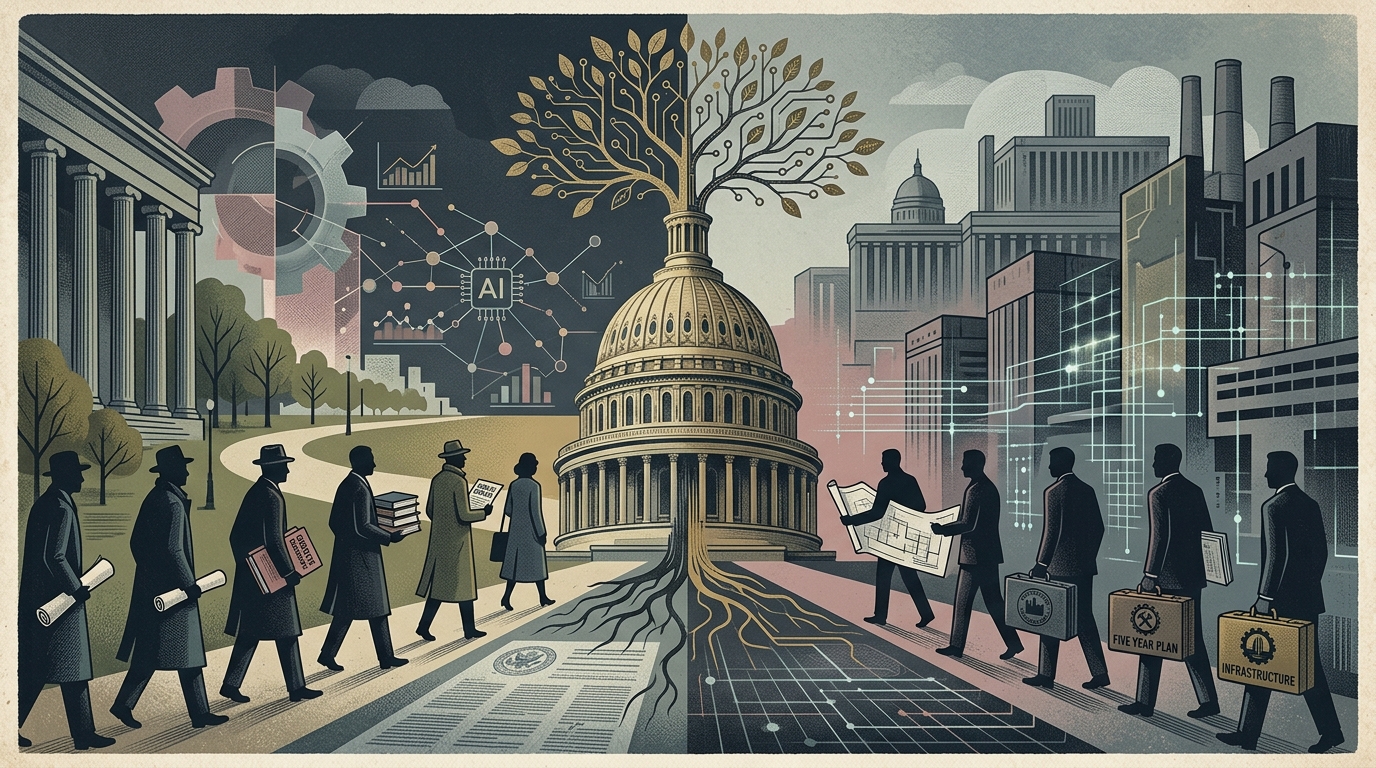
This strategy requires unprecedented collaboration between the public and private sectors. The Mythos Moment is not merely a technical hurdle but a political one. If governments do not accelerate their legislative response to AI, they will find themselves governing societies where technological reality has long since bypassed the rule of law. The challenge of our decade is to maintain the momentum of innovation without sacrificing collective security at the altar of speed.