When we hear the name Jim Henson, we immediately think of the Muppets—the felt-covered anarchy of the Cookie Monster, the gentle wisdom of Kermit the Frog, or the operatic chaos of Miss Piggy. Yet, there exists a shadow side to Henson’s creativity, a streak of avant-garde experimentation that predates his global fame. In 1969, Henson directed and co-wrote a teleplay for NBC’s Experiments in Television titled The Cube. It is a work of such psychological density and existential dread that it feels less like a product of the late sixties and more like a long-lost episode of Charlie Brooker’s Black Mirror.
The Architecture of Existential Dread
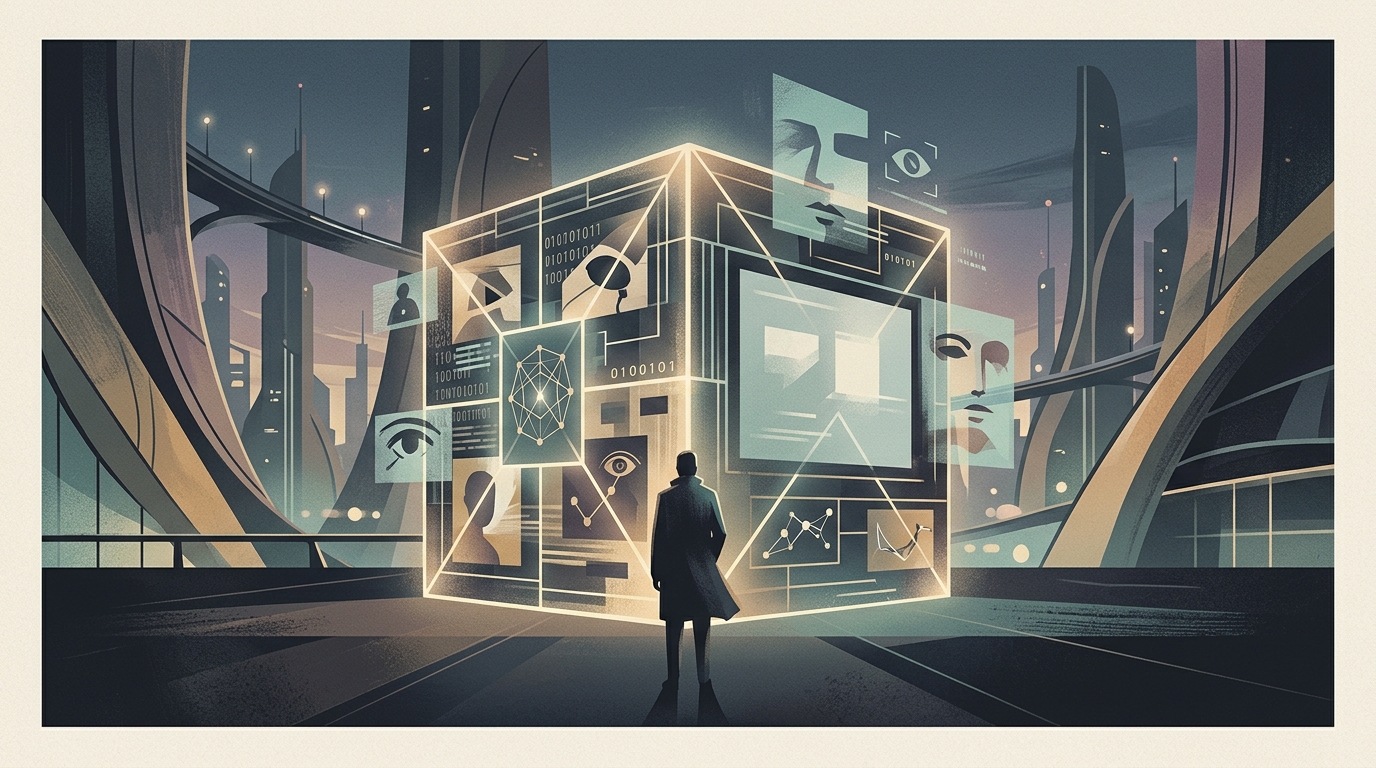
The premise of The Cube is minimalist perfection: a man is trapped in a white, sterile, grid-like room. There is no explanation for his incarceration. Doors appear and disappear, but they only open from the outside. Throughout the film, a parade of guests enters his space—a doctor, a lawyer, a group of partygoers, a guitar player, and even a man claiming to be the cube’s architect. Each visitor offers a different interpretation of the man’s predicament, but none provide a way out. In fact, their presence only serves to further destabilize the protagonist’s sense of self.
The film is a masterclass in the "theatre of the absurd," drawing heavily from the works of Samuel Beckett and Jean-Paul Sartre. The protagonist is an "Everyman" figure, a surrogate for the viewer, who is subjected to a relentless barrage of social roles and expectations. As Henson himself noted in interviews, the project was born out of a desire to explore the limits of human perception and the fragility of what we call "reality."
"I’ve always been fascinated by the idea of a person trying to make sense of their environment, only to find that the environment is designed to be nonsensical."
This sense of systemic gaslighting is the core of the film’s power. The man isn't just trapped by walls; he is trapped by the definitions others impose upon him.
A Proto-Black Mirror Prophecy
While Black Mirror often focuses on the technological catalyst for our isolation, The Cube focuses on the psychological and social ones. However, the parallels are striking. In the age of social media, we are all, in a sense, living in white cubes. We project versions of ourselves into the digital void, and the feedback we receive—the likes, the comments, the criticisms—shapes the walls of our perception. We are constantly visited by "avatars" of social expectation, telling us who we should be and what we should believe.
The film’s critique of bureaucracy and institutional power also feels incredibly modern. The doctor who examines the protagonist isn't interested in his health, but in categorizing his symptoms to fit a pre-existing medical narrative. The lawyer isn't interested in justice, but in the procedural dance of the law. It is a world where the individual is erased in favor of the system—a theme that resonates deeply in our current era of algorithmic governance and corporate dehumanization.
The Visual Language of Jim Henson
Technically, The Cube is a revelation. Long before he mastered the complex mechanics of The Dark Crystal or Labyrinth, Henson was a master of the camera. The use of the white set creates a sense of infinite space that is simultaneously claustrophobic—a visual paradox that keeps the viewer on edge. The editing is sharp and rhythmic, often cutting between the man’s growing desperation and the mundane, almost bored reactions of his visitors.
- Minimalism as Power: The lack of color and texture forces the audience to focus entirely on the dialogue and the protagonist's facial expressions.
- Sound Design: The mechanical hum of the cube and the sharp, jarring sound of the doors clicking shut serve as a constant reminder of the man’s imprisonment.
- The Script: Co-written with Jerry Juhl, the dialogue is a blend of philosophical inquiry and surrealist wit, capturing the anxieties of the 1960s counter-culture.
Conclusion: Escaping the Cube
In the final act of the film, the protagonist begins to realize that the cube might be a manifestation of his own mind—or perhaps a prison he has agreed to live in. The tragedy of The Cube is not that the man cannot leave, but that he has forgotten how to want to leave. He has become so accustomed to the cycle of visitors and the safety of his white walls that the vast, messy world outside has become terrifying.
As we navigate the complexities of the 21st century, Henson’s little-known masterpiece serves as a vital mirror. It asks us to examine the cubes we have built for ourselves—our comfort zones, our ideological silos, and our curated personas. The Cube is a reminder that the most dangerous prisons are the ones without bars, and that the first step to freedom is the courage to stop asking for permission to be free. Jim Henson may be the father of the Muppets, but with The Cube, he proved he was also a prophet of the digital age’s psychological toll.