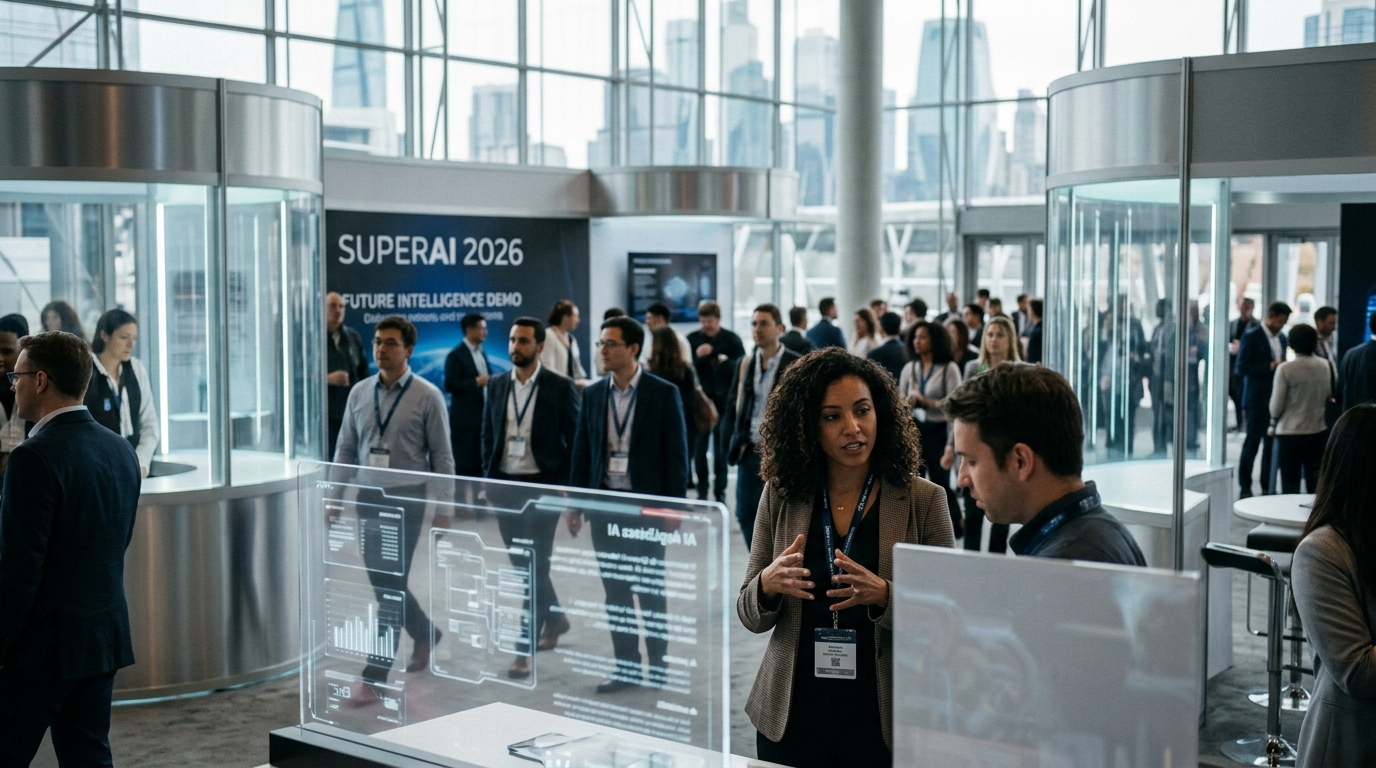
As we navigate the first half of 2026, the global economy stands at a tipping point that few predicted with such precision only three years ago. During the SuperAI 2026 conference, Bain & Company presented a provocative analysis: "intelligence"—at least in its computational and generative form—has now become a cheap, abundant commodity, akin to electricity or running water. The pressing question is no longer "what can AI do," but "what remains for humans when AI can do almost everything?"
The Demystification of Knowledge and the Collapse of Costs
Bain's report highlights that the marginal cost of producing complex intellectual work has plummeted by 95% compared to 2023. With the arrival of GPT-5 and its competitors from Google and Anthropic, the ability to synthesize strategic documents, write high-level code, and analyze vast datasets is no longer a competitive advantage. When access to "high intelligence" costs mere cents per million tokens, the very concept of "knowledge" as an asset is being redefined.
According to analysts, businesses that relied on providing standardized advice or processing information are facing an existential crisis. "If the answer to a problem can be generated by an AI Agent in seconds, then value does not reside in the answer, but in the question and the responsibility of its implementation," the report states. This shift is forcing the corporate world to seek new "moats" to protect their profitability.
The Data Moat and the Ownership of Experience
If intelligence is cheap, then what is expensive? Bain & Company is clear: proprietary data and human experience. In a world where AI models have been trained on the entire public internet, real value shifts to what is *not* public. This includes internal corporate processes, non-leaked historical customer data, and, most importantly, the intangible knowledge passed from person to person within an organization.
- Strategic Differentiation: Companies must invest in their own closed data ecosystems.
- Ethical Accountability: A brand's ability to guarantee the ethical use of AI is becoming a luxury feature.
- Personalized Experience: Human touch and empathy are gaining premium pricing as they become rarer.
The analysis points out that in 2026, "human-crafted thought" will be treated with the same reverence as handcrafted Swiss watches. It won't be the fastest, but it will be the most trusted and the most "spiritually" connected to the end-user.
The Human Signature in the Age of Synthesis
The critical question of "what remains yours" also touches upon individual identity. Bain argues that the "human signature"—the unique perspective, risk-taking, and intuition—are the only elements AI cannot fully replicate, not because it lacks computing power, but because it lacks biological consequences. An AI cannot "risk" its reputation or feel the weight of failure. This lack of "skin in the game" makes human judgment irreplaceable in high-stakes decisions.
"Intelligence has become the new software: ubiquitous and almost free. But wisdom remains the hardware: rare, difficult to produce, and profoundly human."
In conclusion, Bain & Company warns that adapting to 2026 requires a radical re-skilling. Workers and executives must stop competing with AI on speed and memorization and start cultivating critical thinking, negotiation, and emotional intelligence. In an ocean of cheap intelligence, the only thing that will remain expensive is authenticity.