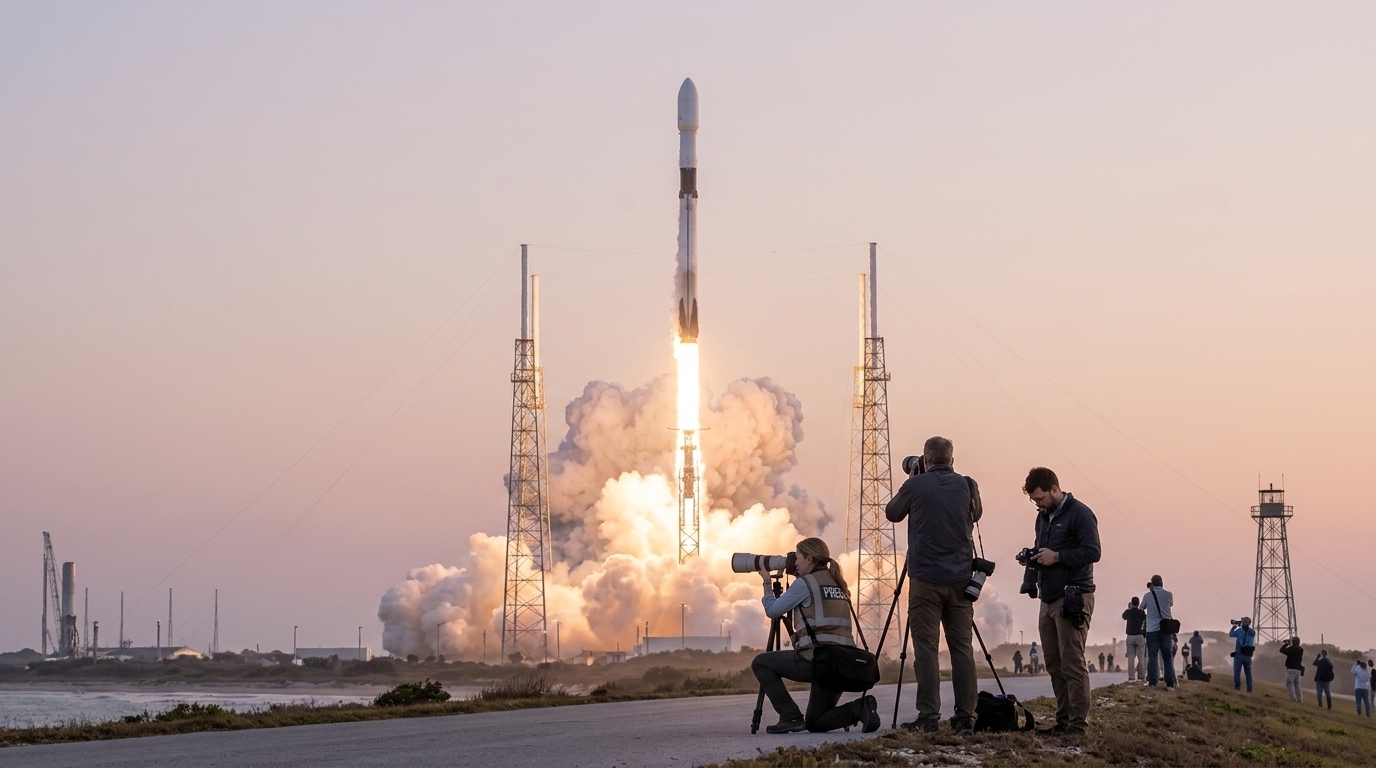
July 8, 2026, will be recorded in the annals of astronautics as the day commercial space broke free from the constraints of the sun. With a flawless launch from Cape Canaveral, a SpaceX Falcon 9 rocket successfully deployed the first commercial satellite powered exclusively by small-scale nuclear energy, utilizing City Labs' pioneering betavoltaic technology. This development is not merely a technical milestone; it is the dawn of a new strategic reality for space exploration and the telecommunications industry.
The Betavoltaic Revolution: Beyond Solar Panels
Until today, the vast majority of satellites relied on massive solar arrays for power generation. This limited their operation to orbits with consistent sun exposure and rendered them vulnerable to radiation degradation and micrometeoroid impacts. City Labs' technology, however, harnesses the isotope tritium to generate electricity by capturing electrons (beta particles) emitted during natural radioactive decay.
Unlike the large Radioisotope Thermoelectric Generators (RTGs) used by NASA for missions like Voyager or Perseverance, betavoltaic cells are microscopic, extremely durable, and do not produce significant heat that could damage sensitive electronics. The most critical advantage is longevity: these batteries can provide steady power for over 20 years, unaffected by extreme temperature fluctuations or total darkness. This reliability is the holy grail for satellite operators looking to extend the mission life of multi-billion dollar constellations.
The Lunar South Pole and Strategic Leverage
The significance of this launch extends far beyond low Earth orbit (LEO). The global space community, led by the U.S. Artemis program and China's lunar ambitions, has focused its attention on the Lunar South Pole. There, within permanently shadowed craters, vast deposits of water ice are believed to exist. Survival in these regions, where the sun never rises, has been the single greatest obstacle to establishing a permanent human presence.
With the successful test by SpaceX and City Labs, the path is cleared for permanent lunar bases and autonomous robots capable of mining resources in total darkness for decades. "We aren't just building a battery; we are building a life-support system for deep space," a City Labs executive stated following the launch. The ability to operate in lightless environments fundamentally shifts the geopolitical competition in space, as those who control energy in the shadows will ultimately control the resources at the poles.
Safety, Regulation, and the Road Ahead
Despite the use of the word "nuclear," this technology is radically different from traditional fission reactors. Tritium emits low-energy radiation that can be stopped by something as thin as a sheet of paper or the battery's own casing, making it inherently safe for commercial applications. Nevertheless, launching nuclear materials remains a sensitive issue requiring rigorous safety protocols from the FAA and NASA. The success of this mission proves that the regulatory hurdles can be overcome when safety is integrated into the core design.
Elon Musk's SpaceX, through this partnership, solidifies its position not just as a launch provider, but as the central hub of a new infrastructure ecosystem. If this trial concludes successfully over the coming months, we can expect a massive industry shift toward micro-nuclear solutions, reducing satellite maintenance costs and dramatically increasing the reliability of global communication networks. Space has just become a little less dependent on our star, and much more accessible to the far-reaching ambitions of humanity.