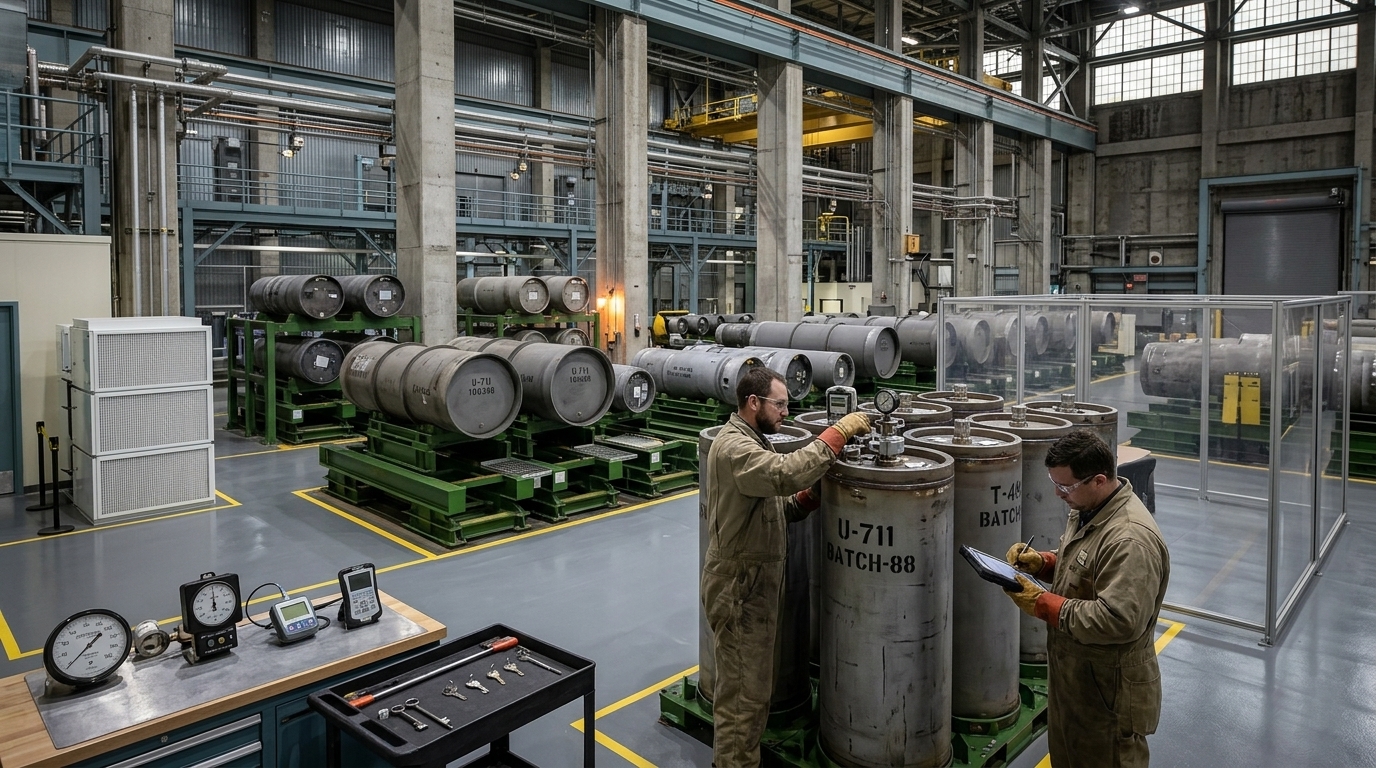
It is June 2026, and the global energy chessboard is undergoing its most dramatic transformation since the 1970s oil crisis. The 'Second Nuclear Age' is no longer a theoretical prediction but an imperative necessity driven by two powerful forces: the insatiable thirst of AI data centers for carbon-free power and the urgent need for geopolitical decoupling from Russian fuel sources. However, rebuilding a supply chain that was allowed to atrophy for decades is proving to be one of the greatest industrial challenges of the century.
The HALEU Bottleneck and Russian Dominance
At the center of this race is HALEU (High-Assay Low-Enriched Uranium), a specialized nuclear fuel enriched to between 5% and 20%. While traditional reactors run on low-enriched uranium (under 5%), the new Small Modular Reactors (SMRs)—which promise to be safer and more flexible—require HALEU to operate efficiently. The problem? Until recently, the only commercial source of this fuel in the world was Tenex, a subsidiary of the Russian state-owned company Rosatom.
The invasion of Ukraine and subsequent sanctions exposed a dangerous vulnerability. The U.S. found itself in the uncomfortable position of indirectly funding the Russian state to keep its lights on. The Biden administration, with bipartisan support through the ADVANCE Act, has now prioritized banning Russian uranium imports, but creating domestic enrichment capacity does not happen overnight. It requires billions of dollars in investment and scientific expertise that the U.S. had nearly forgotten.
New Players: From Bill Gates to Sam Altman
The nuclear renaissance is now being funded by Silicon Valley's elite. TerraPower, the company founded by Bill Gates, is building its first reactor in Kemmerer, Wyoming, at a former coal plant site. However, the project was significantly delayed due to the HALEU shortage, forcing the company to seek alternative solutions. Similarly, Oklo, the company backed by OpenAI's Sam Altman, aims to build small reactors that will directly power the data centers training the GPT models of the future.
- Centrus Energy: The only American company licensed to produce HALEU, operating a pilot plant in Piketon, Ohio.
- Urenco: The European consortium expanding its facilities in New Mexico to fill the gap.
- Bill Gates & TerraPower: Investing in sodium-cooled technologies that require the new fuel.
The connection between AI and nuclear energy is now organic. Microsoft recently signed a landmark deal to reopen Three Mile Island, while Amazon and Google are investing billions in SMRs. For these giants, nuclear power is the only solution that can provide steady 'baseload' power 24/7 without the intermittency of wind or solar.
Geopolitical Security and the Future of the Supply Chain
Rebuilding the supply chain isn't just about enrichment; it's about mining. The U.S. is trying to revitalize uranium mines in Utah and Wyoming while strengthening partnerships with Canada and Australia. The challenge is to create a closed-loop system that is resilient to external shocks.
"We cannot have a green transition that relies on authoritarian regimes. Energy security is national security," a senior Department of Energy (DOE) official recently stated.
However, critics point out that this shift carries risks. Nuclear waste management remains an unsolved problem, and the speed at which new technologies are being pushed could lead to safety regulation shortcuts. Furthermore, the cost of HALEU remains extremely high compared to traditional fuels, meaning the 'Second Nuclear Age' will require continuous state subsidies to remain viable.
Conclusion
The race for uranium is a battle for 21st-century dominance. If the U.S. succeeds in regaining control of the nuclear supply chain, it will have secured not only its energy autonomy but also the fuel for the AI revolution. If it fails, dependence on foreign powers will simply shift from oil to uranium, leaving the economy of the future exposed to new risks.