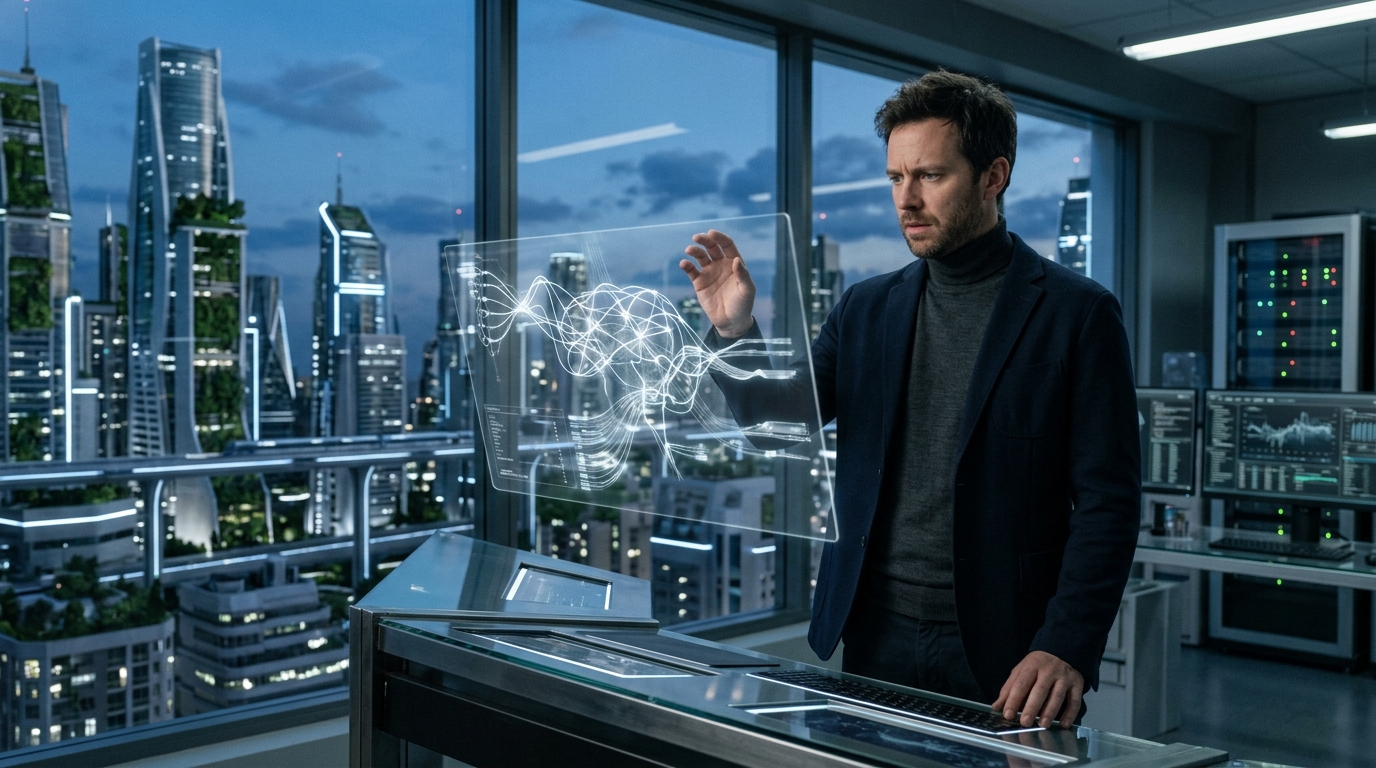
As we navigate the first half of 2026, the conversation surrounding quantum computing has shifted from the realm of theoretical physics to the boardrooms of the world's largest organizations. What was once considered a distant dream for 2040 or 2050 is now knocking on the doors of industry, security, and materials science. 'Quantum supremacy' is no longer an academic term but an operational reality reshaping the global technological landscape.
From Theoretical Qubits to Practical Error Correction
For years, the main obstacle in quantum computing was 'noise'—the sensitivity of quantum states to external interference that caused errors in calculations. However, recent breakthroughs in error correction have changed the game. IBM, Google, and Microsoft have unveiled systems that can now maintain qubit coherence long enough to execute complex algorithms. 2026 finds the market moving toward 'logical quantum computers,' where thousands of physical qubits work together to create a single, stable, and reliable computational unit.
This transition is critical. We are no longer just counting qubits; we are measuring their quality. The ability to perform error-free calculations means we can now simulate nature at its own level: the quantum level. This paves the way for discovering new catalysts that could strip carbon dioxide from the atmosphere or create room-temperature superconductors, forever changing the energy sector.
The Threat to Cybersecurity and the PQC Solution
The most immediate and perhaps alarming impact of the quantum revolution concerns cryptography. Traditional encryption algorithms, such as RSA, which protect our banking data and government communications, rely on the difficulty of factoring large numbers—a task that takes classical computers thousands of years but would take a mature quantum computer mere minutes.
- 'Q-Day': The moment when quantum computers can break existing encryption is approaching faster than predictions suggested.
- Post-Quantum Cryptography (PQC): Governments worldwide, including the EU and the US, are already mandating the transition to algorithms resistant to quantum attacks.
- Harvest Now, Decrypt Later: Concerns about data being intercepted today to be decrypted in the future have forced tech companies to accelerate their security investments.
The Geopolitics of Quantum Power
The race for quantum dominance has taken on dimensions similar to the 20th-century space race. The US and China are investing billions of dollars, viewing quantum technology as the ultimate tool for national security and economic power. Europe, through its 'Quantum Flagship' initiative, is striving to maintain its autonomy, focusing on quantum communication and sensors.
"Whoever first controls the quantum computer will hold the keys to the global economy and military superiority for the next century," international relations analysts suggest.
In Greece, interest is focused on education and research, with Greek universities participating in European quantum communication networks. The challenge is not to fall behind in an era where computing power translates directly into geopolitical influence. The revolution is not merely technical; it is a fundamental shift in how we understand and process information, with implications that will touch every aspect of our daily lives, from precision medicine to global logistics optimization.