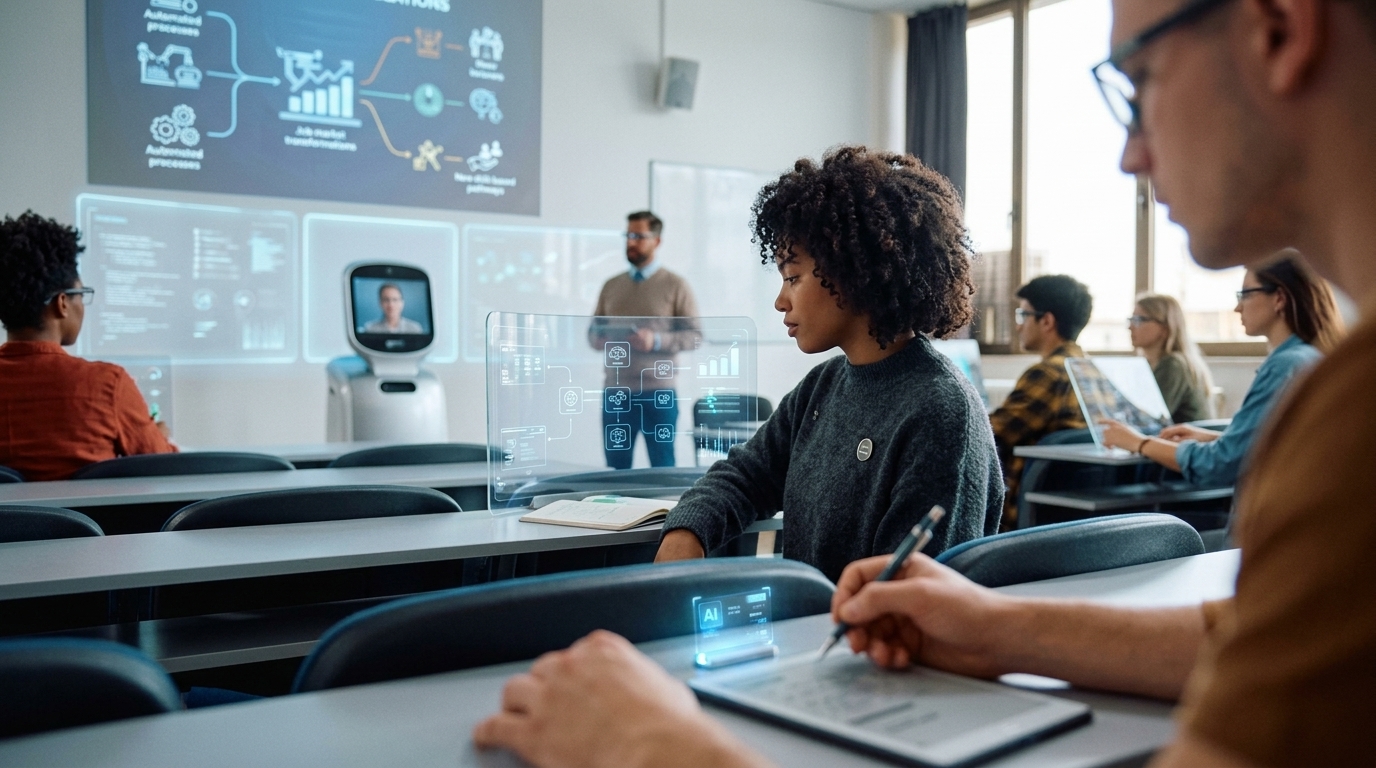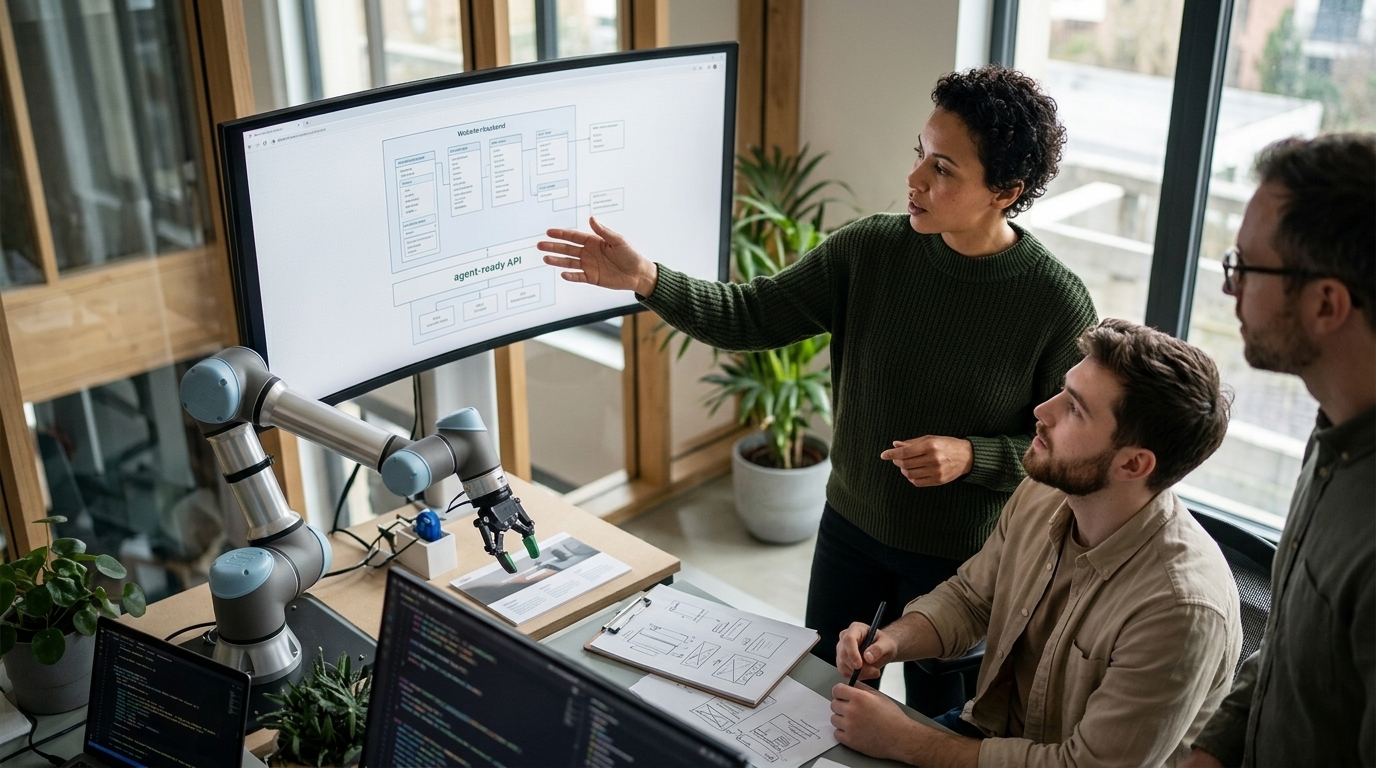
As we navigate the second quarter of 2026, the discourse surrounding Artificial Intelligence (AI) has decisively shifted from the existential dread of "replacement" to the practical reality of "symbiosis." In a recent high-level discussion on Bloomberg Tech, leaders from Panasonic Corporation of North America, New York Life, Kyndryl, and Citizens Bank shared their strategic blueprints for a workforce where humans and machines act as partners rather than competitors. The consensus is clear: success in the AI era is not merely a matter of raw computing power, but of an organization's ability to reskill its people and integrate technology with a human-centric focus.
Panasonic: A Human-Centric Industrial Evolution
Liz Almeida, Chief Human Resources Officer at Panasonic Corporation of North America, emphasized that for an industrial giant, AI serves as a critical tool for safety and precision. According to Almeida, Panasonic does not view AI as a headcount reduction strategy, but as a means to liberate employees from the "three Ds": Dirty, Dull, and Dangerous tasks. The company’s strategy focuses heavily on upskilling, allowing factory floor workers to transition into roles as operators and supervisors of intelligent systems.
Almeida stressed that Panasonic’s culture is rooted in trust. "If employees fear that technology will take their jobs, they will resist it. But if they see that it protects them and offers new career trajectories, they become its greatest champions," she noted. Panasonic is investing in continuous learning programs, ensuring that the transition to automation leaves no one behind, particularly in an era where the global shortage of skilled technical labor remains a persistent challenge.
New York Life: Ethics, Diversity, and the Human Touch in Insurance
In the financial services and insurance sector, Kathleen Navarro, Senior Vice President at New York Life, introduced a vital dimension: ethics and diversity. New York Life utilizes AI for risk assessment and policy personalization, but Navarro warns that algorithms are only as good as the data they consume. "AI can inadvertently replicate past biases. This is why we need a diverse workforce to audit and oversee these systems," she stated.
Navarro argued that in life insurance, AI acts as a "co-pilot" for agents. The technology handles the massive volume of data processing, allowing human professionals to focus on what machines cannot replicate: empathy and building relationships of trust with clients during some of the most difficult moments of their lives. For New York Life, AI integration is not just about speed; it is about the quality of human judgment augmented by data-driven insights.
Kyndryl and Citizens: Infrastructure and the New CIO Mandate
Jamie Rutledge, President of Kyndryl U.S., and Michael Ruttledge, CIO and Head of Tech at Citizens Bank, focused on the technical and organizational hurdles of this transition. Kyndryl, a leader in IT infrastructure services, views AI as the key to managing modern complexity. Rutledge noted that the biggest challenge is often not the AI itself, but data silos and legacy systems that hinder integration. Kyndryl’s strategy involves using AI to automate network maintenance, freeing up engineers to design more innovative, resilient solutions.
From the perspective of Citizens Bank, Michael Ruttledge highlighted the transformation of the Chief Information Officer (CIO) role. The CIO is no longer just a technology manager but a strategic leader tasked with bridging the gap between tech stacks and human talent. At Citizens, AI is used to enhance customer experience through intelligent chatbots and real-time fraud detection. Ruttledge emphasized that success depends on organizational "agility"—the ability to adapt to tools that evolve every six months.
Conclusion: The Era of "Human Plus"
The common thread among these industry leaders is that the future of work is not a race against the machine, but a race to better utilize it. Companies that invest in education, ethical frameworks, and strategic integration will be the ones to thrive. The "Human Plus AI" model is emerging as the only sustainable path for the global economy of 2026, where human creativity and mechanical precision combine to forge a new standard of productivity.
- Upskilling is the primary driver for AI adoption and employee buy-in.
- Ethics and data diversity are non-negotiable to prevent algorithmic bias.
- The CIO role has evolved into a position of cultural and strategic leadership.
- AI liberates humans from repetitive tasks, enabling a focus on empathy and innovation.