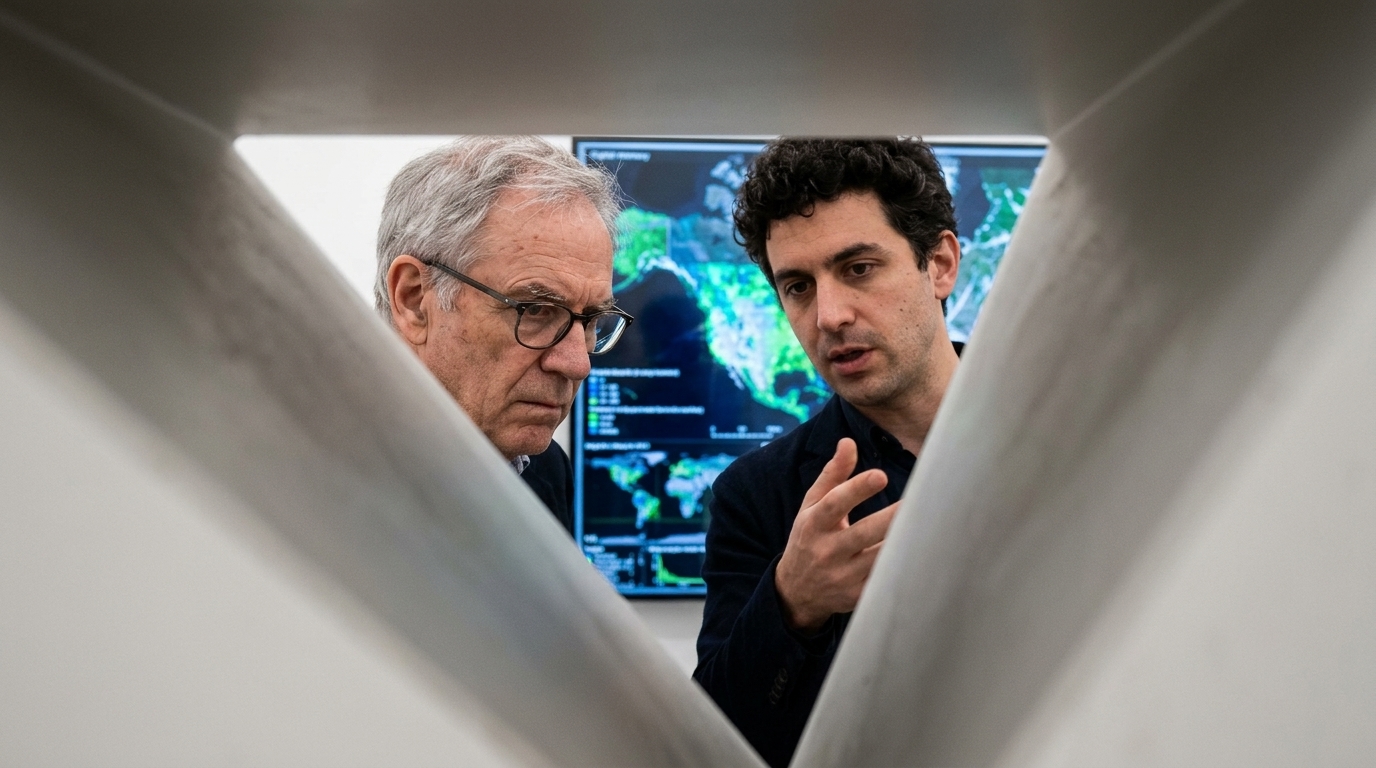
At the intersection of classical engraving and the digital revolution, Manolis Charos stands as one of the most insightful observers of the Greek and European art scenes. His recent interview with Fortune Greece was not merely a retrospective of a distinguished career, but a profound philosophical statement on what it means to create in a world saturated with algorithms and automated imagery. For Charos, art is not a static representation but a "geography of memory"—a map of emotions and experiences recorded through the seamless connection between the eye and the hand.
Roots in Kythira and the Paris School of Fine Arts
Manolis Charos's starting point is Kythira, an island that serves as a crossroads of cultures and winds. This sense of the "open horizon" shaped his aesthetic perception long before he found himself in the studios of the Ecole des Beaux-Arts in Paris. His training in printmaking provided him with a discipline rarely found in contemporary painting: an understanding of matter, the resistance of metal or wood, and the importance of abstraction.
As he describes, Paris in the 1980s was a cauldron of exploration. There, Charos learned not only techniques but also the significance of intellectual freedom. His art began to evolve from strict representation toward a more internal search for landscape. For Charos, a landscape is never a postcard; it is a living organism bearing the marks of time and human presence, even when that presence is invisible.
The Digital Revolution as a New Palette
While many artists of his generation viewed technology with skepticism or fear, Manolis Charos was a pioneer in integrating digital media into his work. As early as the late 1980s, he was experimenting with the first Macintosh computers, seeing the screen not as an enemy but as a new working surface. "My gaze and my hand are my primary language," he states, emphasizing that the tool—whether it is an engraver's burin or a tablet stylus—remains secondary to the artistic intention.
Charos's use of technology is not intended to dazzle. Instead, he uses it to deconstruct the image, play with layers, and create a sense of depth that mimics the workings of human memory. His digital images are often printed on traditional papers or combined with oils and acrylics, creating a hybrid result that challenges the viewer to question the origin of the line.
The Challenge of AI and Human Uniqueness
In discussions about the future of art, the issue of Artificial Intelligence (AI) is inevitable. Charos approaches the subject with the composure of someone who has seen many "revolutions" come and go. While he acknowledges the power of generative algorithms, he insists that AI lacks the core ingredient of art: lived experience. An AI model can synthesize millions of images based on statistical probabilities, but it cannot feel the saltiness of the Aegean or the pain of a loss.
"Technology is a tool that expands boundaries, but the heart of creation remains human choice. The moment the hand decides to stop, the moment the mistake becomes part of the work—these are elements that a machine cannot yet authentically simulate."
For Charos, the art of the future will be a constant negotiation between technological ease and manual persistence. The value of a work of art will increasingly lie in its ability to offer a "handmade" truth in a world of mass-produced content.
The Geography of Memory: A Perpetual Journey
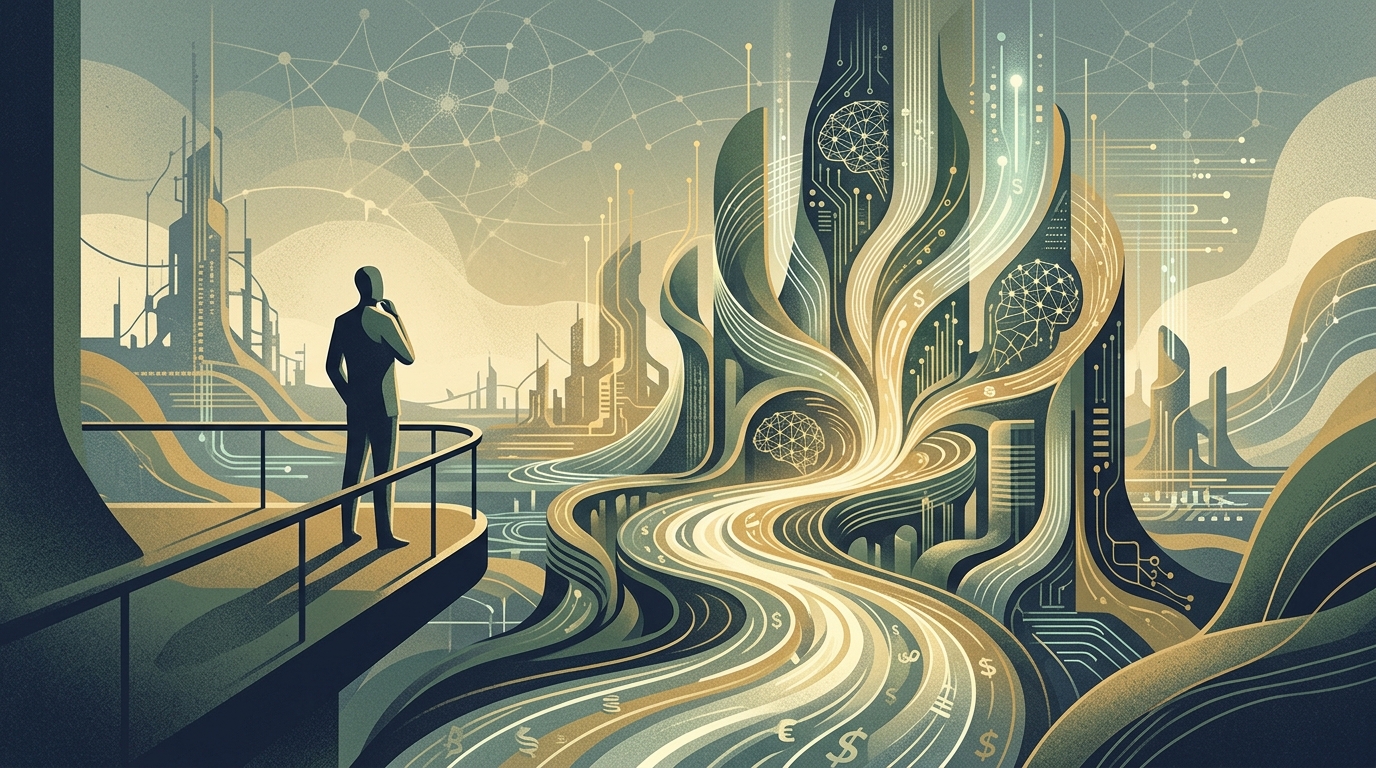
In conclusion, the artist refers to the "geography of memory" as the central theme running through his entire body of work. This is not a nostalgic return to the past but an active process of mapping the present. The places he paints—whether Kythira, Paris, or imaginary destinations—are imbued with the stories of the people who inhabited them.
Manolis Charos remains an artist who is not afraid to get his hands dirty with ink, while his gaze is fixed on the infinite possibilities of the digital future. His journey reminds us that authentic art does not need to choose between tradition and modernization; its power stems from its ability to contain both, creating a new, personal world.