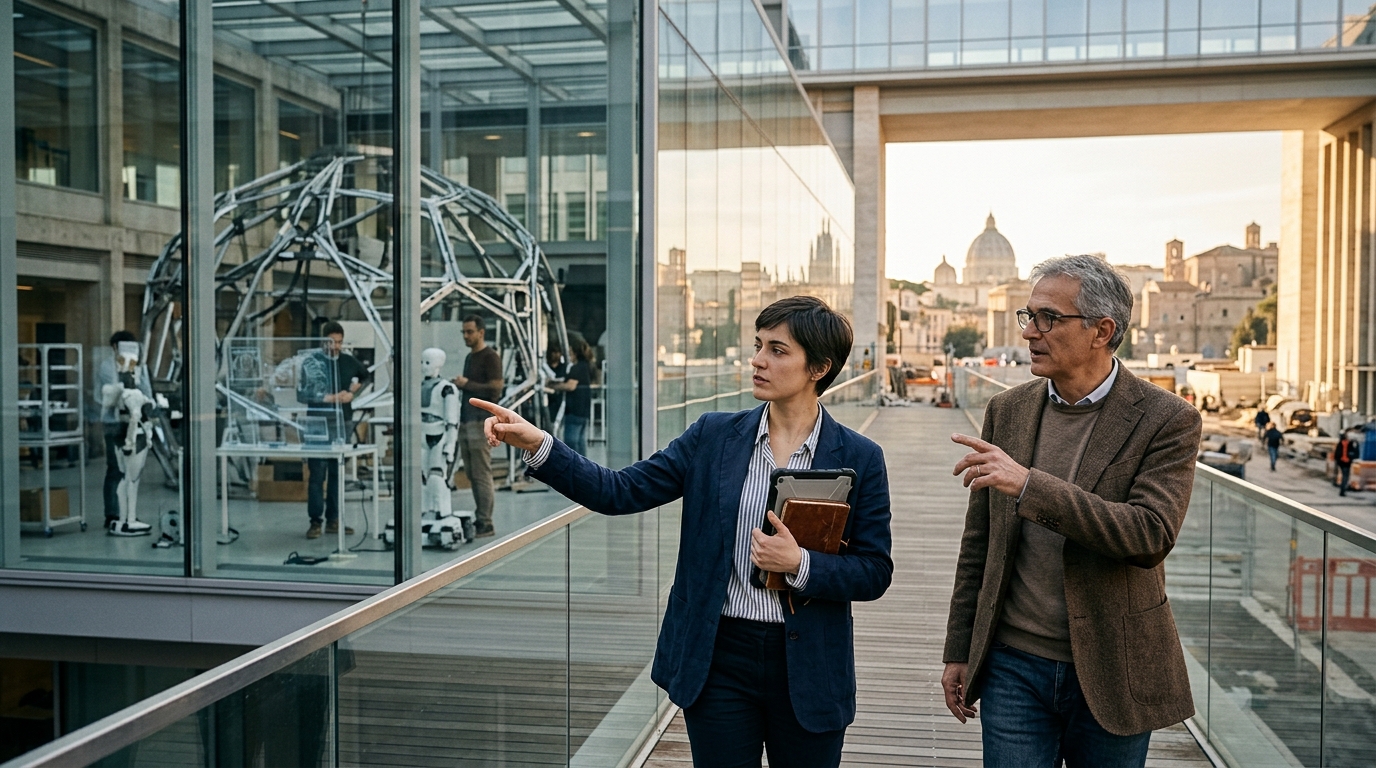
In the heart of the Mediterranean, Italy—a nation historically synonymous with artistic creation and high industrial aesthetics—now faces one of the most significant challenges in its modern history. The advent of Artificial Intelligence (AI) is no longer a distant promise; it is an imperative reality radically reshaping the professional skills landscape. As we move through the summer of 2026, the Eurozone's third-largest economy is struggling to bridge the gap between traditional production methods and the demands of the algorithmic age.
Italy’s challenge is twofold. On one hand, there is an urgent need to integrate AI tools to boost productivity, which has remained stagnant for decades. On the other, the country is grappling with an acute talent shortage, exacerbated by a demographic crisis and a persistent "brain drain" to Northern Europe and the United States. AI isn't just changing how work is done; it’s redefining what it means to be a "skilled" worker in today's Italy.
The SME Digital Bottleneck
The Italian economic model relies heavily on Small and Medium Enterprises (SMEs, or PMI - Piccole e Medie Imprese). These businesses, often family-owned, are the backbone of production, spanning from fashion and design to automotive components. However, AI adoption in this sector faces significant hurdles. A lack of capital for cutting-edge technology investments and a void in internal technical expertise make the transition painful.
According to recent reports, over 60% of Italian SMEs claim they struggle to find staff with basic digital skills, let alone expertise in machine learning or data analytics. AI requires a new generation of workers who can blend traditional Italian craftsmanship (artisanat) with the ability to manage complex information systems. If these businesses fail to adapt, they risk being marginalized in the global supply chain, where efficiency and data-driven decision-making are now the baseline.
Demographics and Productivity: AI as a Lifeline
Italy has one of the oldest populations in the world. With birth rates at historic lows, the workforce is shrinking at an alarming pace. In this context, AI is no longer viewed solely as a threat to jobs, but as a necessary tool to maintain production levels. AI-driven automation can fill the gaps left by retiring workers, allowing the remaining workforce to focus on higher-value-added tasks.
However, the "knowledge transfer" from the older generation to the younger through technology remains problematic. The challenge lies in reskilling older workers to collaborate with AI systems rather than being replaced by them. The National Recovery and Resilience Plan (PNRR) has allocated billions of euros for digitalization, but the absorption of these funds and their conversion into actual skills is moving slowly due to entrenched bureaucracy and a lack of systemic coordination.
Education and Reskilling: Toward a New "Rinascimento"
To address the talent crisis, Italy must overhaul its educational system. Universities in Milan, Turin, and Rome have begun introducing interdisciplinary programs that combine the humanities with AI, recognizing that ethics and philosophy are as vital as code in the new era. The concept of "Digital Humanism" is gaining traction, promoting an approach where technology serves humanity and social cohesion.
- Strengthening technical schools (ITS) with specialized applied AI courses.
- Incentivizing companies that invest in continuous staff training.
- Programs to attract foreign talent and repatriate Italian scientists working abroad.
In conclusion, Italy stands at a crossroads. Artificial Intelligence offers the opportunity for a new economic renaissance, but only if the country manages to invest in its most precious resource: its people. Success will not be measured by the number of algorithms purchased, but by the ability of the Italian workforce to harness them to create value while preserving its unique cultural identity. The transition requires a bold shift from being a consumer of technology to a master of it.