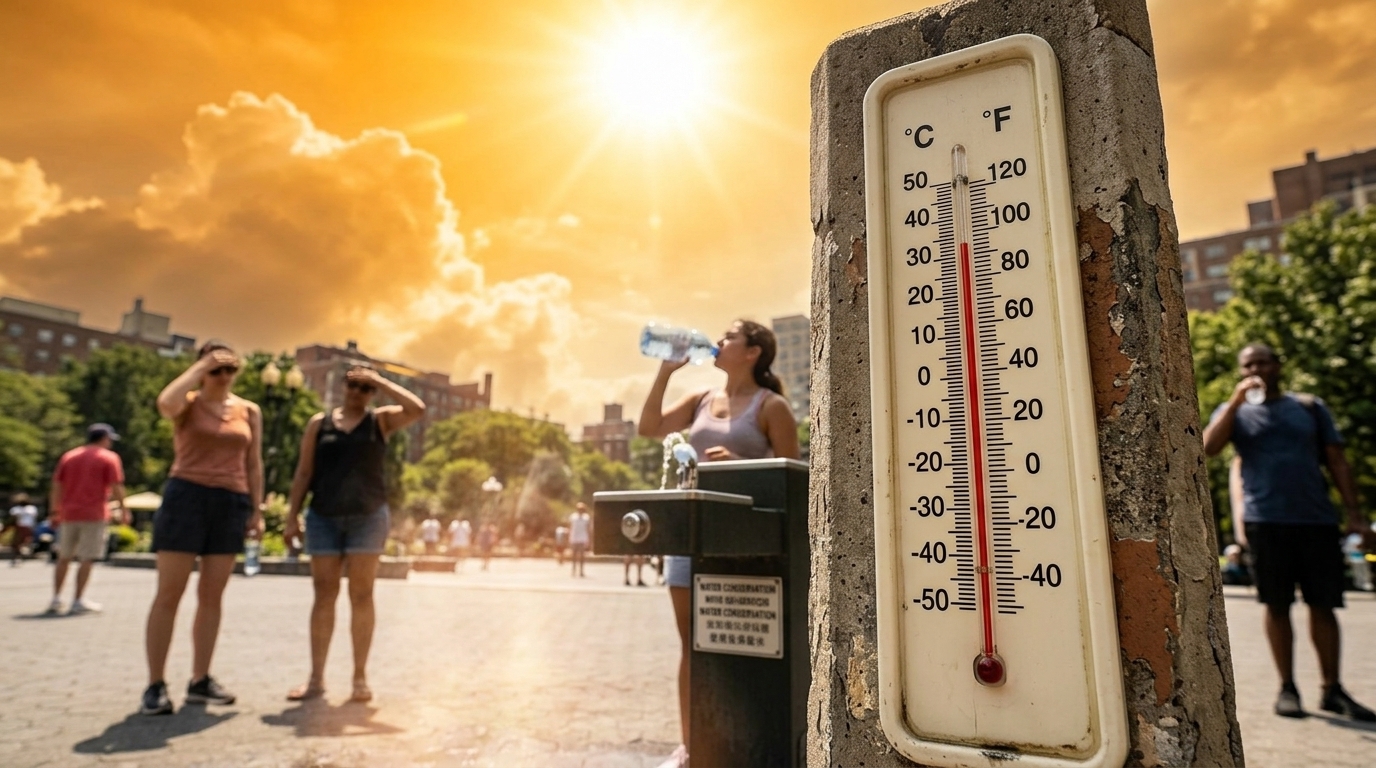
The climate crisis is no longer a distant threat; it is a present reality manifesting with increasing intensity. According to the latest data from the Copernicus Climate Change Service (C3S), this past May recorded temperatures that place it among the highest in historical records. This thermal anomaly is not an isolated event but the latest chapter in a disturbing streak of twelve consecutive months where each month was the warmest ever recorded for its respective period.
Scientific Analysis of the Thermal Surge
Copernicus scientists point out that the average global surface air temperature for May was significantly higher than the 1991-2020 average. This is attributed to a combination of long-term global warming due to greenhouse gas emissions and the influence of natural climate cycles. However, what is particularly alarming is the speed at which records are being shattered, leaving little room for ecosystems and human societies to adapt.
Special emphasis is placed on ocean temperatures. Sea surfaces are exhibiting unprecedented levels of heat, acting as vast energy reservoirs that fuel extreme weather events. This warming is not limited to tropical zones but extends to the North Atlantic and other critical regions, affecting marine currents and biodiversity. The thermal inertia of the oceans means that even if emissions were halted today, the warming trend would persist for decades.
The Shadow of the 'Super El Niño'
The primary driver for the further escalation of temperatures in the coming period appears to be the transition toward a "Super El Niño" phenomenon. El Niño is a natural climate cycle characterized by the warming of waters in the central and eastern Pacific Ocean. When this phenomenon reaches extreme proportions, its impacts are felt globally, causing droughts in regions like Australia and Southeast Asia, and catastrophic flooding in the Americas.
Meteorological forecasts, now bolstered by advanced Artificial Intelligence models, indicate that the upcoming El Niño could be one of the strongest in recent decades. This suggests that 2026 and 2027 may break every previous temperature record, confronting humanity with challenges that exceed our current infrastructure. The possibility of permanently crossing the critical 1.5°C threshold is becoming increasingly visible.
Impacts on the Mediterranean and Europe
For the Mediterranean region, considered a climate change "hotspot," the outlook is grim. The high temperatures of May foreshadow a summer of prolonged heatwaves and an increased risk of wildfires. The drought already affecting many parts of Southern Europe is expected to worsen, directly impacting agricultural production and water reserves.
- Increased intensity and duration of heatwaves across the continent.
- Risks to food security due to crop failures in traditional breadbaskets.
- Pressure on energy grids due to heightened demand for cooling.
- Further degradation of marine ecosystems and loss of biodiversity.
The need for immediate action is imperative. Political leadership must focus not only on mitigation but also on adaptation. Fortifying cities against heat, managing water resources more efficiently, and reorganizing civil protection systems are the only ways to survive in a significantly warmer environment.
The Role of AI in Climate Forecasting
In this somber landscape, technology offers some glimmers of hope. Artificial Intelligence (AI) is transforming how we understand and predict the climate. New AI models can process billions of data points from satellites and sensors in real-time, providing warnings for extreme events with precision that was unthinkable just a few years ago. These tools are essential for policymakers, as they allow for the design of data-driven strategies rather than mere estimates.
"We are not just recording records; we are recording the gradual collapse of the systems that support our lives," a Copernicus official noted.
In conclusion, May 2026 is another alarm bell. The arrival of a Super El Niño on an already burdened planet requires a global mobilization that moves beyond promises and translates into concrete action. The time for complacency has long since passed.