In the summer of 1956, on a quiet campus in New Hampshire, a small group of scientists gathered with an ambition that many then considered science fiction: to create machines that could think. Today, as we navigate 2026, Artificial Intelligence (AI) is no longer a working hypothesis but the backbone of the global economy, science, and our daily lives. UNSW Sydney, alongside the global scientific community, is celebrating the 70th birthday of a field that altered the trajectory of humanity.
The Birth of an Idea: Dartmouth 1956
It all began with a proposal submitted by John McCarthy, Marvin Minsky, Nathaniel Rochester, and Claude Shannon. Their central premise was bold: "Every aspect of learning or any other feature of intelligence can in principle be so precisely described that a machine can be made to simulate it." This sentence became the 'Big Bang' of AI. During that summer at Dartmouth College, the term "Artificial Intelligence" was chosen over alternatives like "Complex Information Processing," marking the dawn of a new era.
The early decades were characterized by unbridled optimism. The pioneers believed that within a generation, the problem of creating artificial intelligence would be substantially solved. However, reality proved far more complex. "Symbolic AI," which relied on logic rules and programmed instructions, quickly hit a wall when faced with the ambiguity and complexity of the real world.
Winters and Springs of Intelligence
The history of AI has not been a linear path of success. It included periods known as "AI Winters," where funding dried up and interest waned due to unfulfilled promises. The 1970s and late 1980s were eras of skepticism. Yet, beneath the surface, research into neural networks continued to simmer.
The great turning point came with the advent of Big Data and the exponential increase in computing power. The "Spring" that began in the 2010s with Deep Learning transformed AI from a laboratory experiment into an industrial tool. From AlphaGo's victory in 2016 to the explosion of Generative AI in 2022 and 2023, progress accelerated at rates that even the Dartmouth founders could not have imagined.
2026: AI as a Social Partner
Reaching today, in 2026, AI has entered the phase of "Practical Integration." We are no longer just talking about chatbots writing essays, but about systems designing new drugs in hours instead of years, managing the energy grids of entire cities, and acting as personalized tutors for millions of students. UNSW Sydney highlights that the great challenge of the coming years is no longer just the "intelligence" of systems, but their alignment with human values.
- Ethics and Governance: With the implementation of the AI Act in Europe and similar frameworks globally, the conversation has shifted from "what can we build" to "what should we allow."
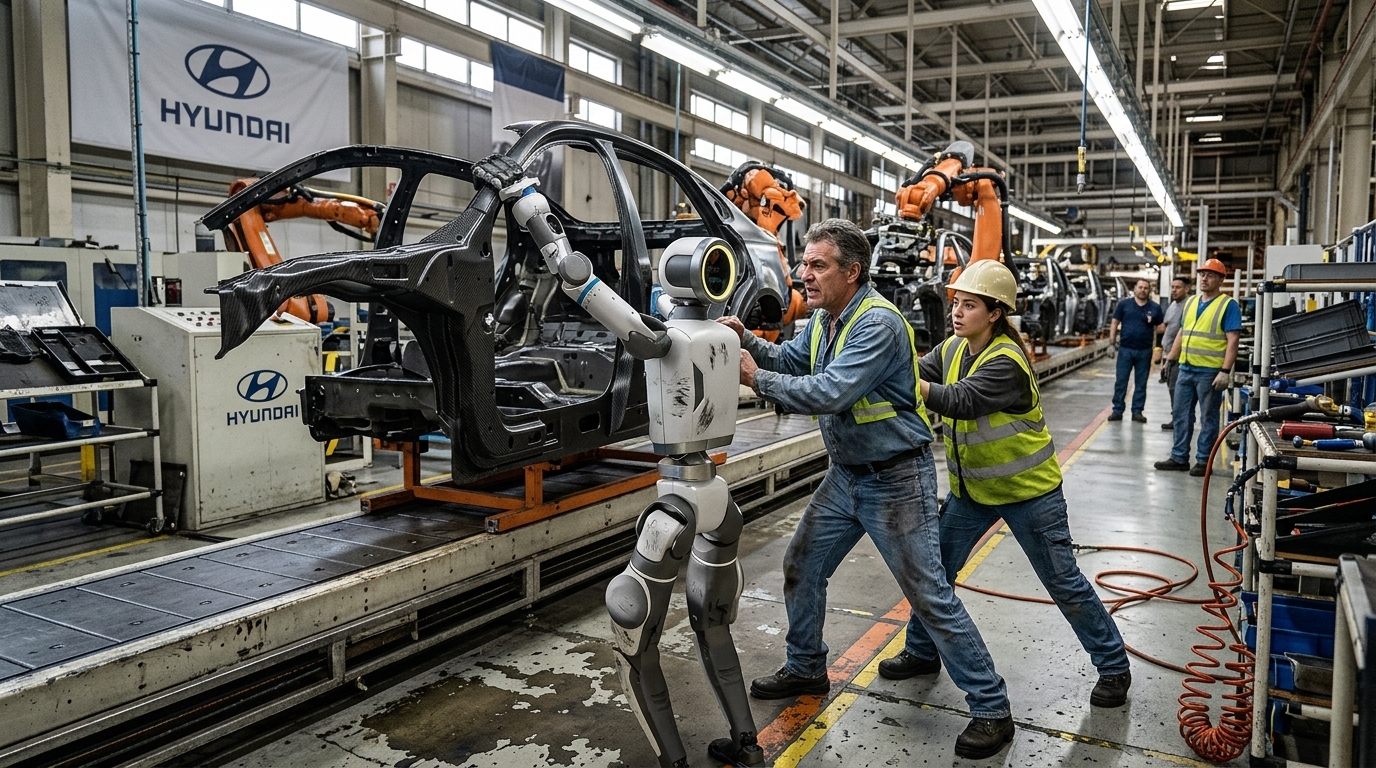
- The Evolution of Work: AI did not replace human labor en masse, as many feared in 2024, but transformed every profession, requiring new skills in human-machine collaboration.
- The Path to AGI: The quest for Artificial General Intelligence (AGI) remains the "Holy Grail," with many researchers estimating we are closer than ever.
"Artificial Intelligence is no longer a branch of computer science; it is a mirror of human cognition and a lever for solving our planet's greatest challenges," the academic community notes.
Closing seven decades of existence, AI celebrates not only its technological supremacy but also its ability to force us to redefine what it means to be human. The dream of 1956 became the reality of 2026, and the journey is only just beginning.